The Concert For Diana

•September 26, 2010 • 1 Comment

LONDON, ENGLAND Sunday July 1, 2007 – My shoes were back…parked at my hotel room door: dried, cleaned up and polished after the soaking rain during Saturday’s late afternoon West End Tour. I had successfully navigated the streets of London for several days now, and had learned my way around on the Underground with tools like the “Oyster Card “– that “Mind the Gap!” recording echoing in my head. As requested, I had avoided running into my daughter Devin and her school mates on their Coronado High School tour’s last stop, as we shared the hotel these past several days. Today, though, I had arranged a great surprise with the help of the Concierge at the Crowne Plaza. All Devin knew was that I had a special event arranged and that I had an extra ticket for that event so that a friend of hers could join us.

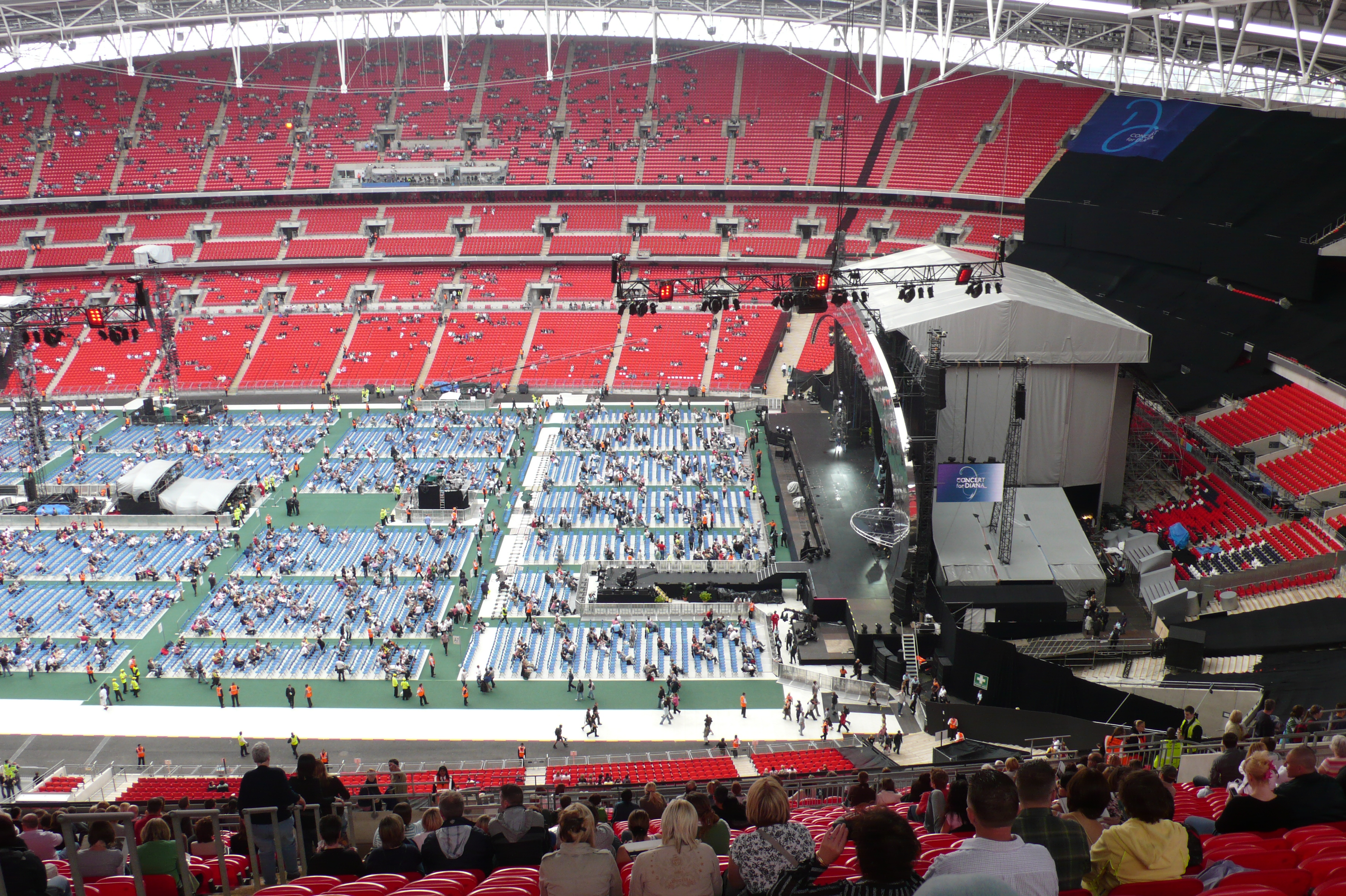
The newspapers and televisions had been building up the Concert for Diana for months. In December 2006 the first lot of 22,500 tickets to the event sold out in just 17 minutes. It was scheduled on what would have been The Princess of Wales’ 46th birthday, almost exactly ten years after the tragic accident that took her life in Paris August 31, 1997. Prince William and Prince Harry, representing the Trust that had been set up to continue their mother’s good works, had invited a plethora of musical stars to a fundraising concert in Wembley Stadium that night, and we were going to be there to enjoy it live! Fully 63,000 of us came out to Wembley to enjoy the concert, and for good reason. The list of entertainers was awesome, covering generations of musical taste, so I was sure that both my teenage daughter and her friend, Garland Rogers, as well as myself would find the program entertaining.

Order of Entertainers: Sir Elton John (opening with “Your Song”), Duran Duran, James Morrison, Lily Allen, Fergie, The Feeling, Pharrell, Nellie Furtado, English National Ballet (“Swan Lake”), Status Quo, Josh Stone, Roger Hodgson (Supertramp Medley), Orson, Sir Tom Jones and Joe Perry, Will Young, Natasha Beddingfield, Bryan Ferry, Anastacia, Connie Fisher and Andrea Ross (“Cats”), Andrea Bocelli, Josh Groban and Sarah Brightman (“Phantom of the Opera”), Donny Osmond, Jason Donovan and Leah Mead (“Joseph and the Amazing Technicolor Dreamcoat”), Rod Stewart, Kanye West, P. Diddy, Take That, Ricky Gervais, and the finalé by Sir Elton John (again).

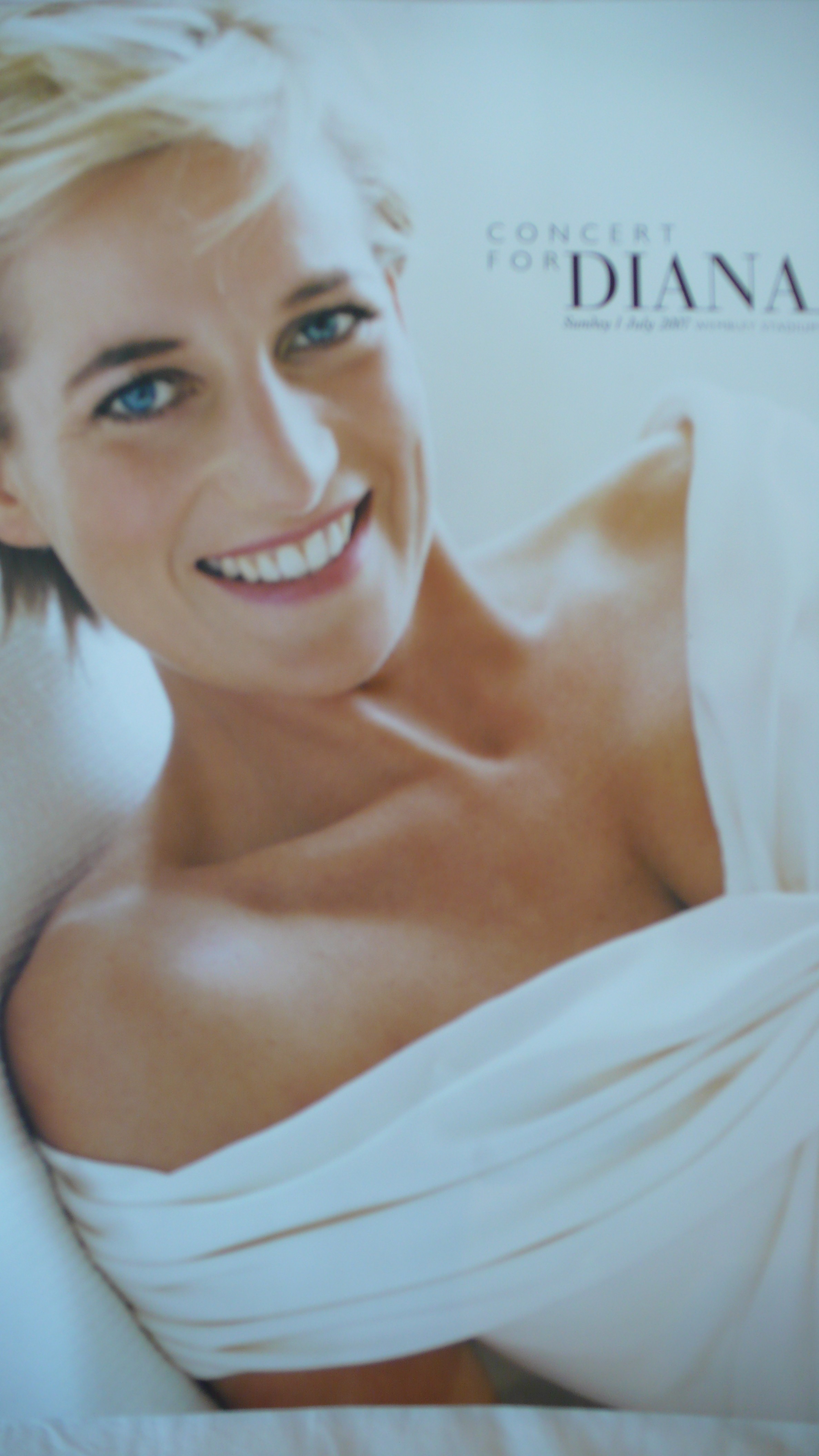
Cover of the Concert Program

We were to take the train out to the new Wembley Stadium, quite the architectural marvel I had heard.  I was excited, more to spend some time with Devin than to see the concert. The idea that we would be watching this incredible production live and in person, while over 500 million other people around the world in 140 countries watched it live on television, gave me goose bumps.


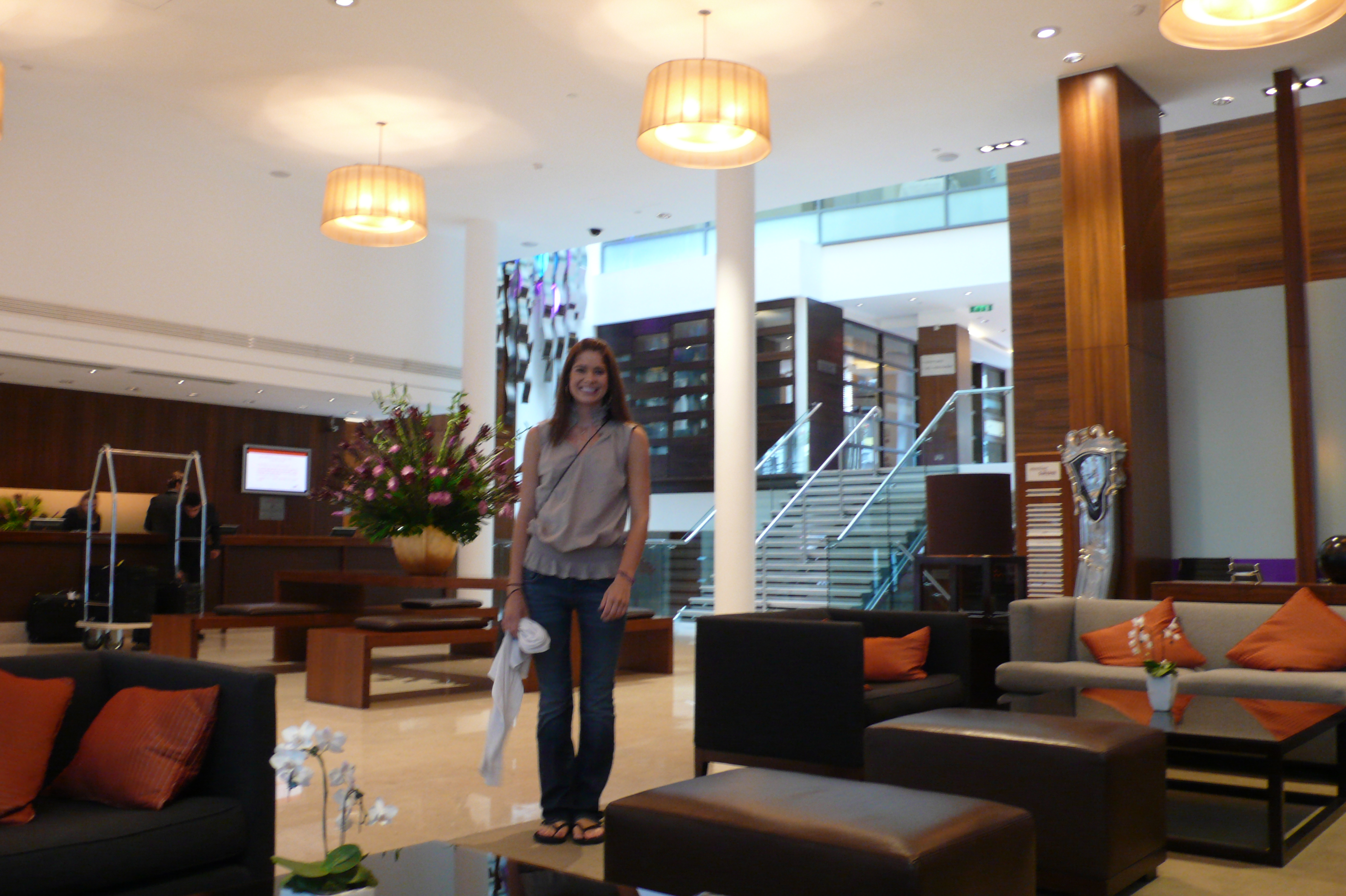
Devin Etzold in the Lobby of the Crowne Plaza Hotel-The City


Garland Rogers ready for a concert!

Getting a chance to finally spend some time with Devin, finding out about her adventure through Europe and what her group had seen since they had been in London, was wonderful.  This evening’s break in both of our schedules was quality time that I cherished.  She would rejoin her group tonight when we returned from the concert, and we’d not see each other again until the morning of July 3rd, Tuesday, when her group left to return to the United States and she moved her things into my room for our two-week Father-Daughter Adventure!

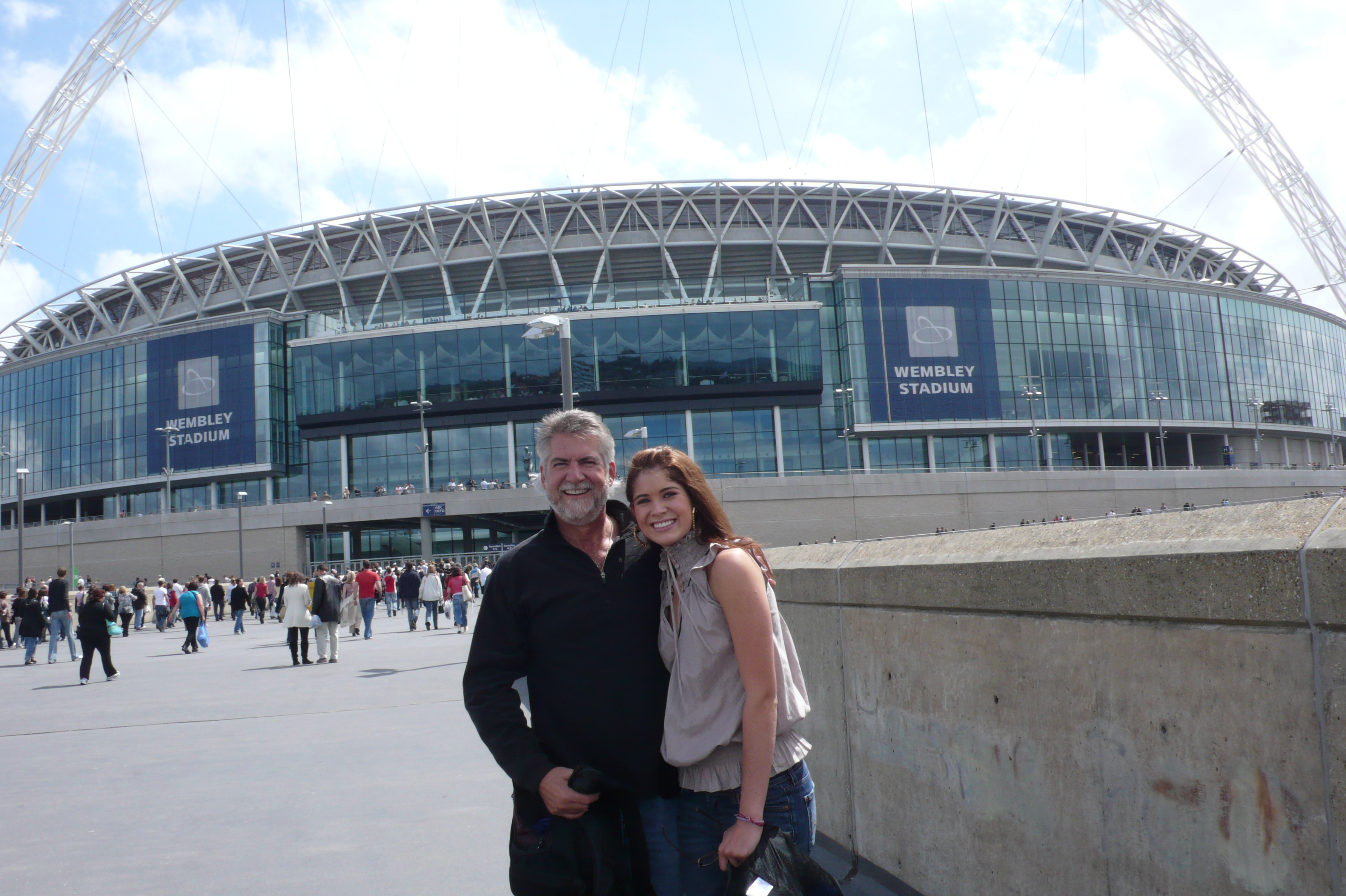
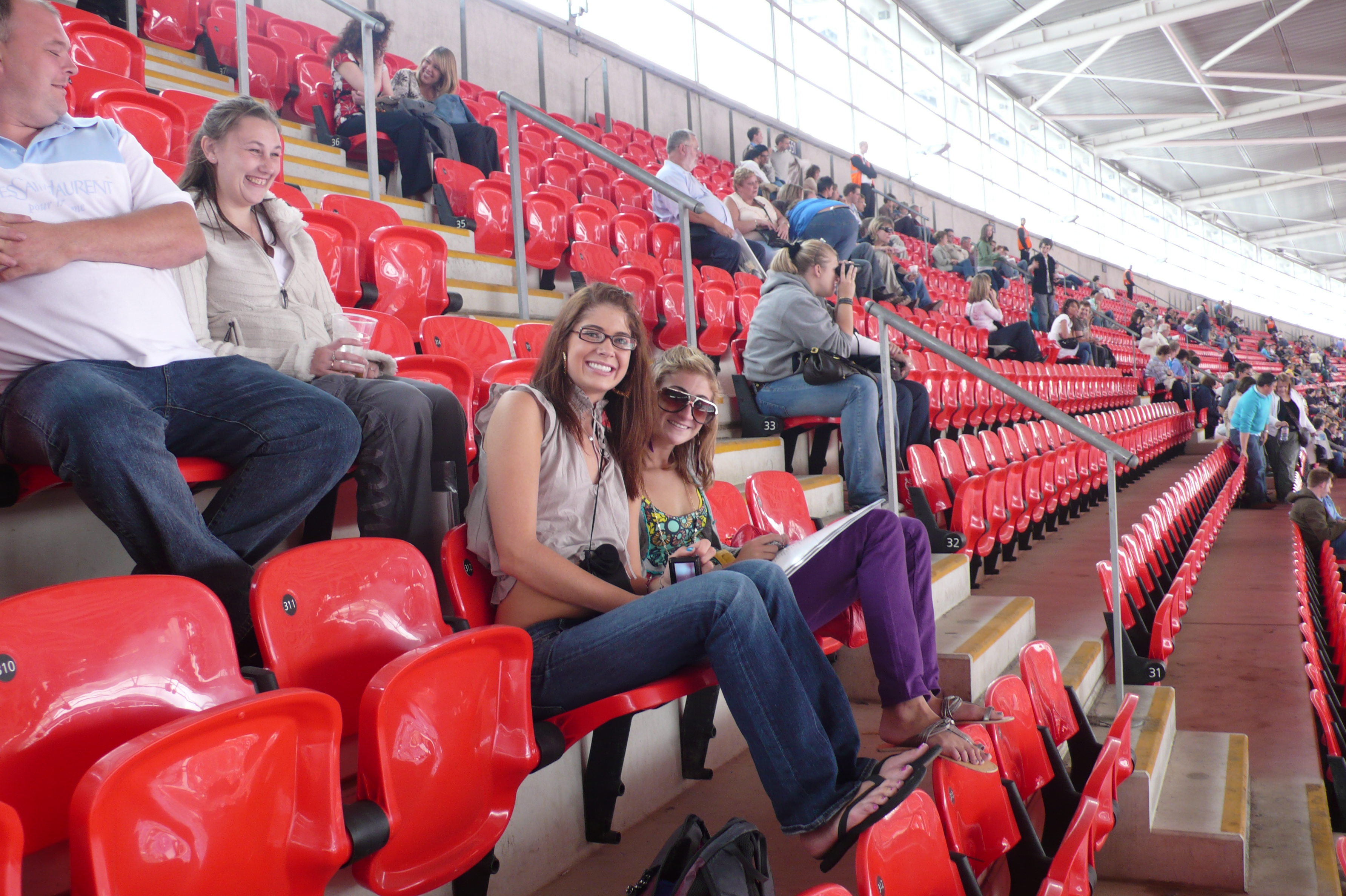
Devin and Garland at the Concert for Diana

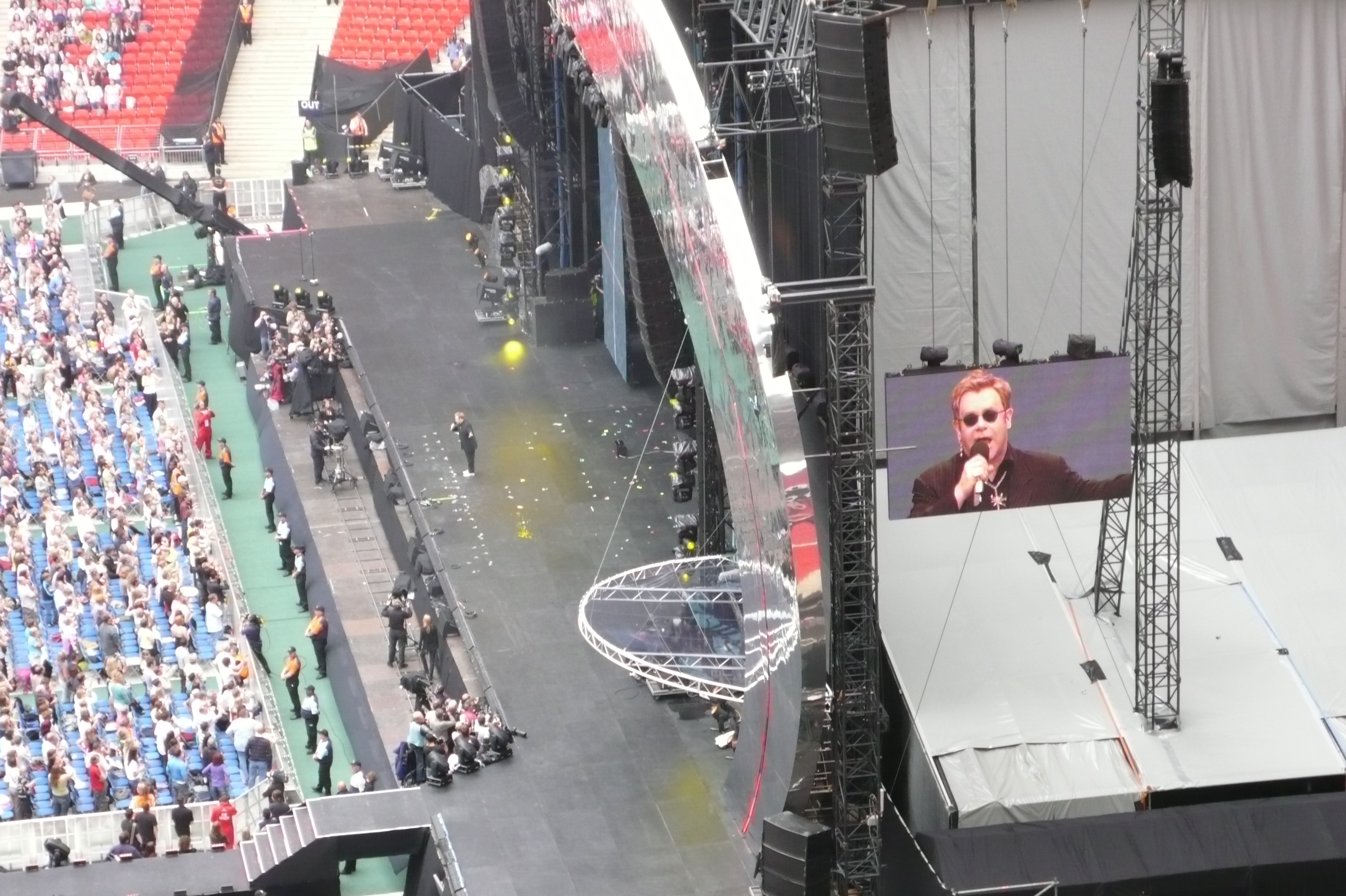
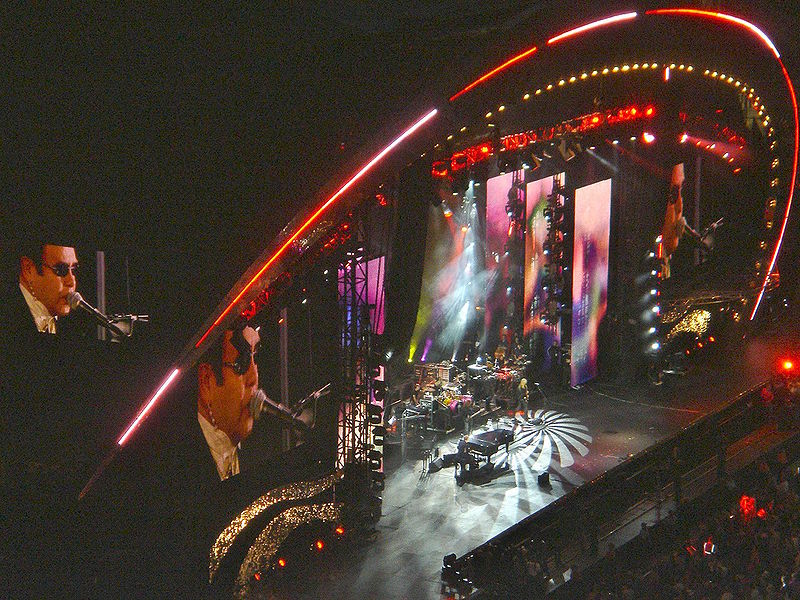
Sir Elton John's opening number

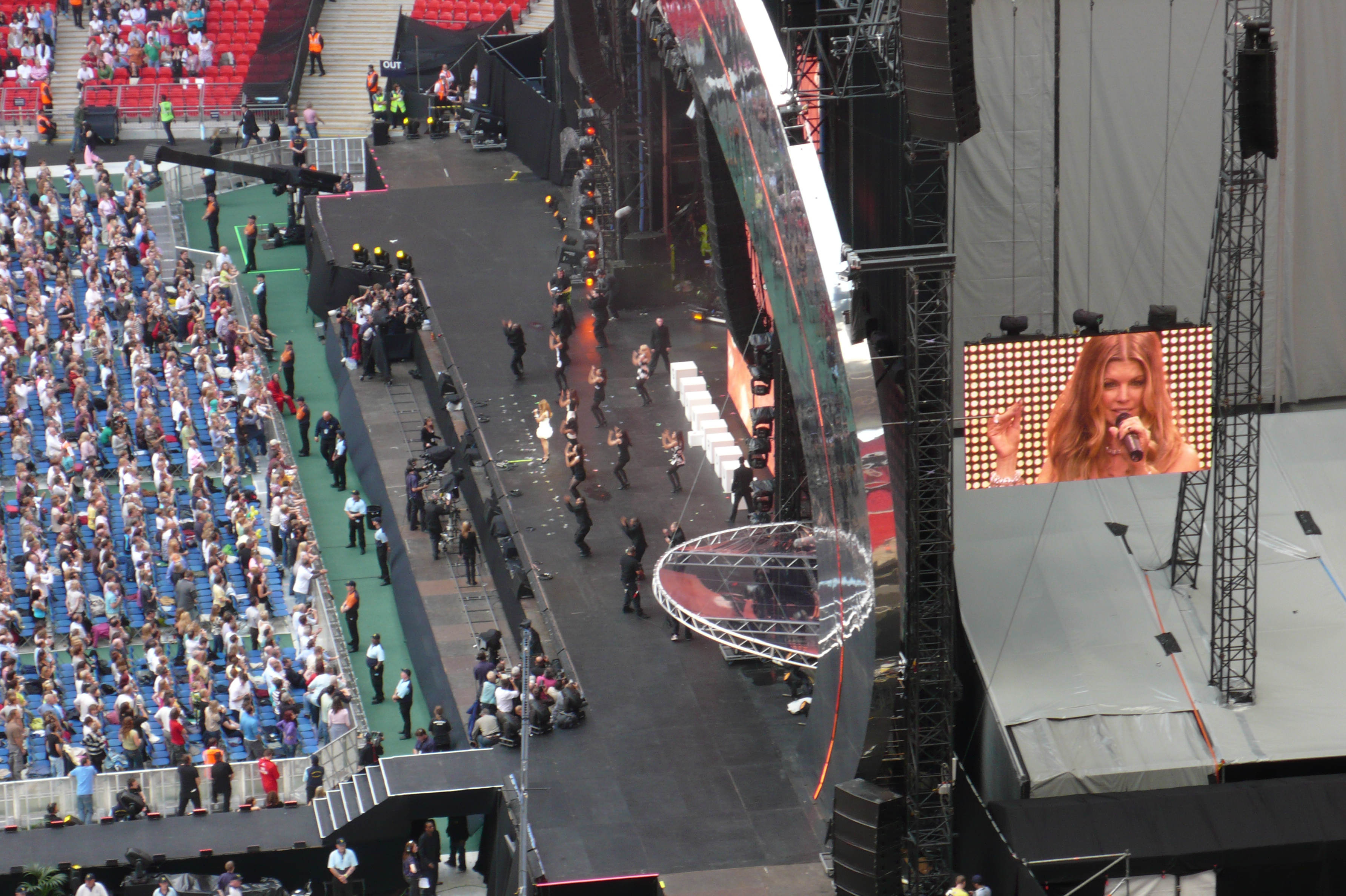
Fergie and crew rocking the stadium early in the evening

Sir Elton John delivering the final act at the Concert for Diana

Fini!


West End Tour

•September 16, 2010 • 1 Comment

WEST END, LONDON, ENGLAND June 30th – Sometimes the best laid plans are nought when Mother Nature takes her way. The longest of the www.AudioSteps.com London walking tours was of the West End, which is 4.9 miles long and has 30 point-of-interest stops. It is a grueling walk to tackle in the three or four hours as I had planned, even in good weather.  Following lunch on Saturday, after getting a bit of rest from the morning’s walking tour of the Tower and City, I head out into what became a very rainy afternoon’s exploration of the West End of London. I must emphasize that, when I say rain, I don’t mean a light drizzle such as we get in West Texas, I mean that steady drum of heavy drops and slashing wind that washes London so frequently. This is the land of rain gear: umbrellas, rubbers and oil skins! Though the record of this part of the tour might be abbreviated due to quality and quantity of photographs, a direct impact of the heavy weather, the excitement of the adventure was no less diminished.

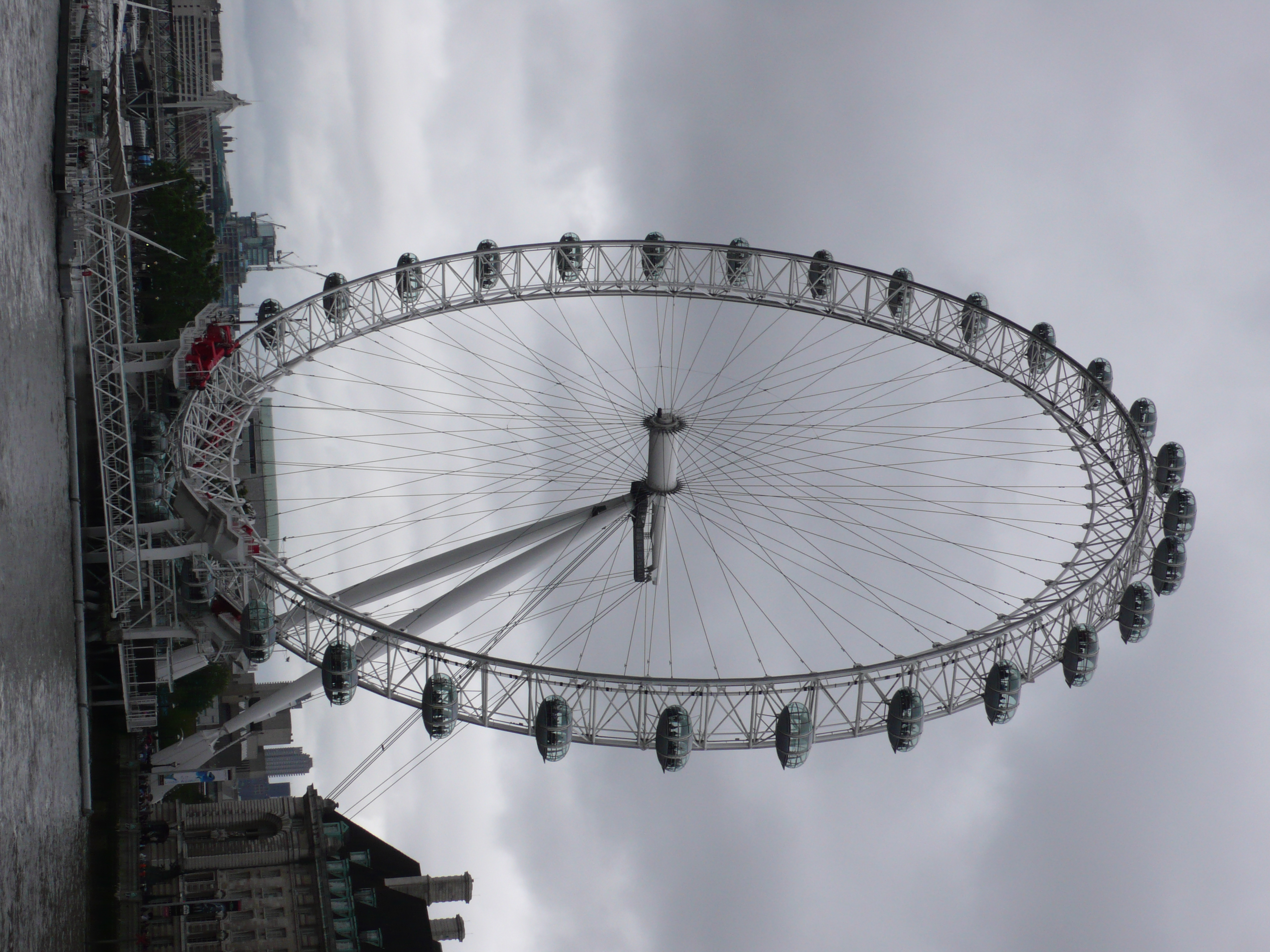
Millennium Wheel, also called "The London Eye"

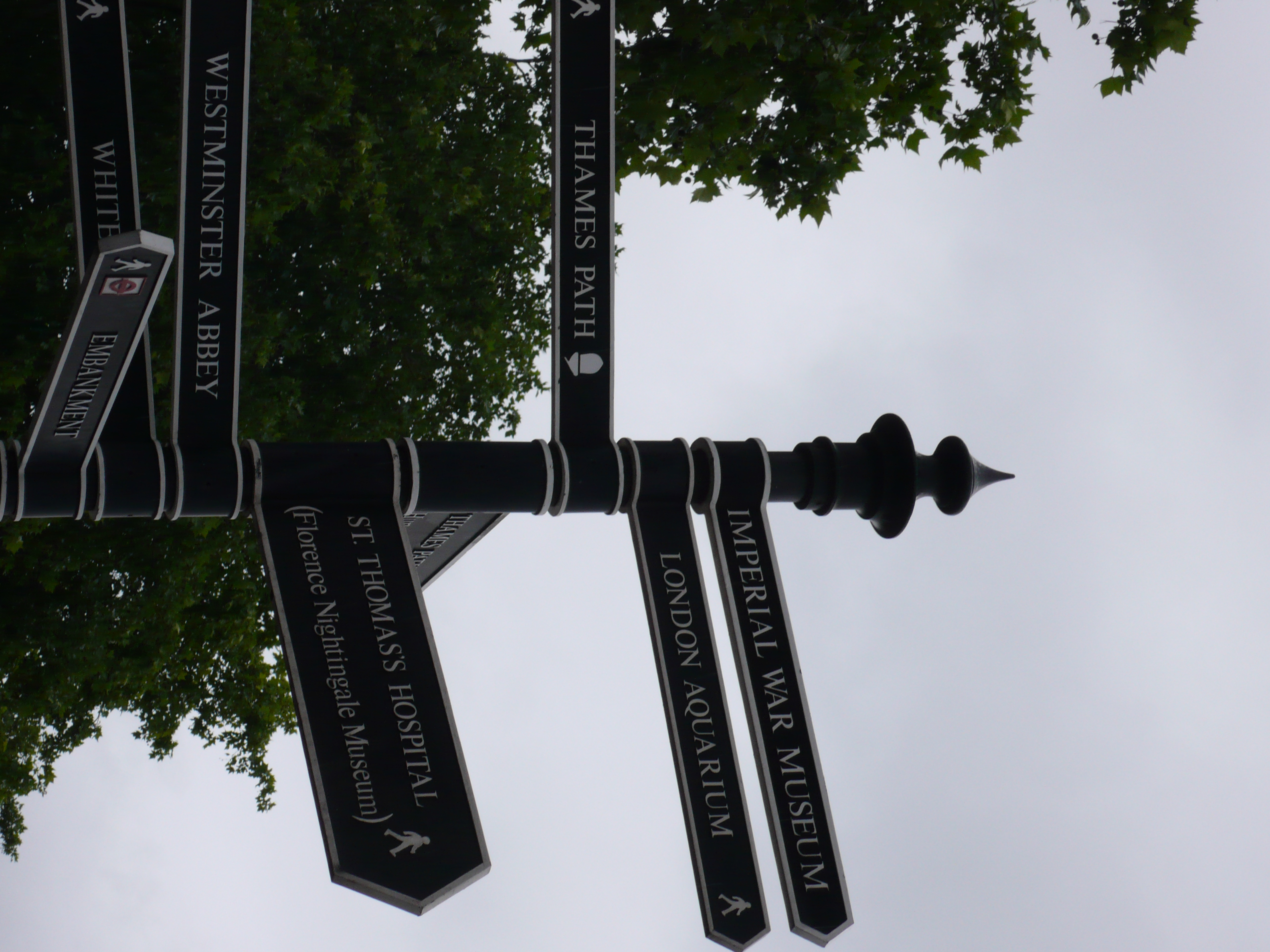
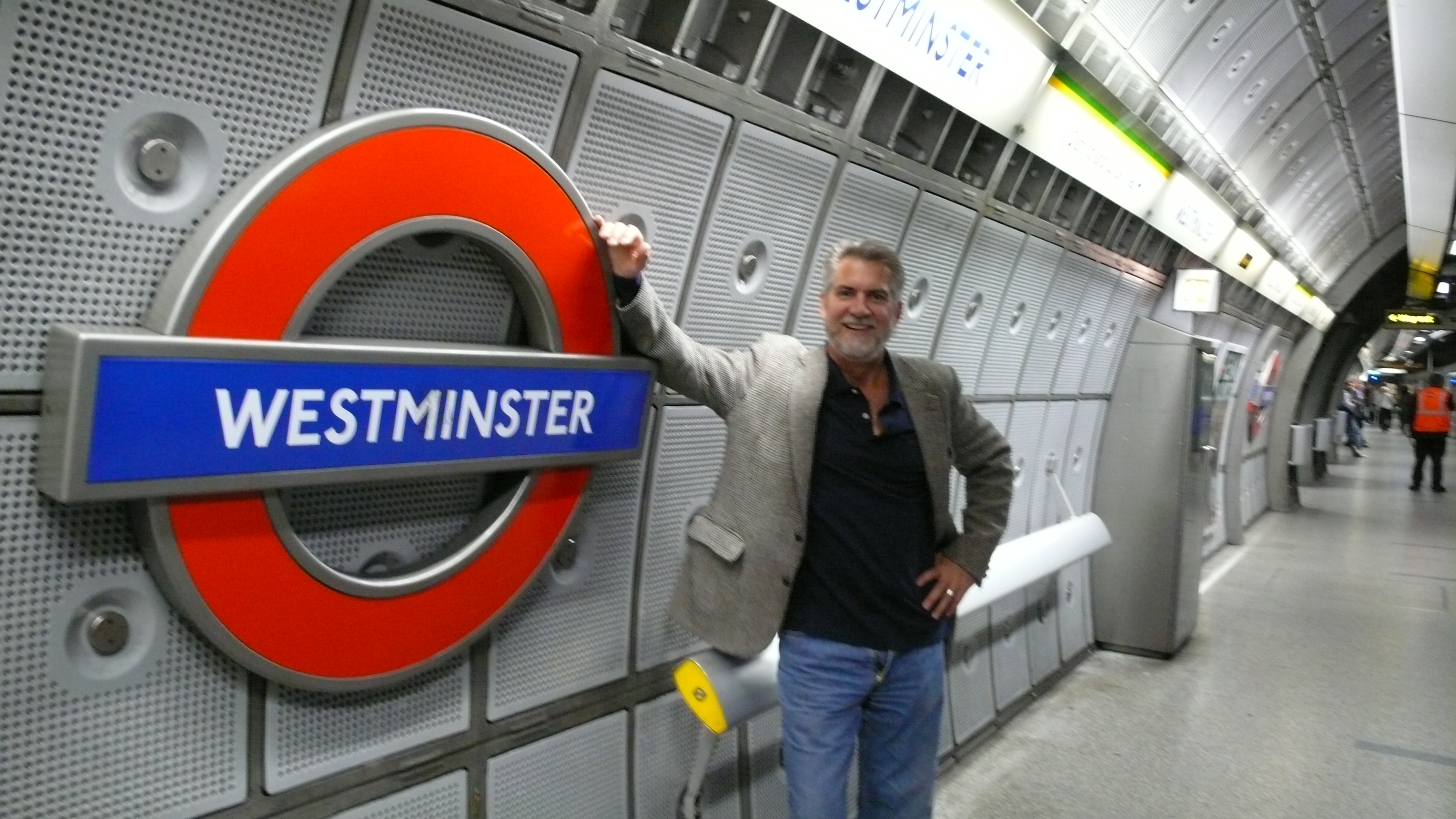
The tour begins at the Westminster Tube Station (Exit 4) on the Embankment at Bridge Street. The huge ferris wheel built for the Millennium Celebration dominates the riverscape. It was opened in March 2000, originally called “The Millennium Wheel“, and was sponsored and partially funded by British Airways.  The project was the vision of David Marks and Julia Barfield, a husband and wife architect team. The wheel design was used as a metaphor for the end of the 20th century, and time turning into the new millennium. Since then, it has morphed into “The London Eye” and is the United Kingdom’s most popular paid visitor attraction with some 3.5 million riders per year. Thirty-two pods, each weighing some 20,000 pounds hold approximately 25 passengers each and travel at a pace of 26 centimeters per second, allowing passengers to step on and off without the wheel stopping on the 30-minute ride. I have to admit, I was never inclined to wait in the long lines and put up with the crush of passengers in each of the bus-sized pods on the huge wheel!

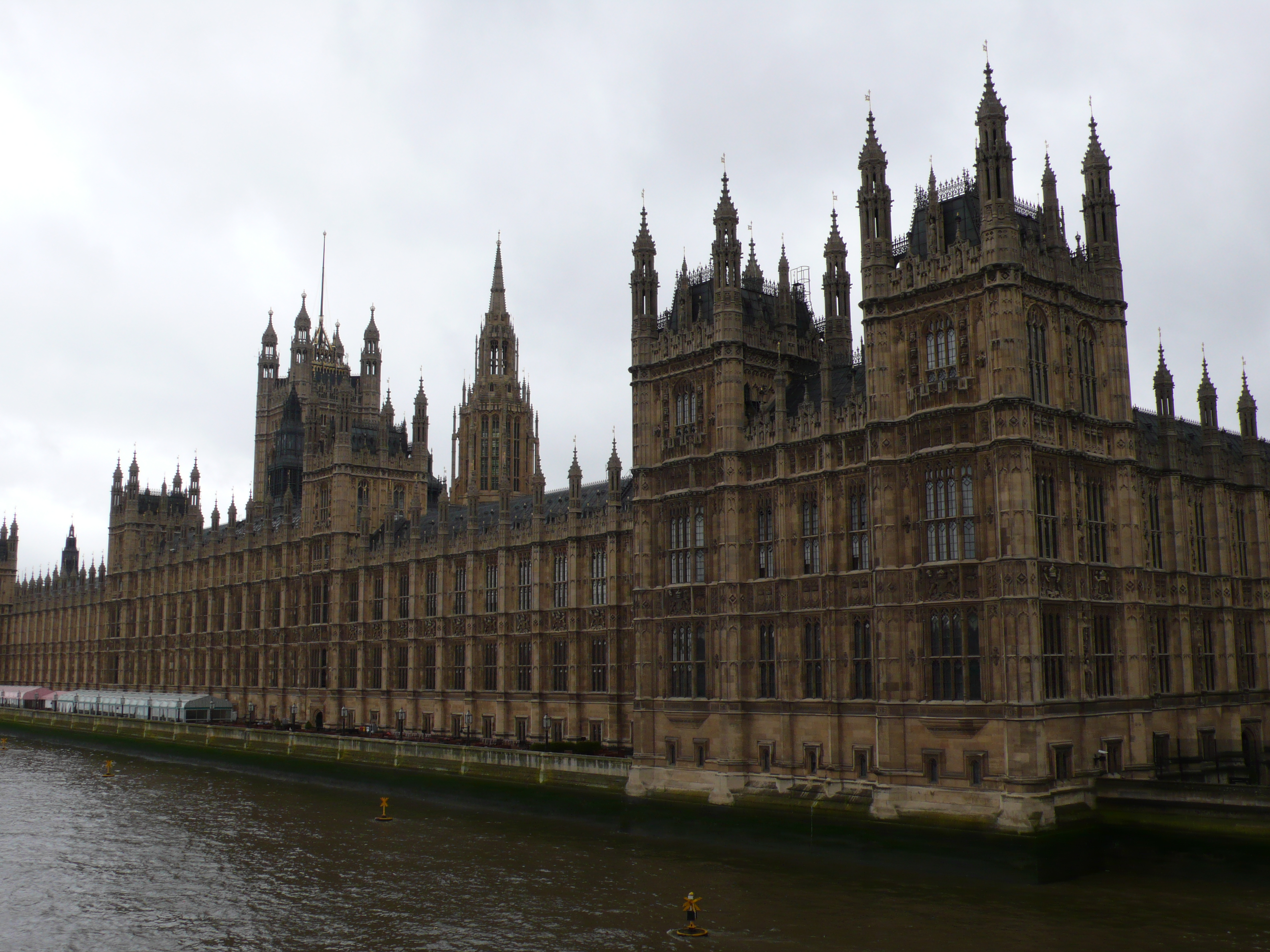
The Houses of Parliament on the banks of the Thames

Click to see a map of this walking tour:  London-West End Walking Tour Map

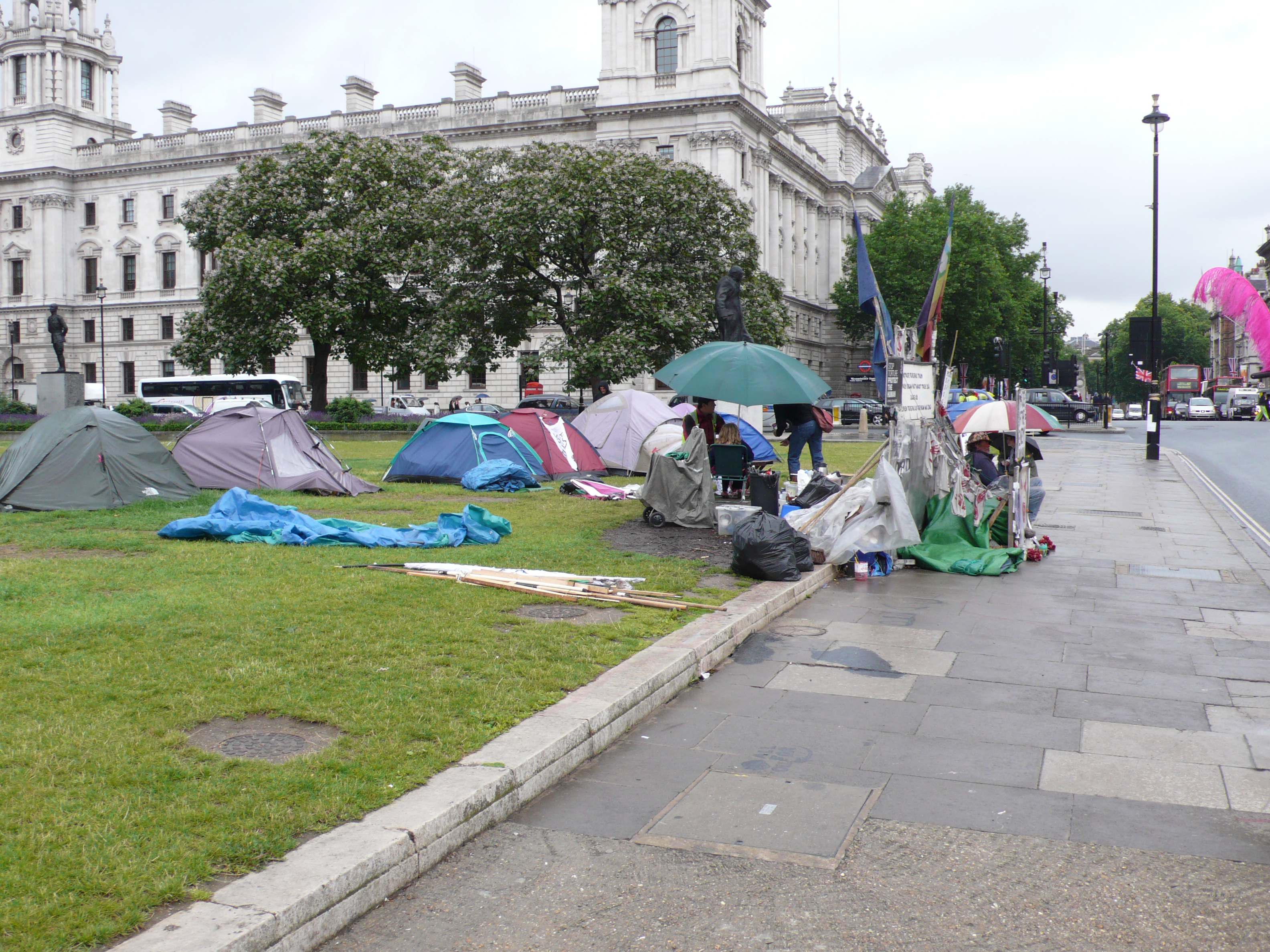
Right off the bat, a real surprise: At the very beginning of the walking tour, we find Brian William Haw (born 1949) who is an English protestor famous for living in a “war protest peace camp” in London’s Parliament Square. Although he had begun his protest before the September 11th 2001 terrorist attacks on the United States, Haw became a symbol of the general anti-war protest movement over the policies of both Britain and the United States in Afghanistan and later in Iraq. He was voted “Most Inspiring Political Figure” at the 2007 Channel 4 Political Awards (London).  On June 2nd 2001, he began his quiet, peaceful one-man political protest. Now, he is often joined by other volunteers. By his own account, he was first inspired to take up his vigil after seeing the images and information produced in England by the Mariam Appeal, an anti-sanctions campaign. Haw justifies his protest on a need to improve his children’s future. He only leaves his makeshift campsite in order to attend court hearings, surviving on food and donations brought by supporters.

Brian Haw's War Protest Camp in Parliament Square

The juxtaposition of the statues of both Churchill and Cromwell with the peace protesters camped at their feet in front of Parliament was an ironic image.  I gave them some spare change out of some spark of empathy from the days of my youth.  Churchill’s scowl, looking down on the motley crew huddled in the rain, couldn’t have seemed more appropriate!

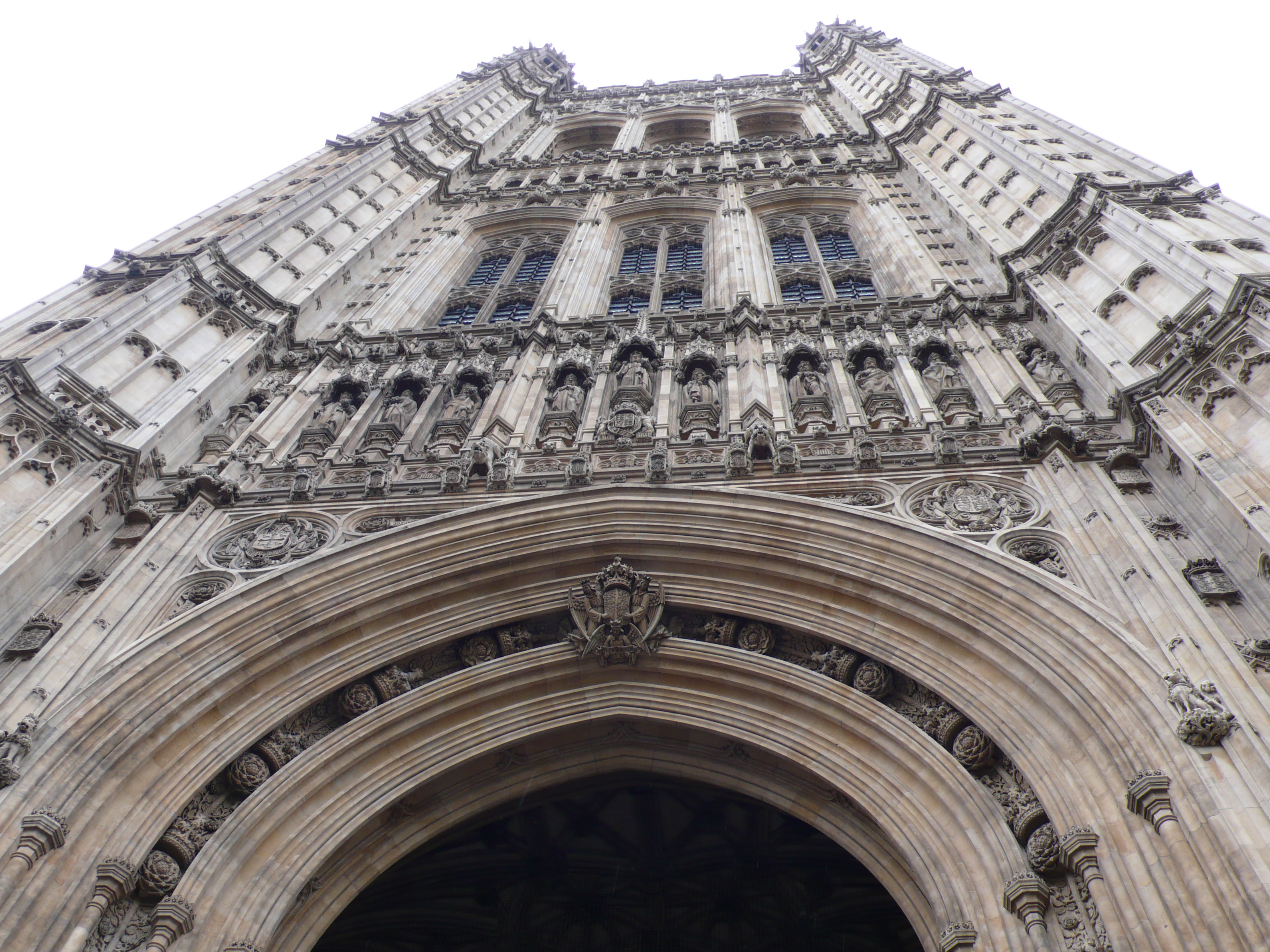
Sovereign's Entrance to Parliament

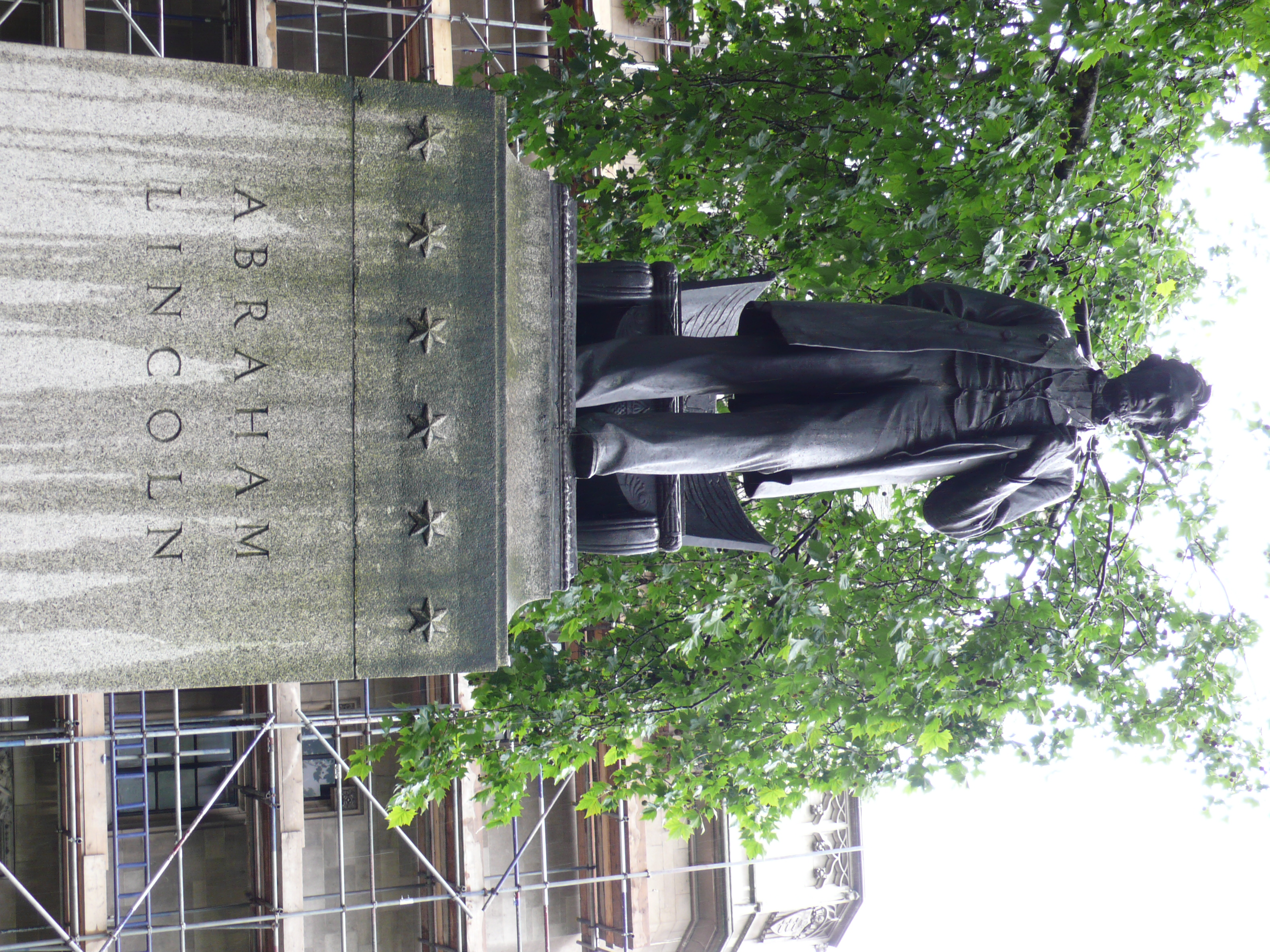
Abraham Lincoln shares a spot near Parliament Square

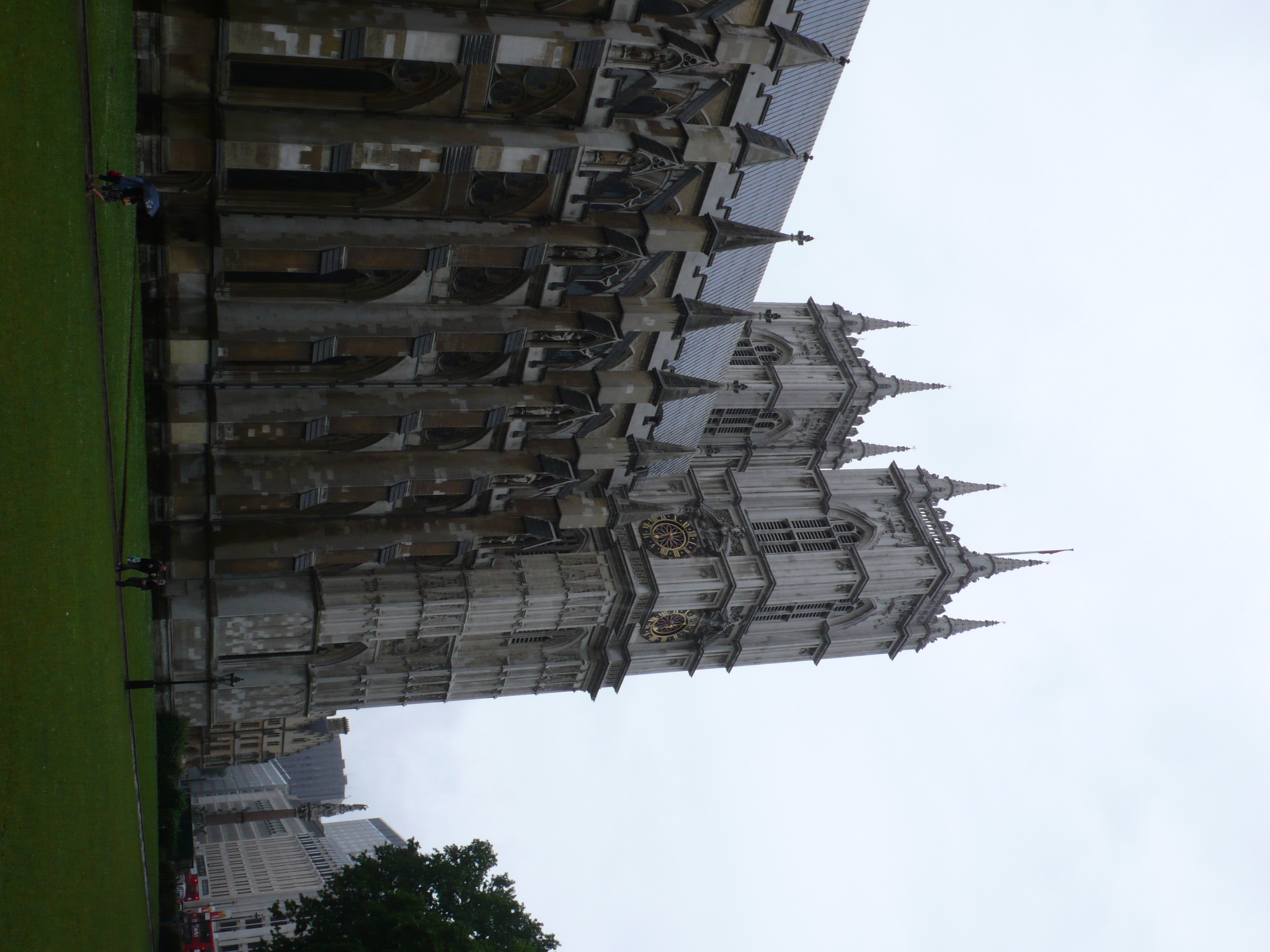
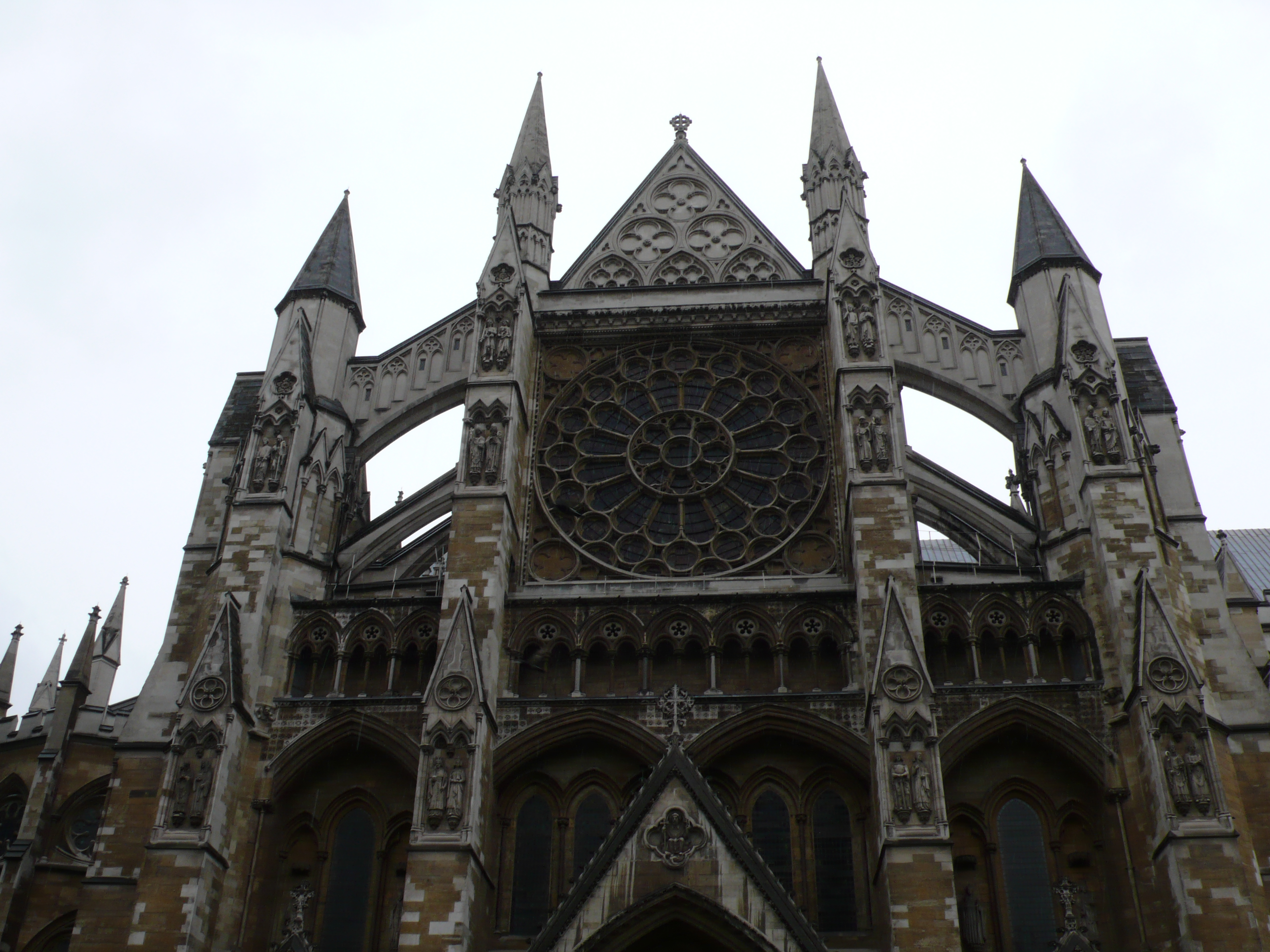
Westminster Abbey in the mist and rain

Westminster Abbey is one of the great benchmark sights in London. Built at the site of an ancient monastery by King Edward the Confessor (last king from the House of Wessex, who ruled from 1042-1066) and dedicated to the memory of Saint Peter the Apostle, the correct title of this famous abbey is “The Collegiate Church of St. Peter in Westminster“. This is the “West-minster”, in contrast with the “East-minster” which is St. Paul’s Cathedral. It is peculiar in that it is a place of worship under the direct control of the monarch, and operates without the supervision of a Bishop. The original abbey was consecrated 28 December 1065, just in time for the Norman invader William the Conqueror to be crowned there in 1066.  With only two exceptions, every British monarch since then has been crowned in it’s hallowed Sanctuary.  Those exceptions, Edward V (murdered in the Tower of London in 1483) and Edward VIII (who abdicated his throne in 1936), were never crowned.

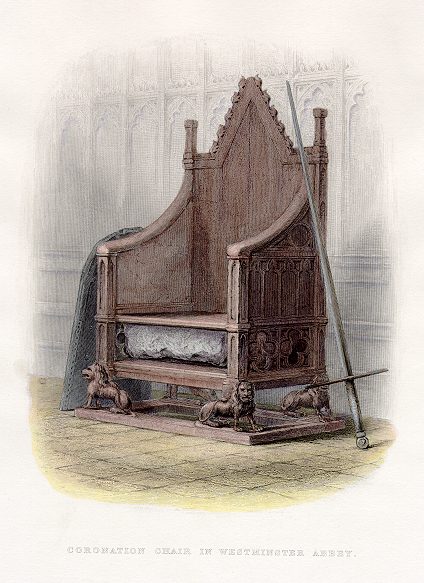
Little of Edward the Confessor’s original church remains, but in his shrine is the original “Coronation Chair”, sometimes known as St. Edwards Chair after the fact that he was England’s only canonised king. However, Edward the Confessor never sat on this chair for it was actually commissioned by King Edward I in 1296, long after the Saint King’s death. The less confusing, and more common name is “King Edward’s Chair”, which would actually cover the connection to both monarchs. The seven hundred year old carved oak chair was designed to hold the historic Coronation Stone of Scotland, known as the “Stone of Scone“, after it was captured and brought to London by King Edward I. Though the stone was returned to it resting place in 1996 – Scone Abbey near Perth, Scotland – it is brought from Scotland and still used in British coronation ceremonies.

Coronation Chair and the Stone of Scone c. 1855

Much of what we see today was built in the Gothic style from the 13th to the 16th Centuries, and the Chapter House inside looks almost exactly as it did when completed in the early 13th Century. There are over 600 monuments and 3,000 people buried inside the abbey, including Kings and Queens of England. The tomb of Geoffrey Chaucer, the first great English poet, was the inspiration for the famous “Poet’s Corner” located in the South transept of the Sanctuary.

Today would not be the day to tour Westminster Abbey, I would try to get back here tomorrow and attend Sunday services in this glorious church. For now, on with the walking tour up Parliament Street to Whitehall Place, past 10 Downing Street and the Horse Guards, to Trafalgar Square.

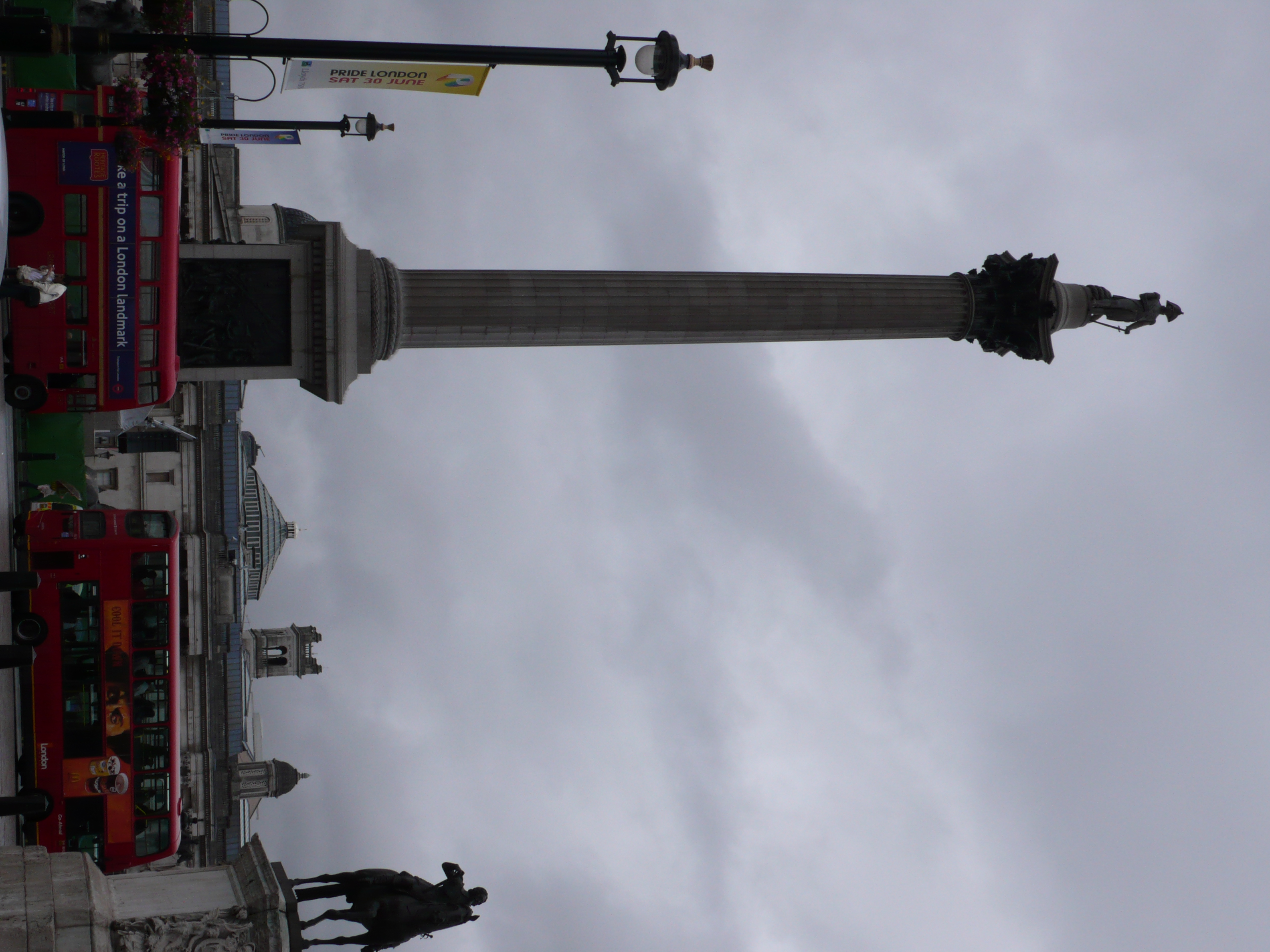
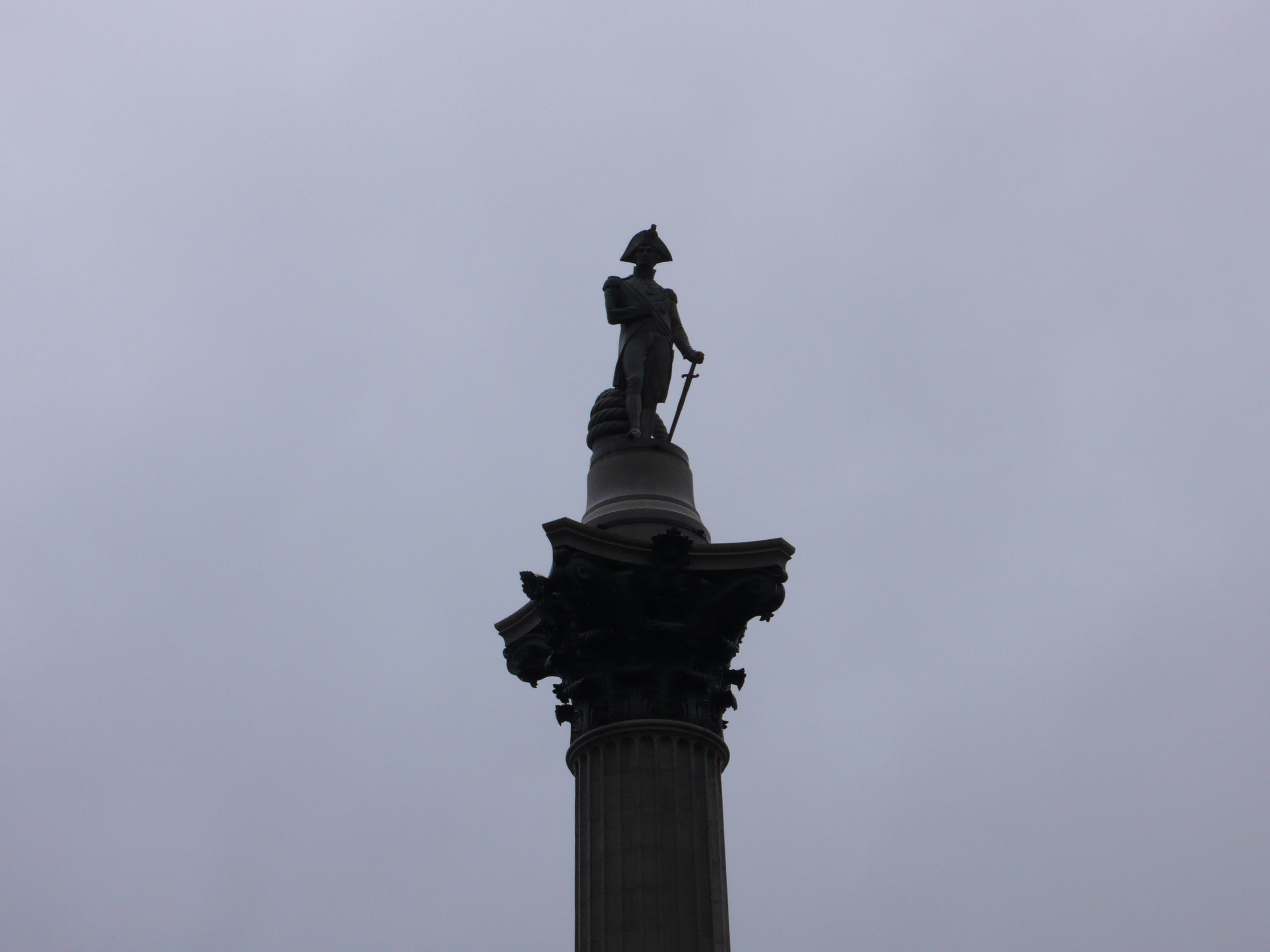
Lord Nelson Memorial in Trafalgar Square

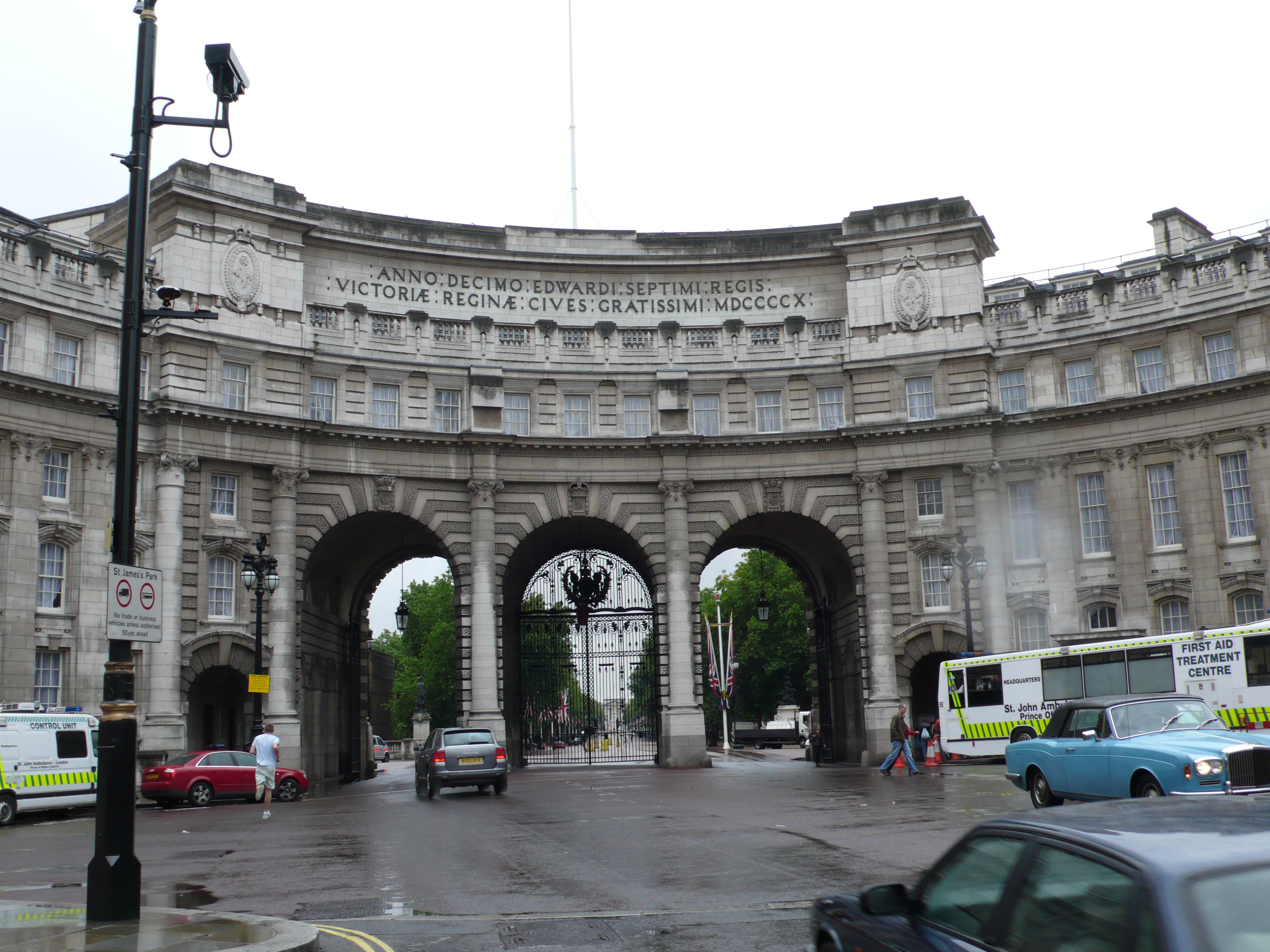
Admiralty Arch on The Mall looking west from Trafalgar Square

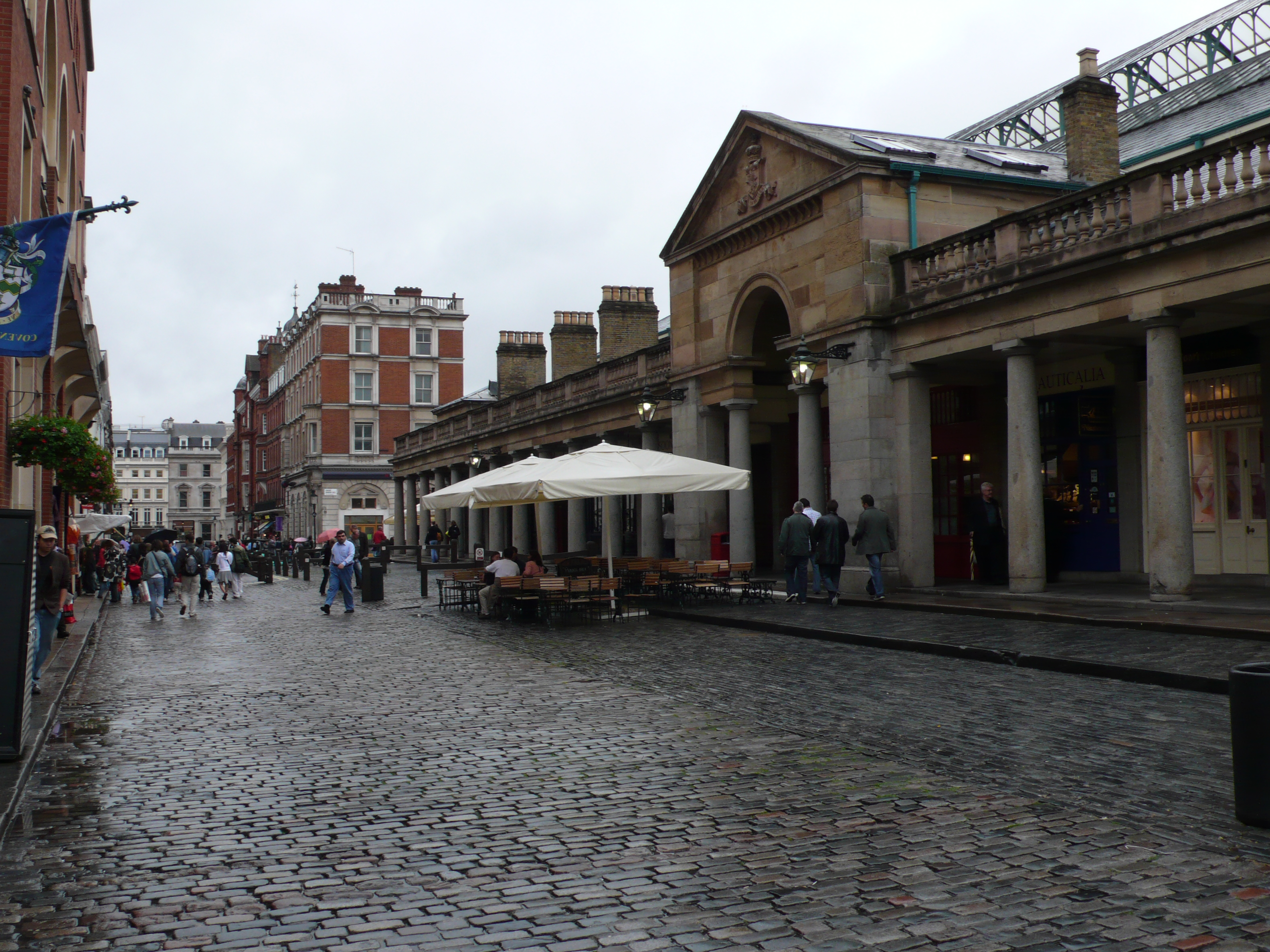
Covent Garden on a rainy afternoon

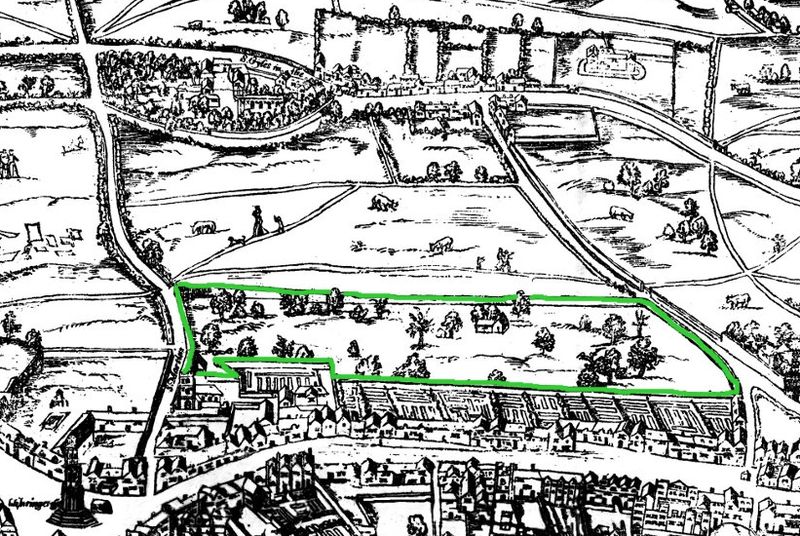
Covent Garden, on the eastern fringes of the West End, once was a real garden owned by Westminster Abbey and was originally called “Convent Garden“.  It was confiscated in 1540 by King Henry VIII, along with the rest of the Westminster Abbey Estate, when all monasteries and convents were taken by the crown.

Covent Garden 1572

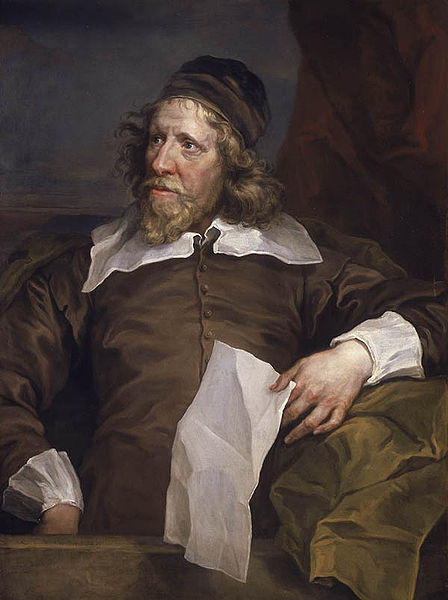
After the Reformation, the 1st Earl of Bedford acquired the Covent Garden land from King Edward VI in 1552.  Not much happened to the area, other than the construction of a manor house and gardens, until the 4th Earl of Bedford hired London’s first significant architect of the modern period, Inigo Jones (1573 – 1652), to design what is considered to be London’s first residential project developed around a central square.  The central buildings you see today were added in the mid-1800’s by architect Charles Fowler to replace the less substantial and fire-prone stalls and carts. The Bedford Family succeeded in controlling this area of London for over 350 years, from its acquisition in 1552 to its disposition in 1918 by Herbrand Russell, the 11th Duke of Bedford, for a sum in excess of £2,000,000.   The strategic location, on the east end of the West End, close to The City of London, is adjacent to or contains the Royal Opera House, Drury Lane, the Theatre Museum, the Theatre Royal and the London Transport Museum.

Inigo Jones, Architect (1573-1652)

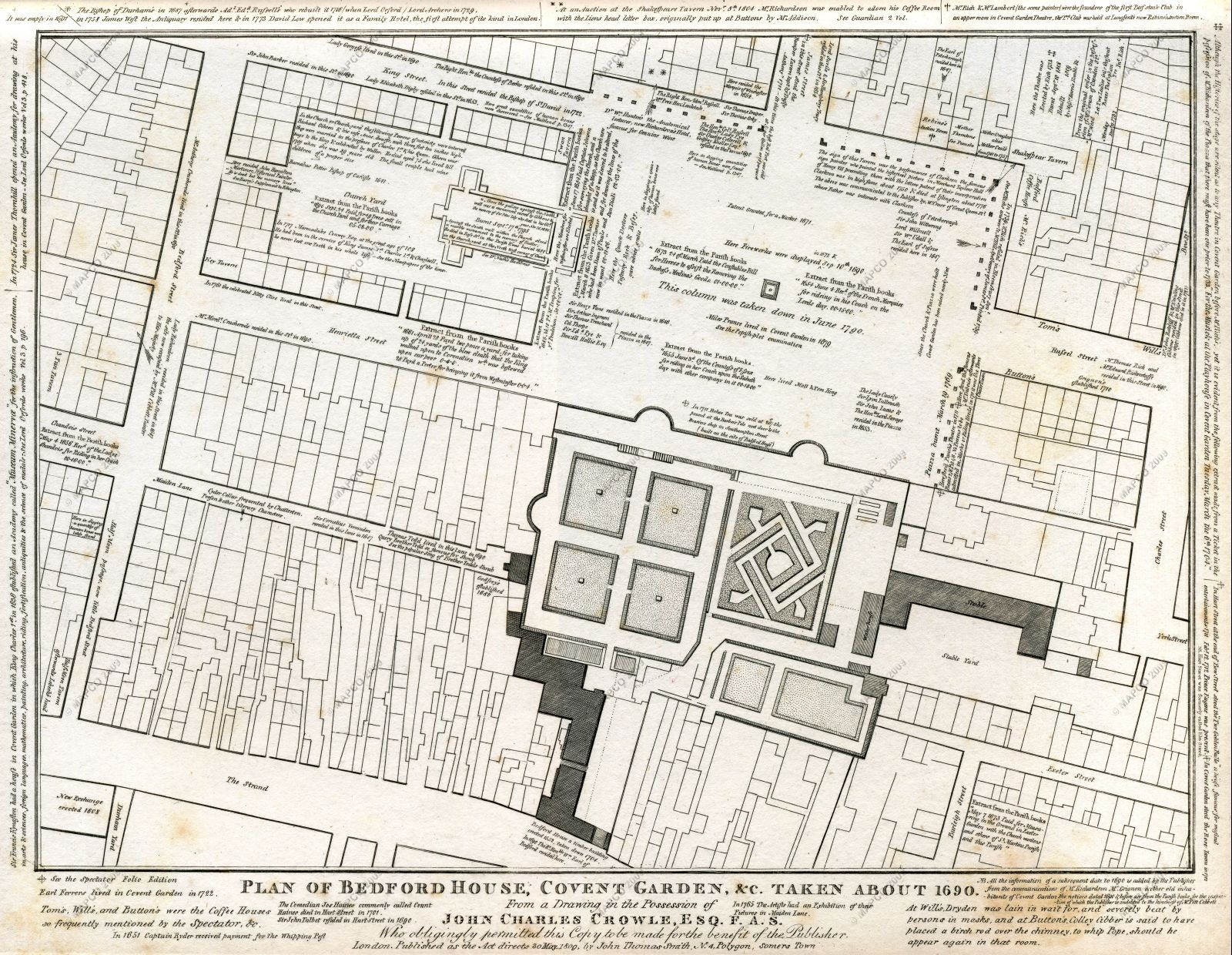
1690 Bedford House & Covent Garden Plan showing St. Paul's Church

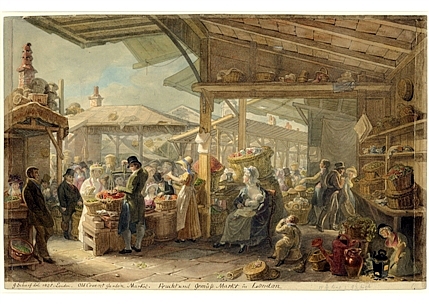
Covent Garden Market 1825

In 1631, the 4th Earl of Bedford commissioned Inigo Jones to also construct a church while his work was proceeding on the adjacent piazza at Covent Garden. It is said that, in order to save some money, the Earl instructed his architect to make the church no more remarkable than a barn. To that, Mr. Jones is said to have replied to his benefactor, “Well, then, you shall have the handsomest barn in England!” So began St. Paul’s Church in Covent Garden.

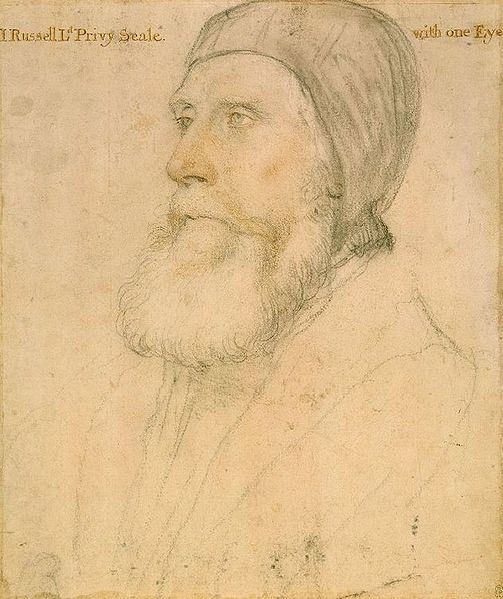
John Russell, 1st Earl of Bedford

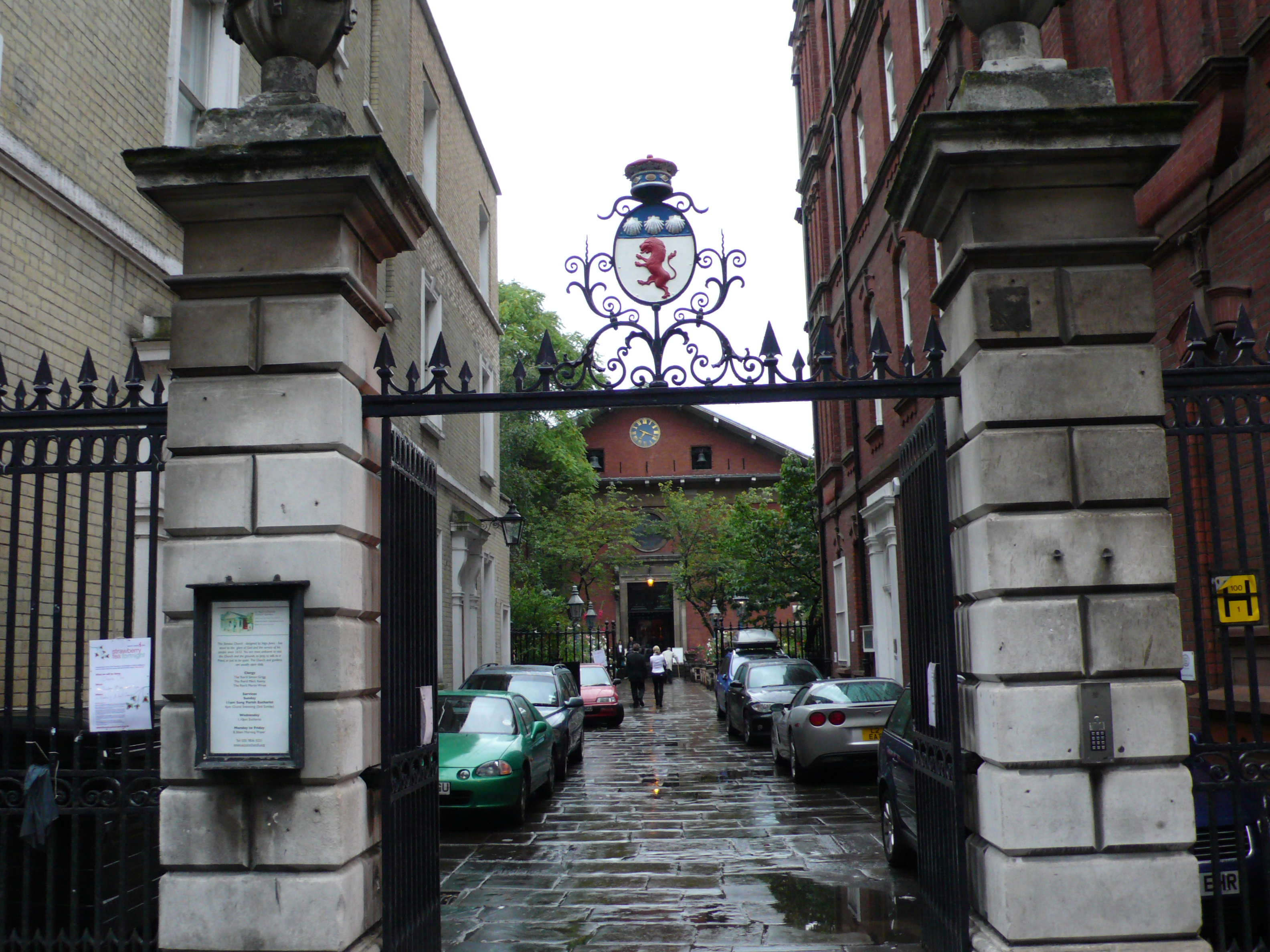
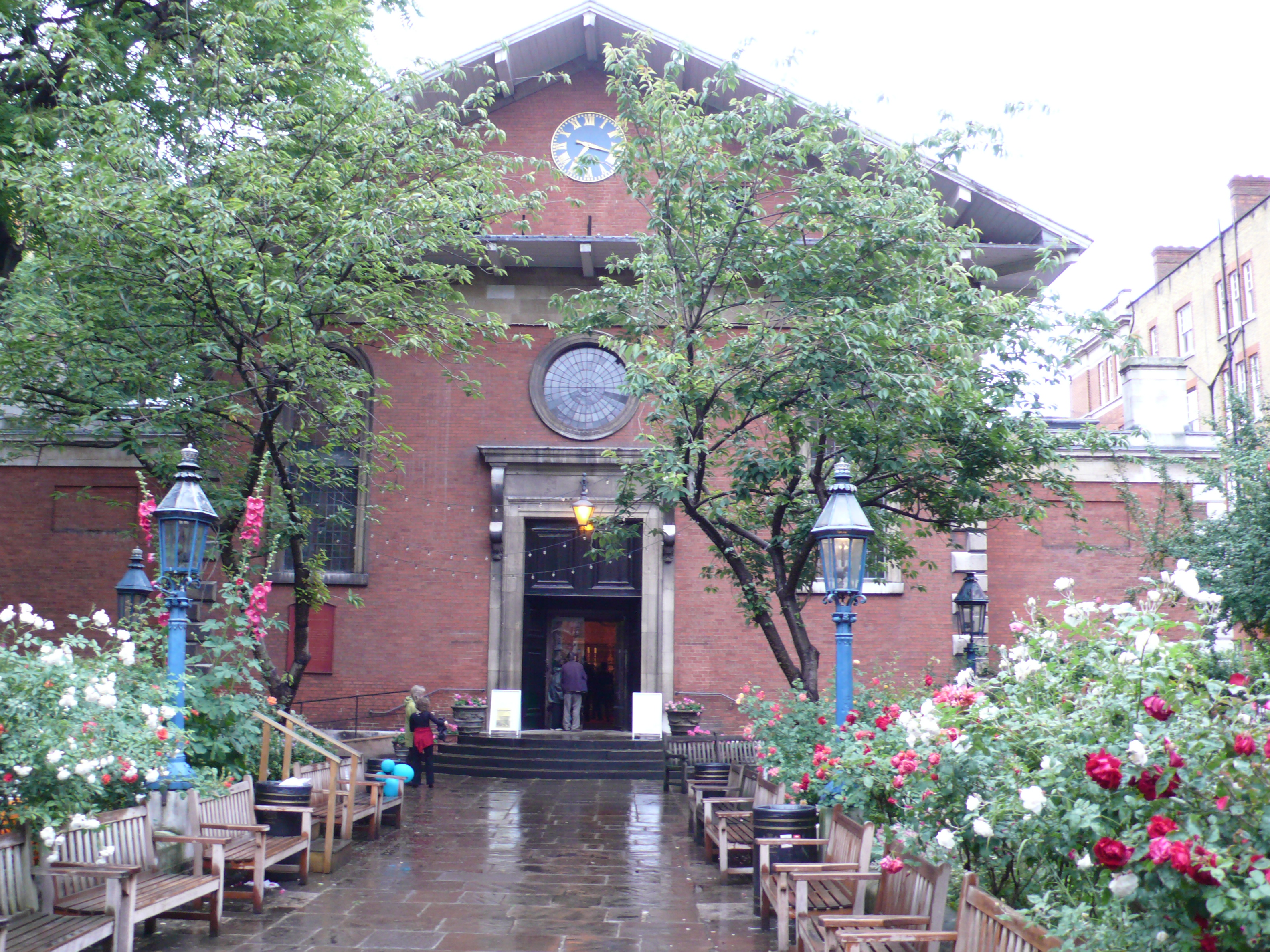
St. Paul’s Church off King street (not to be confused with St. Paul’s Cathedral) came to be known as “The Actors’ Church“, serving the needs of the new neighborhood developed by the Earl of Bedford on this 16th Century real estate land play.  In keeping with its theatre tradition, Professor Higgins meets Liza Doolittle here in the play “My Fair Lady”, and several notable actors are remembered within its walls: Boris Karloff, Vivien Leigh, and Charlie Chaplin, among others.  The gardens host an annual Mayfair and Puppet Festival, harking to the story of Samuel Pepys seeing a Punch & Judy puppet show here in 1662.

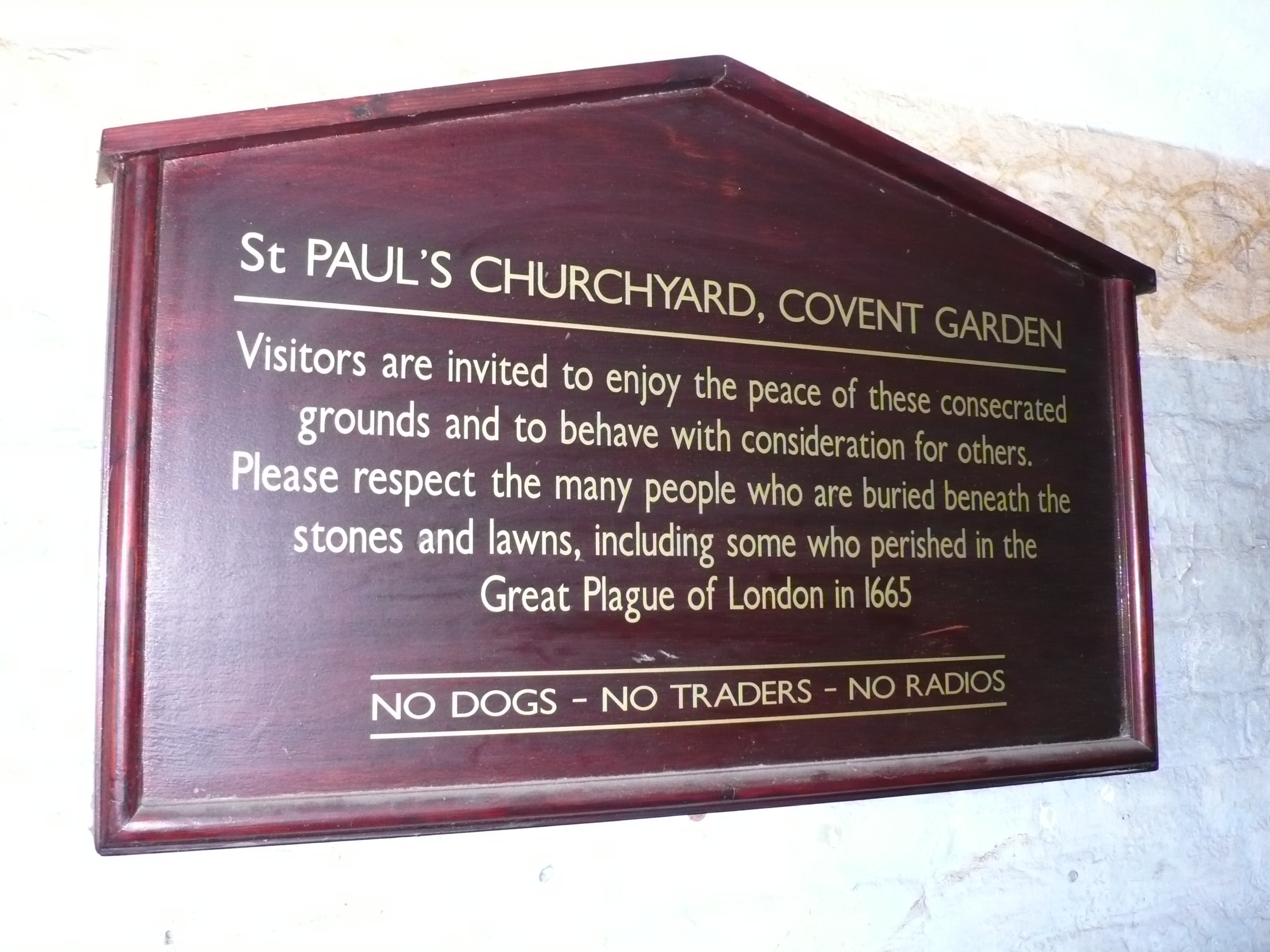
St. Paul's Churchyard, Covent Garden

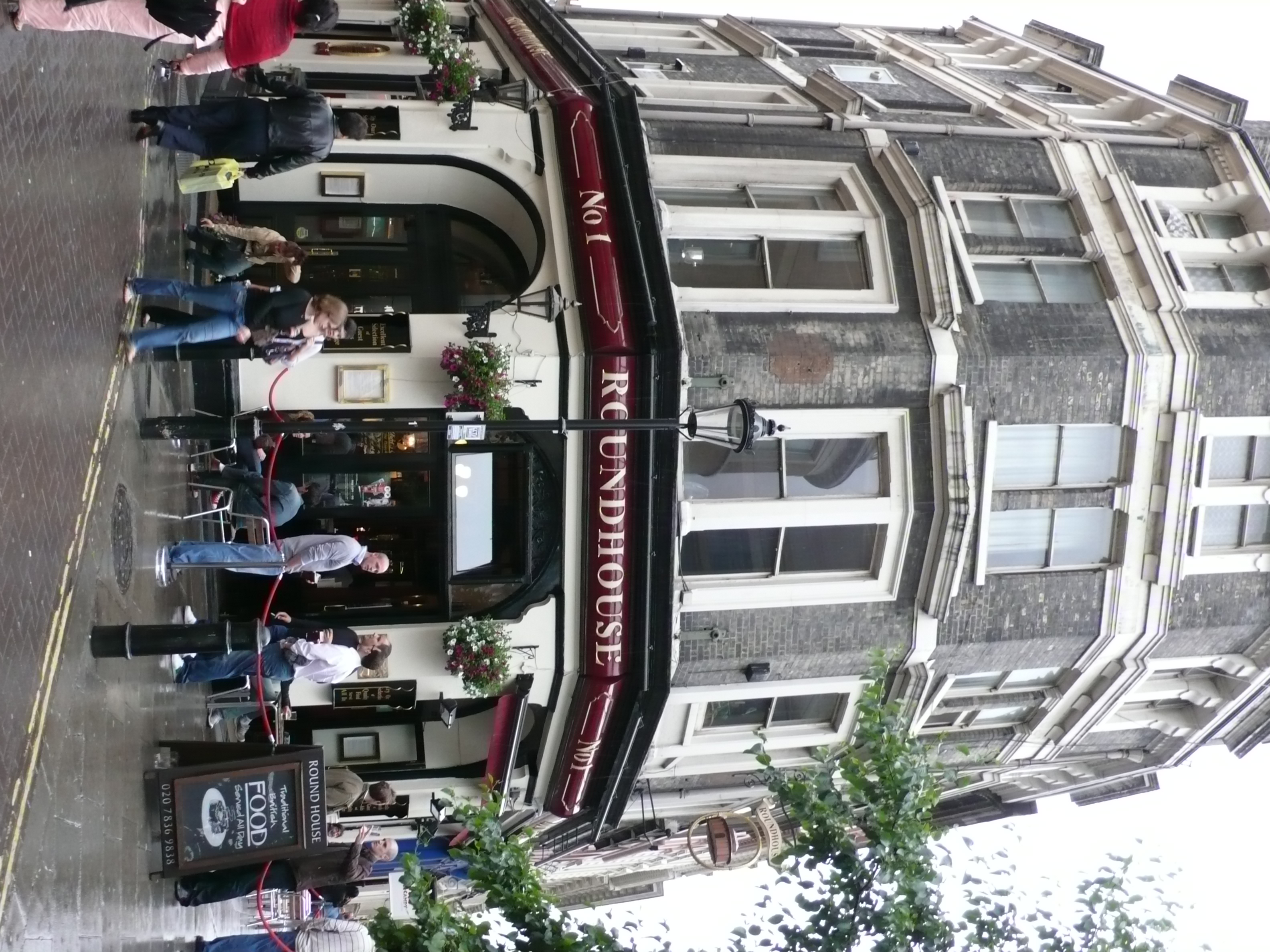
A stop for a pint at 1 Garrick Street, "The Roundhouse" near Leicester Square

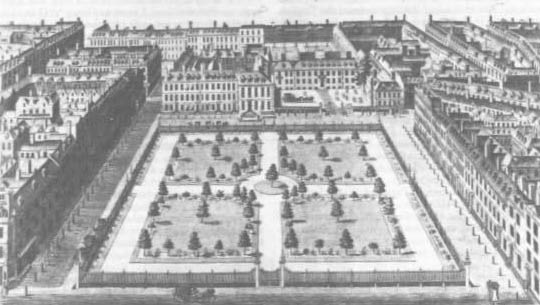
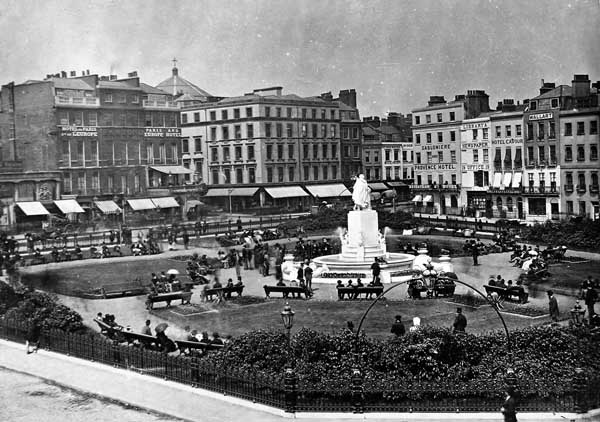
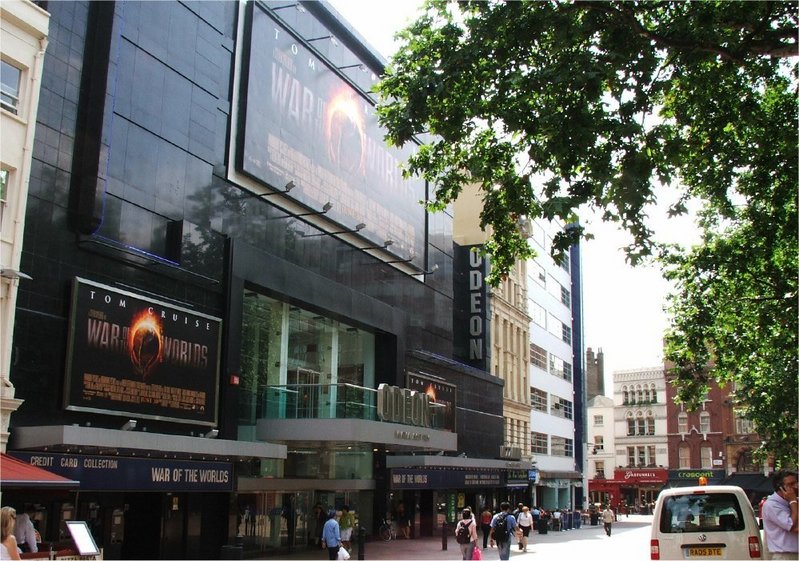
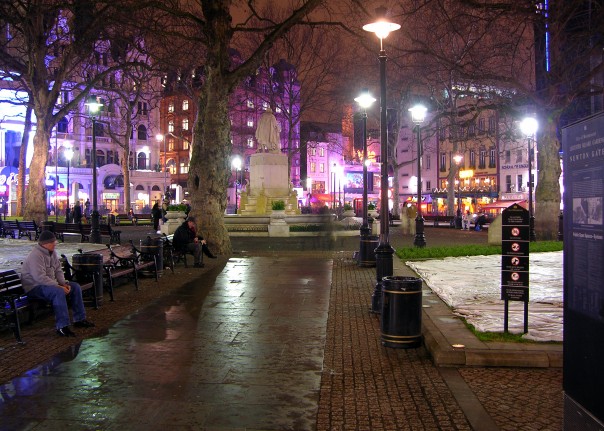
About a quarter mile west of Covent Garden is Leicester Square, which got its name from the adjacent mansion owned by the Earl of Leicester. Built after the Great Fire of 1666, this public square is now home to the Empire and Odeon Theaters, venues for major cinema premier events. It is a pleasant and popular place to visit and rest in the middle of this huge urban landscape.

A live interactive webcam showing scenes from Leicester Square is available at the following link:

http://www.radissonedwardian.co.uk/leicester-sq-webcam-large.html

Leicester Square c. 1750

Leicester Square c. 1880

Odeon Cinema

Leicester Square at night

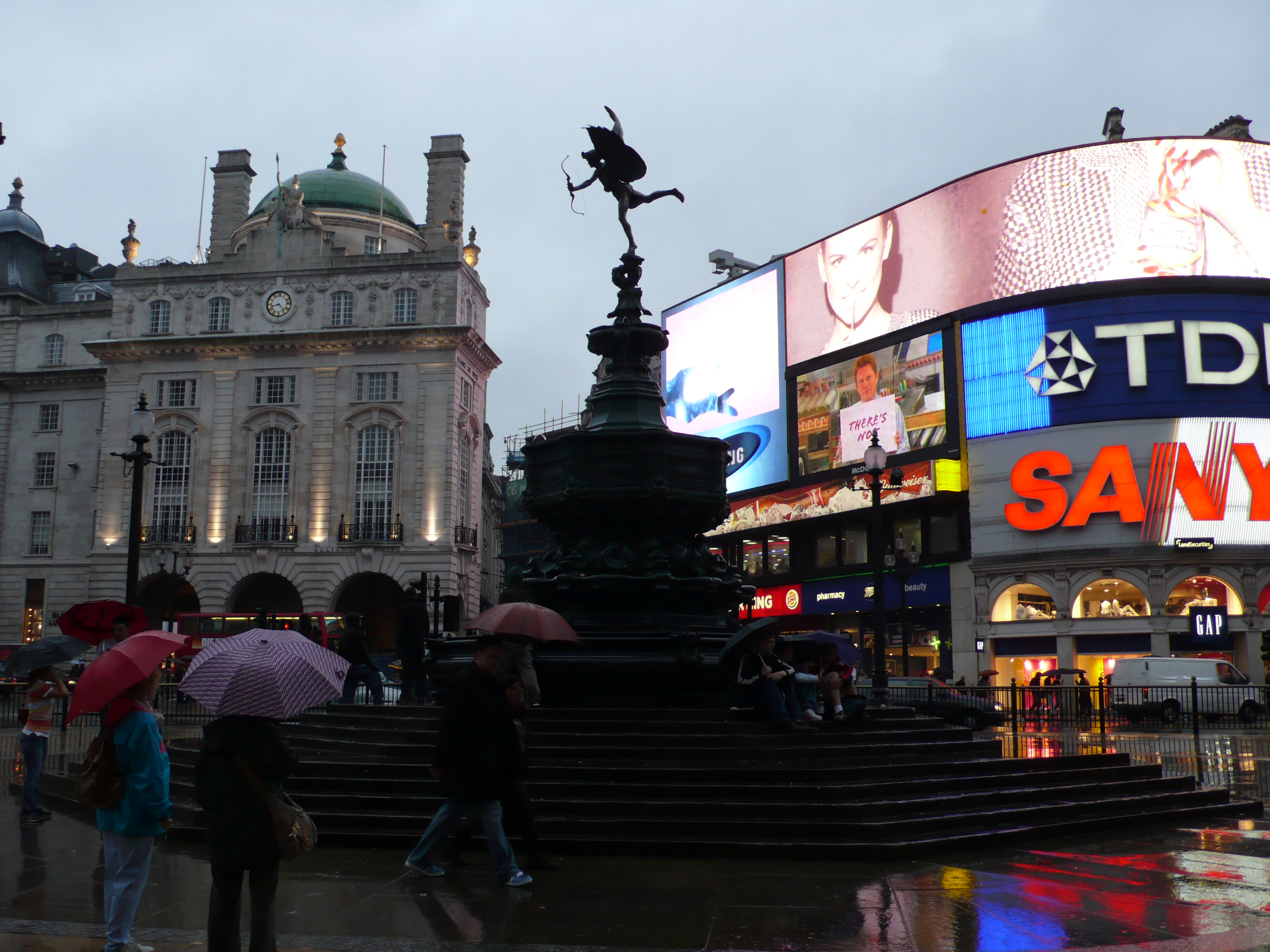
Marked by the iconic statue located in the middle of the fountain, which is said to be the first aluminum statue in the world, Piccadilly Circus got its name from an Elizabethan tailor, Robert Baker, who made and sold shirt collars called “piccadills” nearby.  He bought land near here and his house came to be known as Piccadill Hall.

The famous statue is actually not of Eros, as it is commonly described, it was a memorial designed to honor the Seventh Earl of Shaftsbury and the statue actually depicts “The Angel of Christian Charity”, to recognize the charitable work of the Earl.  “Eros” was spirited away from its original location in the center of the circus during World War II for safekeeping and, when returned, was relocated to the side of the circus in its present location.

Piccadilly Circus as the light fades and the rain continues...

Detail of Statue of "Eros" in Piccadilly Circus

Passing down Piccadilly, crossing Regent Street, the rain gets heavier and the skies darken.  Quickly turning into The Ritz Hotel from the broad covered sidewalk in front, I shake off the water, fold my umbrella and pause for a cup of tea in the parlor.  The warm liquid soothes the bite of the weather outside and the aroma of the Earl Grey tea leaves my head refreshed.

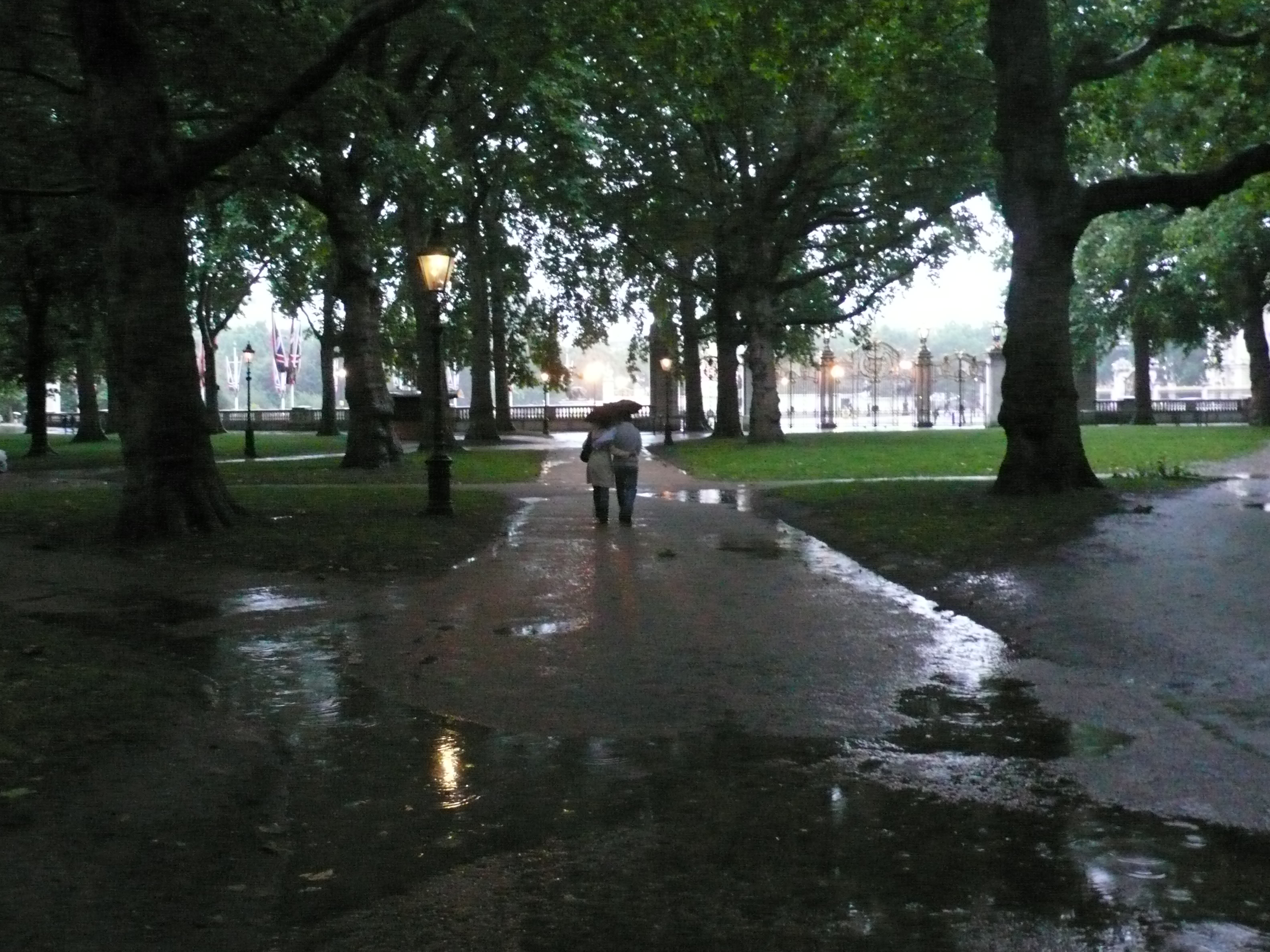
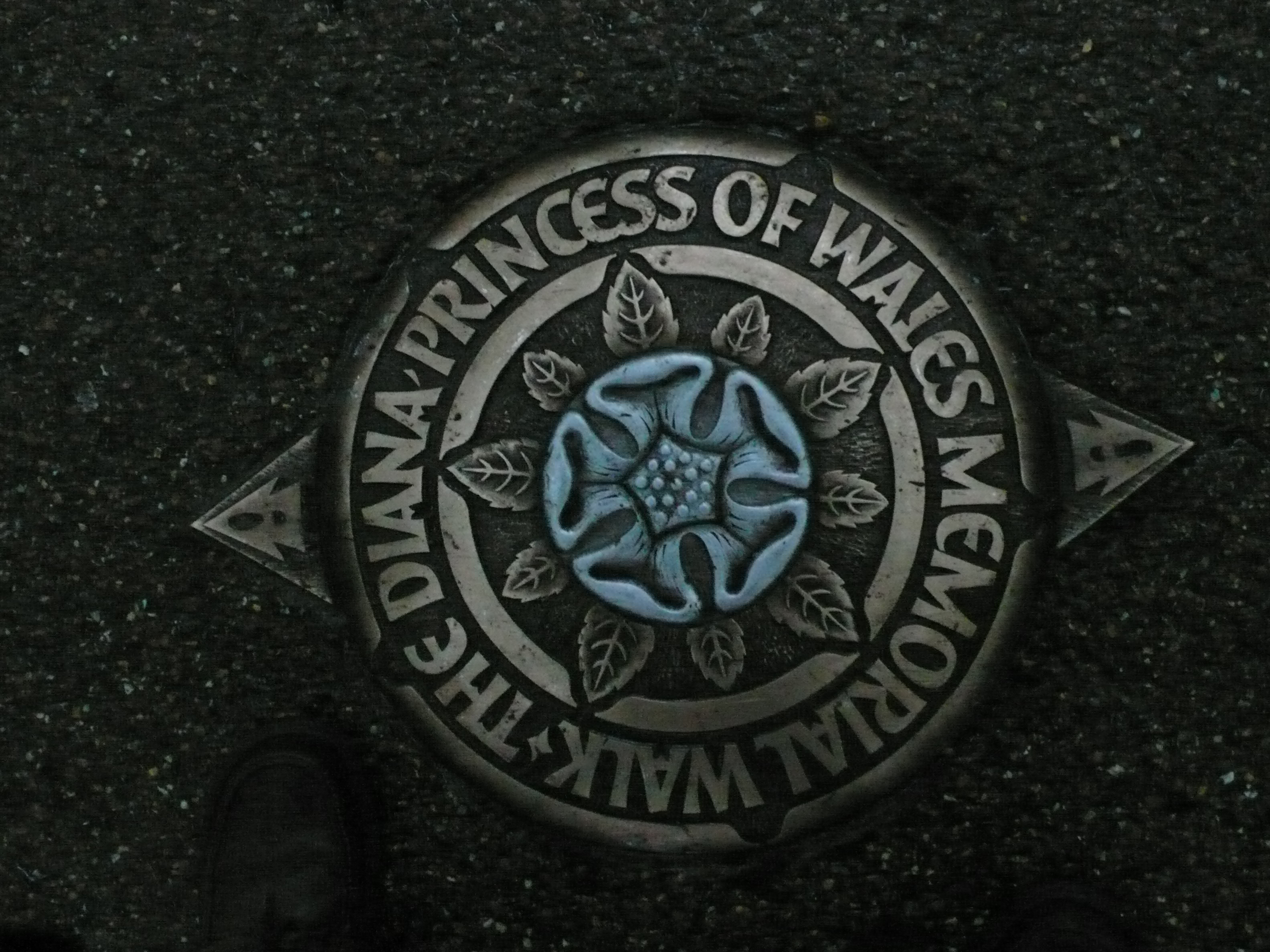
But, it is getting late and I cannot tarry, so out I stride into the late Saturday afternoon squall and hang a left before the Green Park tube station, along the “diagonal path” into Green Park. Here, during good weather, you can sit in one of the many deck chairs spread out on the lawn and an attendant will appear out of nowhere to serve you. Green Park was named such due to the absence of flowers, and was a preferred location for both duels and balloon ascents in years gone by. Nearby is Spencer House, once the ancestral home of the House of Spencer – the late Diana Princess of Wales’ family. You will notice several beautiful markers indicating the “Diana Princess of Wales Memorial Walk” set into the diagonal path you are following toward Buckingham Palace.

Long, rainy, wet walk through Green Park on the Princess Diana Memorial Walk

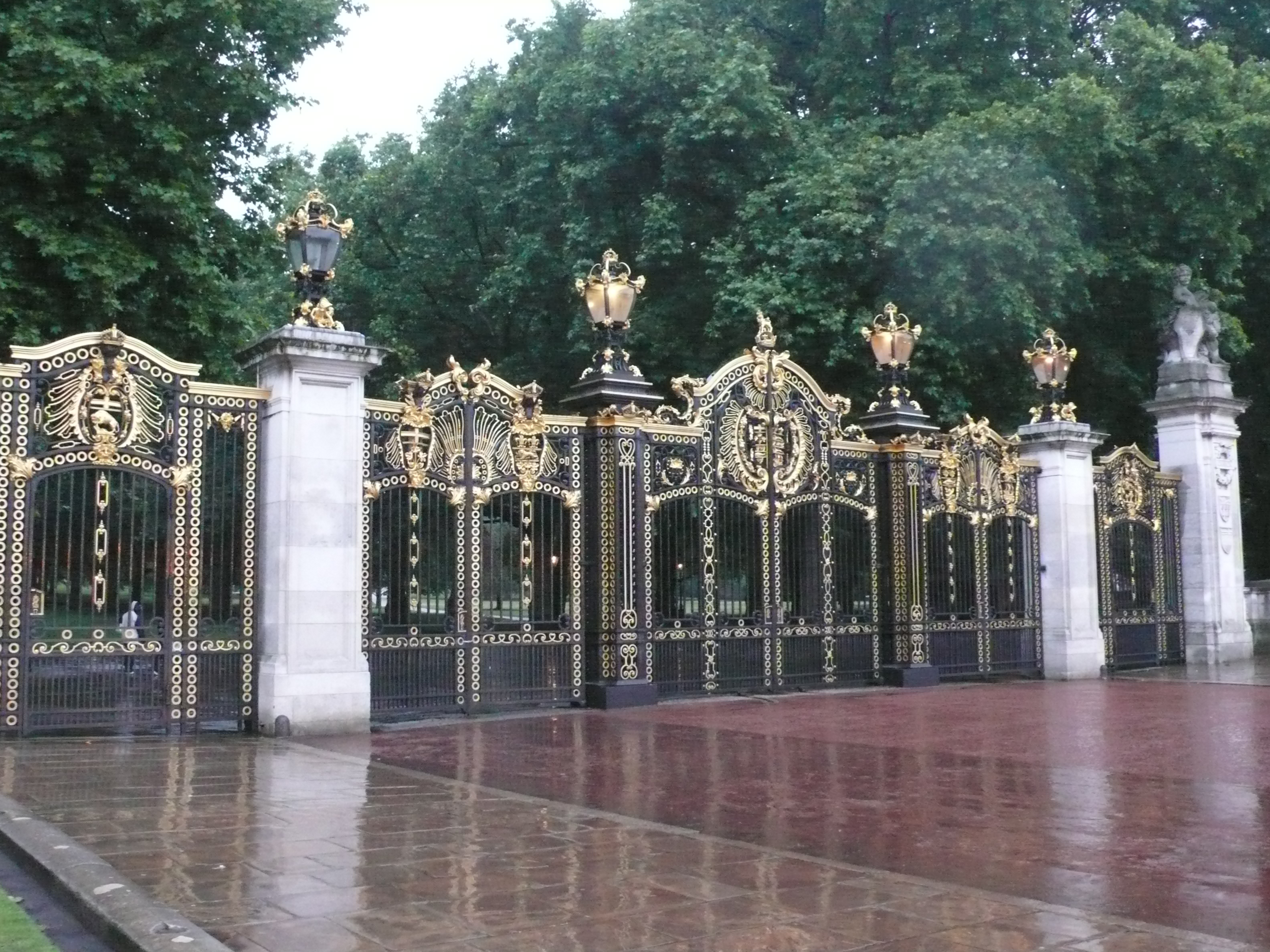
Canada Gate

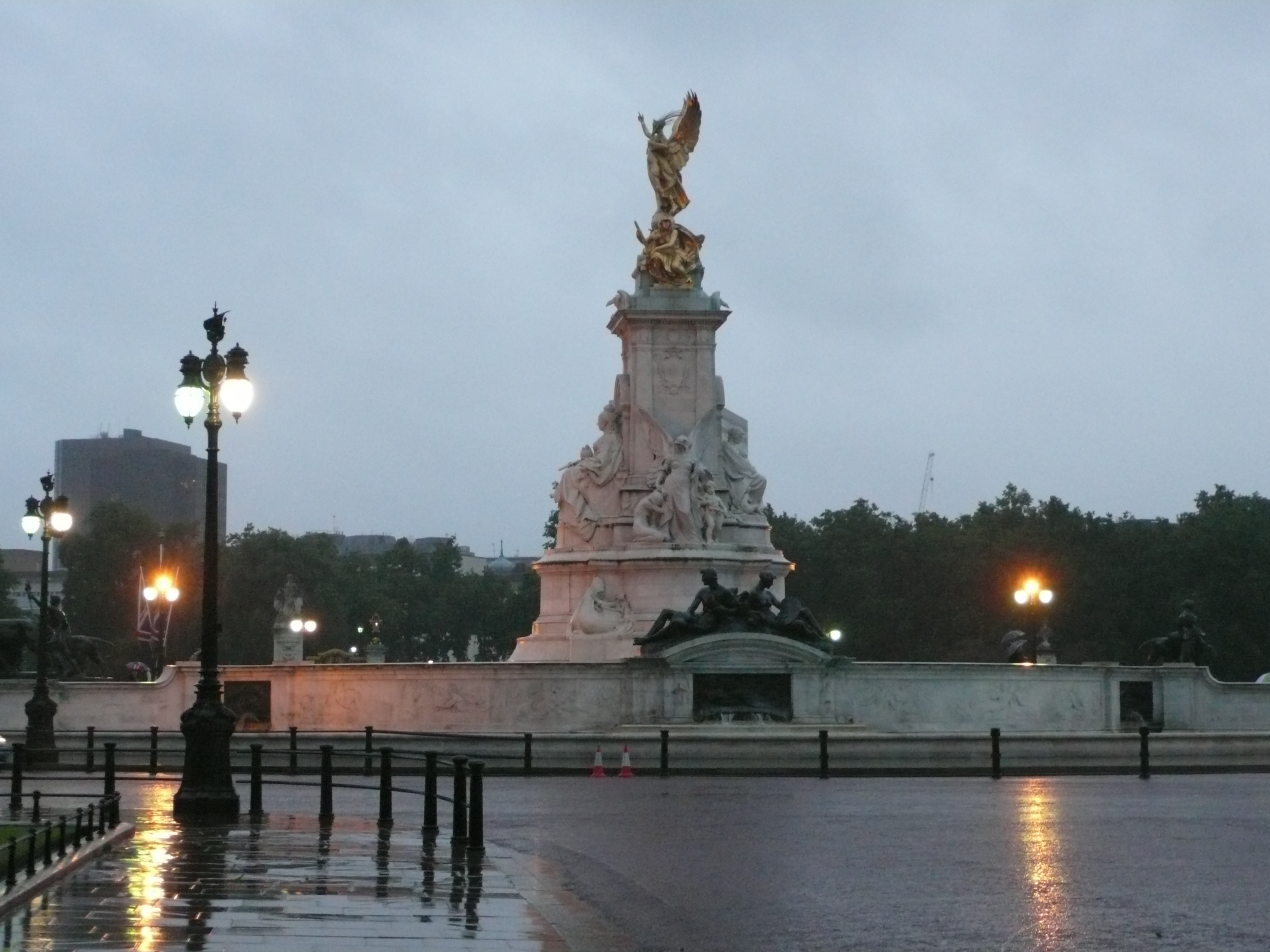
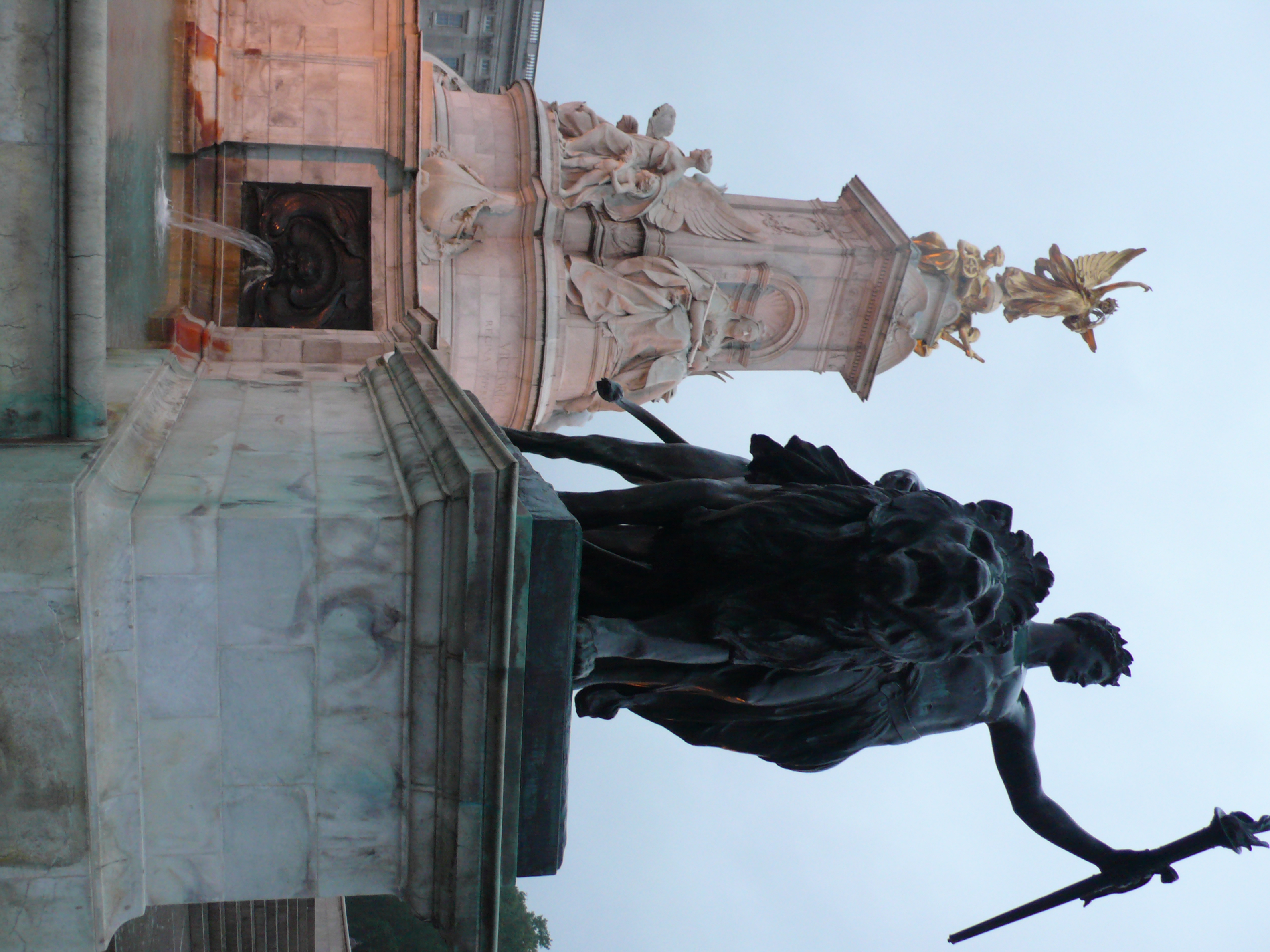
Victoria Memorial

The Victoria Memorial was built in 1911, ten years after Queen Victoria’s death, at this westernmost end of The Mall facing the most recognized façade of Buckingham Palace. The gold figure on the top is the image of “Victory”. Queen Victoria’s likeness on the east side of the monument has overlooked many historical events which have occurred on The Mall, the ceremonial approach to Buckingham Palace. This is also the most popular location to view the famous “Changing of the Guard”  at Buckingham Palace, when (during good weather) the area is packed with thousands of spectators.

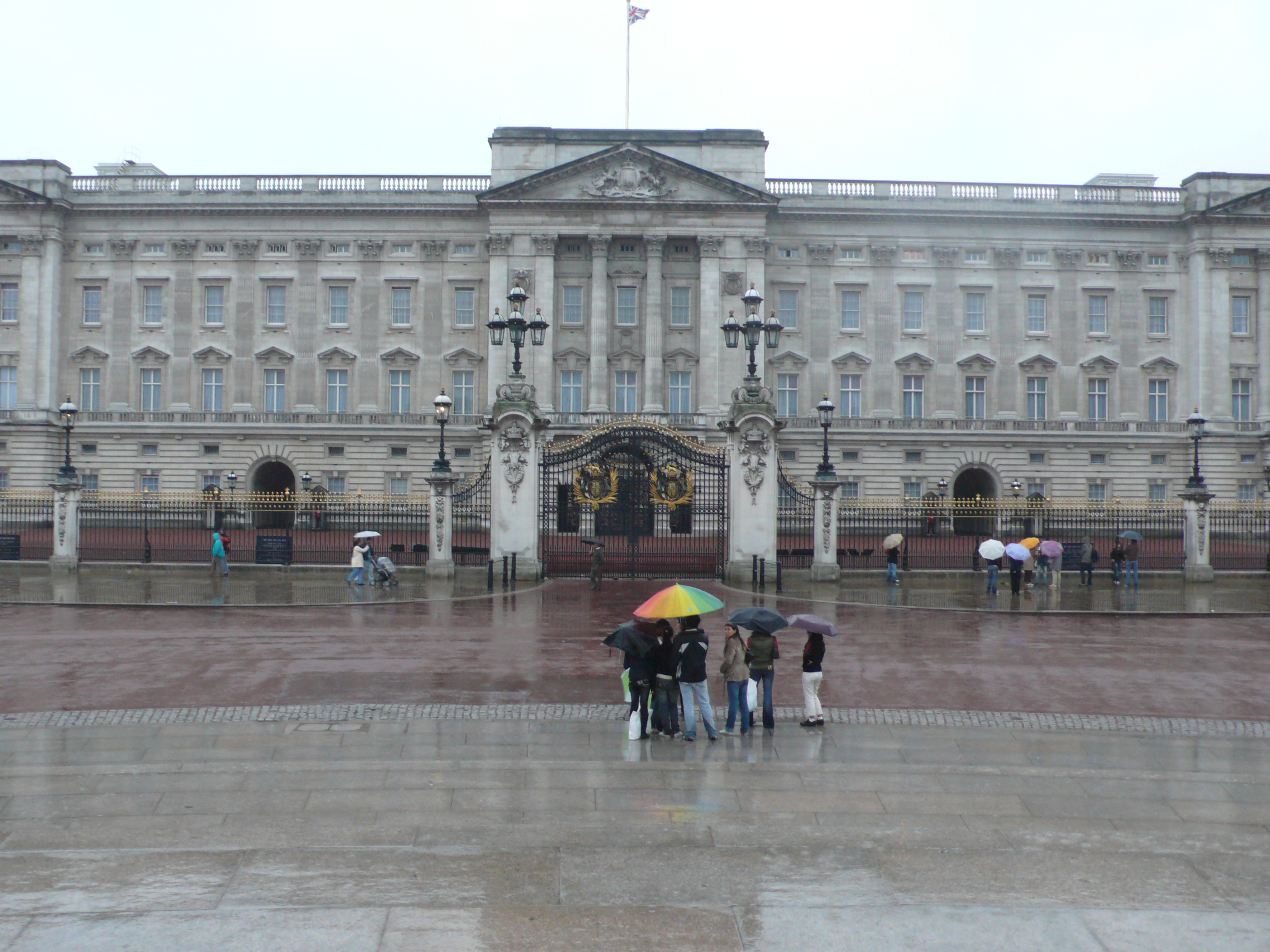
The official residence of Her Majesty the Queen in London, Buckingham Palace, has not always been a royal residence. It was owned by the Dukes of Buckingham before it was bought by King George III in 1761. Queen Victoria was the first regent to actually take up residence here in 1837. By 1914 a series of major remodeling projects came to an end and left the Palace in it’s present configuration. The view from the Victoria Memorial is of the “back” of the Palace, which actually was designed to face the wonderful Gardens to the west.

Buckingham Palace in a downpour!

Fini!

The City and Tower Tour

•September 6, 2010 • 2 Comments

LONDON, ENGLAND June 30th – A lively young voice with a crisp British accent spoke clearly into my ears through my iPod headset.  The voice was laying a pleasant historical foundation for what I was seeing, telling me about this and that building, asking me to pause and look that way as she was describing historical street scenes, and moving me from “Point A” to “Point B” – all the way through the alphabet it seemed – before we finished “London: The City and the Tower” tour.  It is true, there were 24 stops with point-of-interest commentaries over the 3-mile course.   It’s Saturday and the City of London (Financial District) is very quiet. This will be fun!

See:  City-Of-London Walking Tour Map

This self-guided walking tour was an excellent idea.  If you are inclined, you can purchase and download the MP3 format audio tour for London at www.AudioSteps.com and you’ll be remarkably surprised.  The price is equivalent to the cost of a meal, but you can reuse the recordings even copying them to CDs. The narrator, Sally Beaumont, moves the tour along at a quick clip. However, because you have it on your iPod or iPhone, you can easily pause the tour narration and take a break, have lunch, or shop and then come back to the tour later. Want to refresh the details of a previous point of interest? Just re-wind and re-visit the narrative stage you wanted to hear again. Now, onwards….

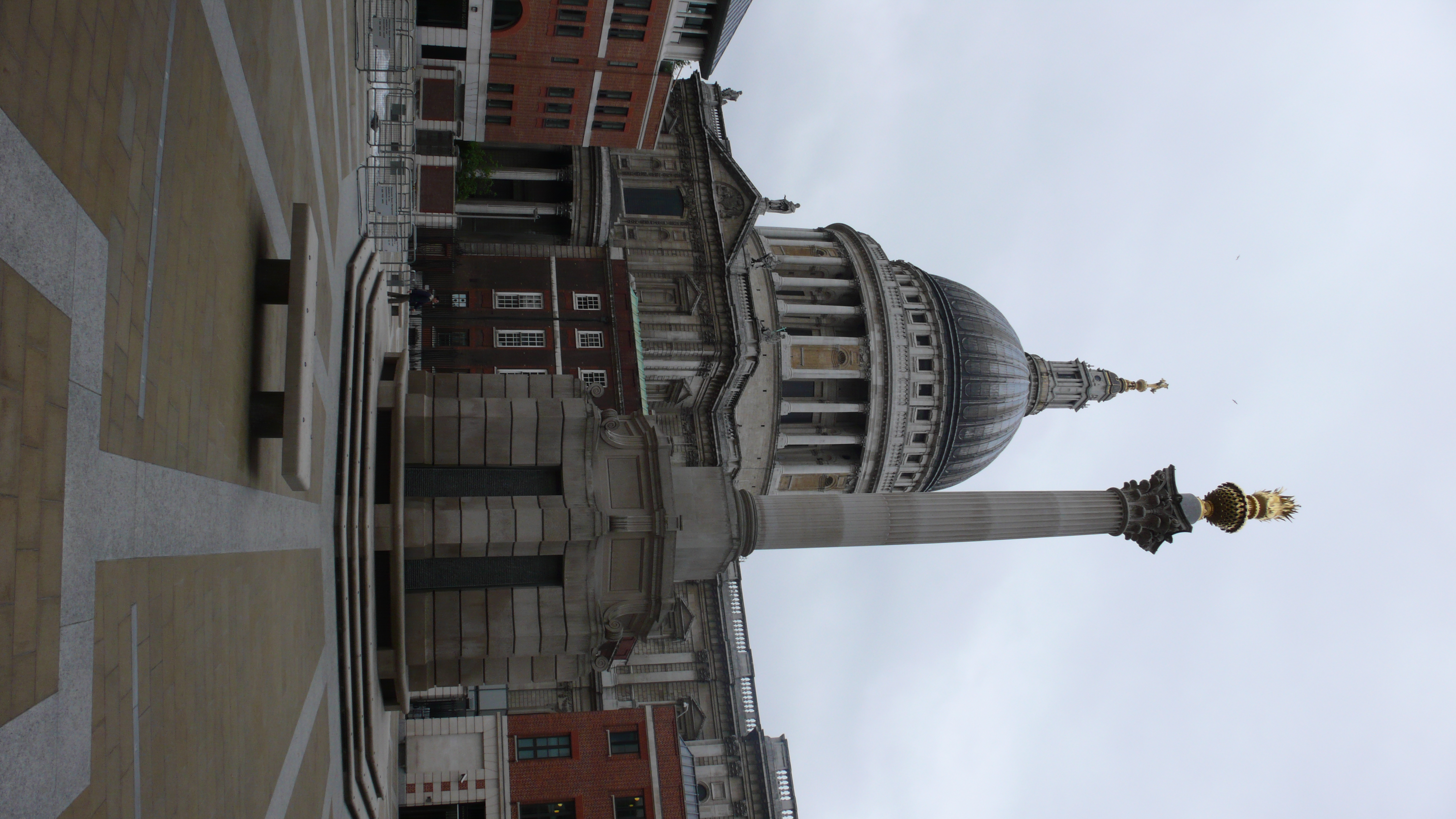
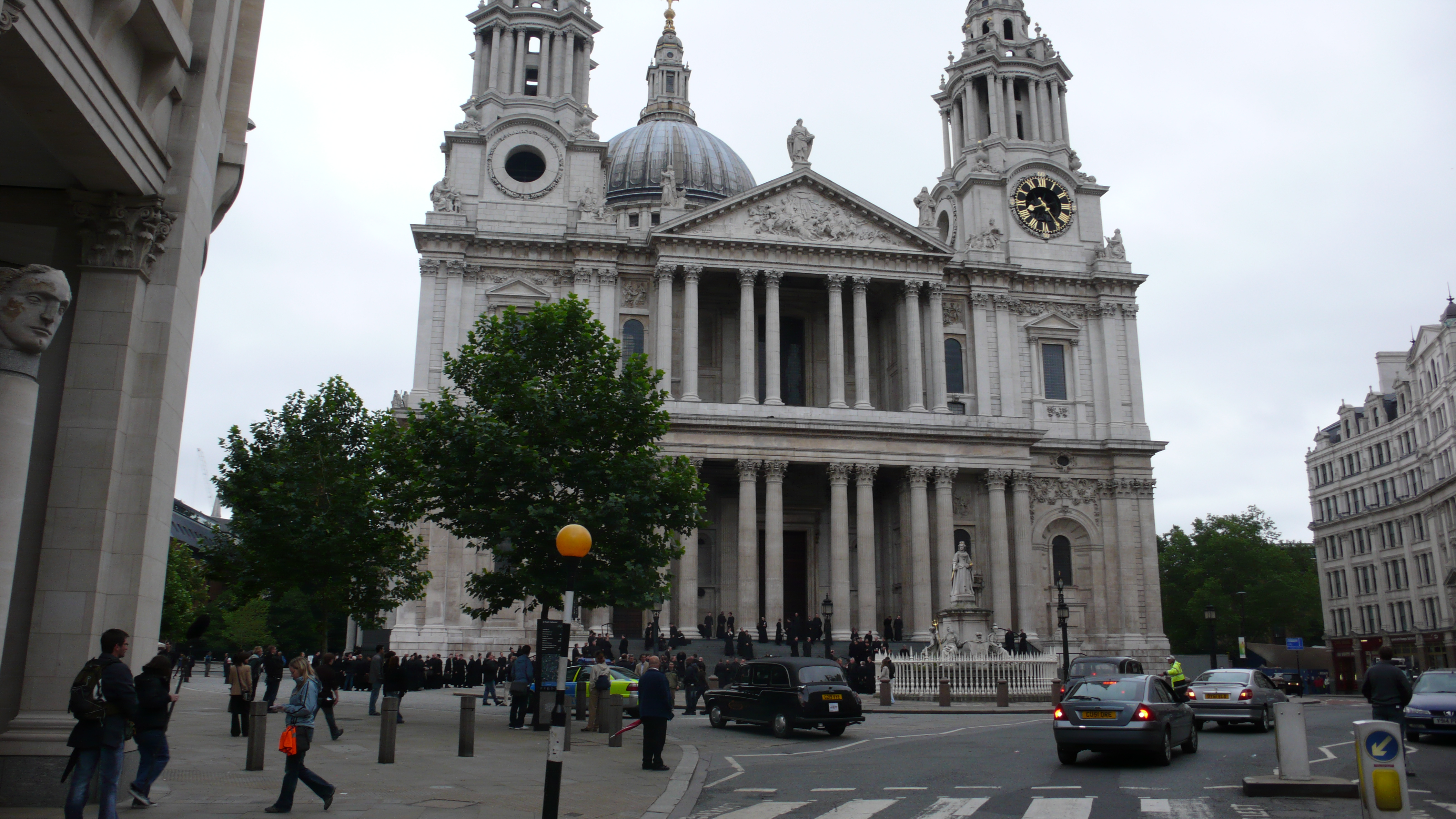
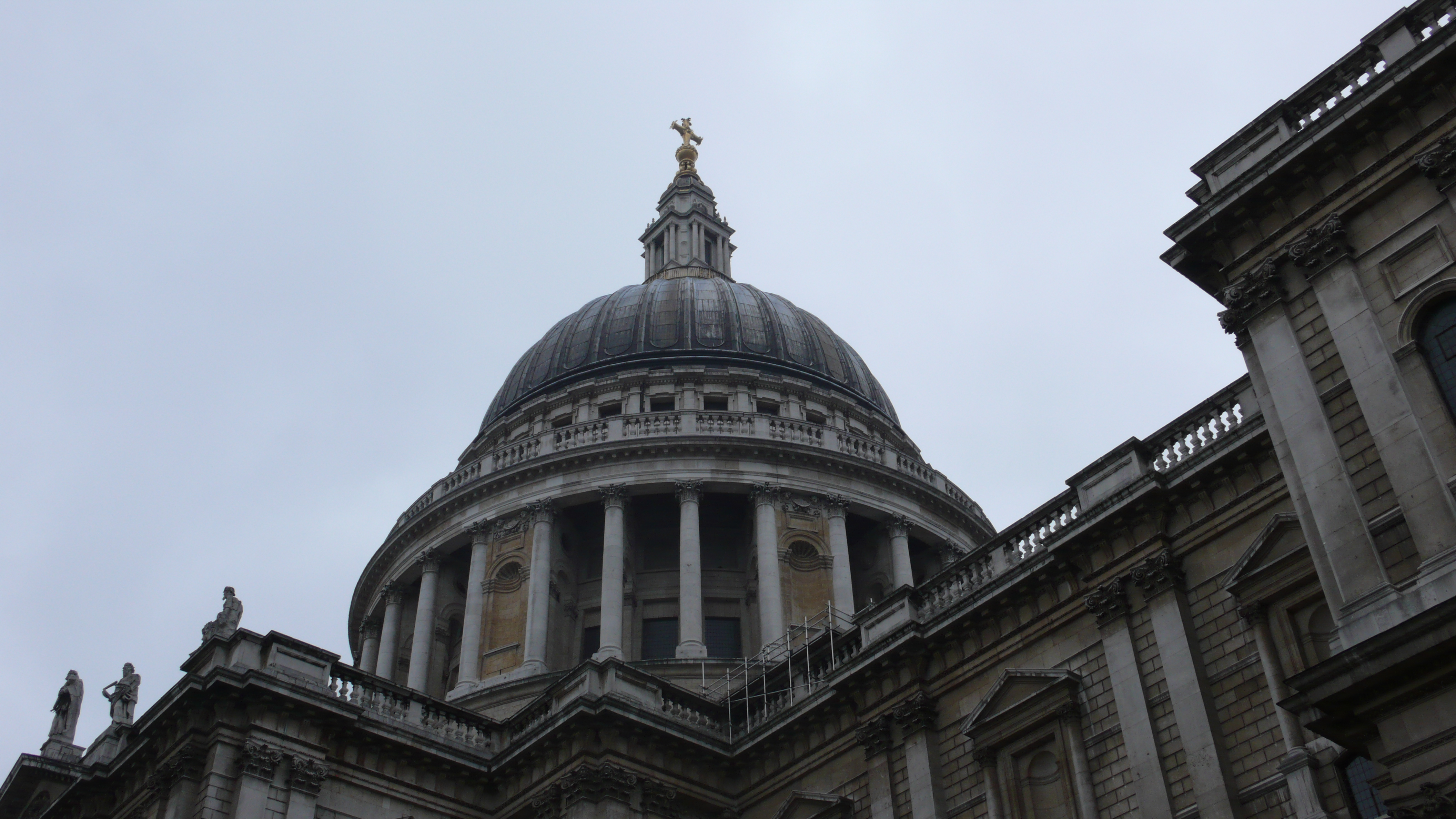
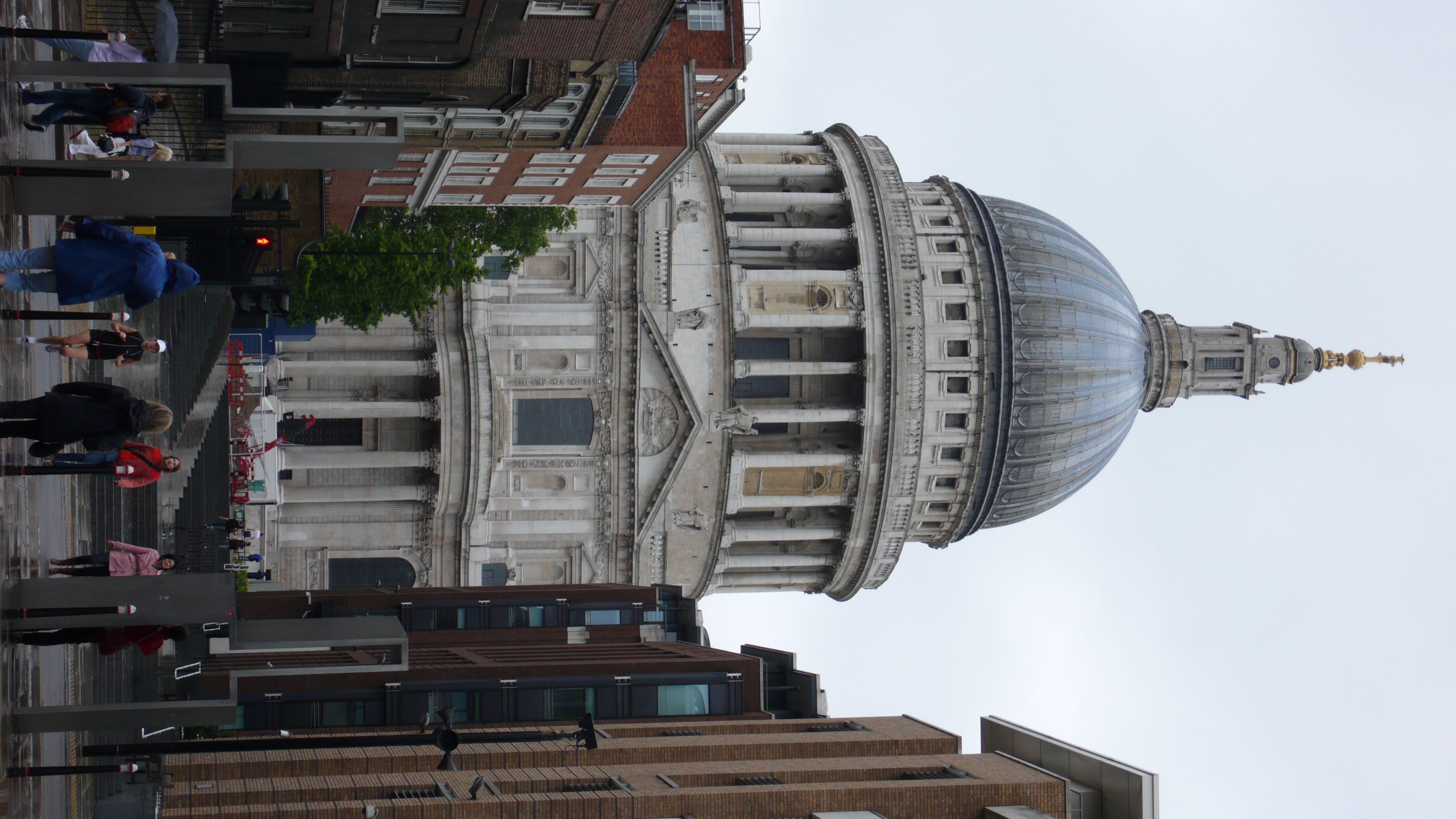
Paternoster Square, home of the London Stock Exchange, is the first main stop at the beginning of the walking tour.  The Square contains this 23-meter high replica of one of the original columns from the portico of the St. Paul’s which burned in the Great Fire of 1666.  This monument, the largest erected in London in over 100 years, is made of Portland stone and is lit at night by fiber optics.  The prominent dome of the present St. Paul’s Cathedral, designed and built by Christopher Wren, is seen in the background.

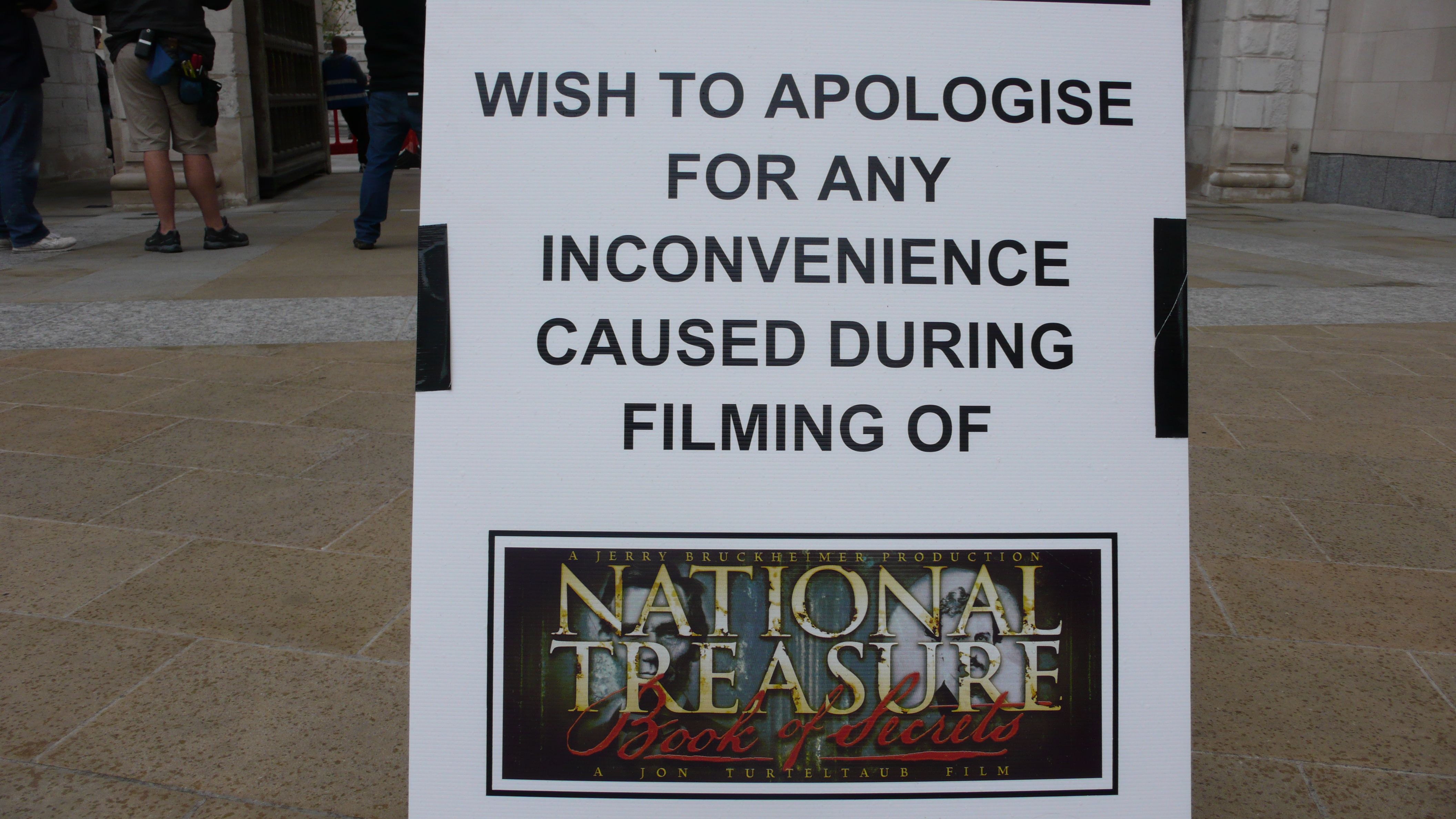
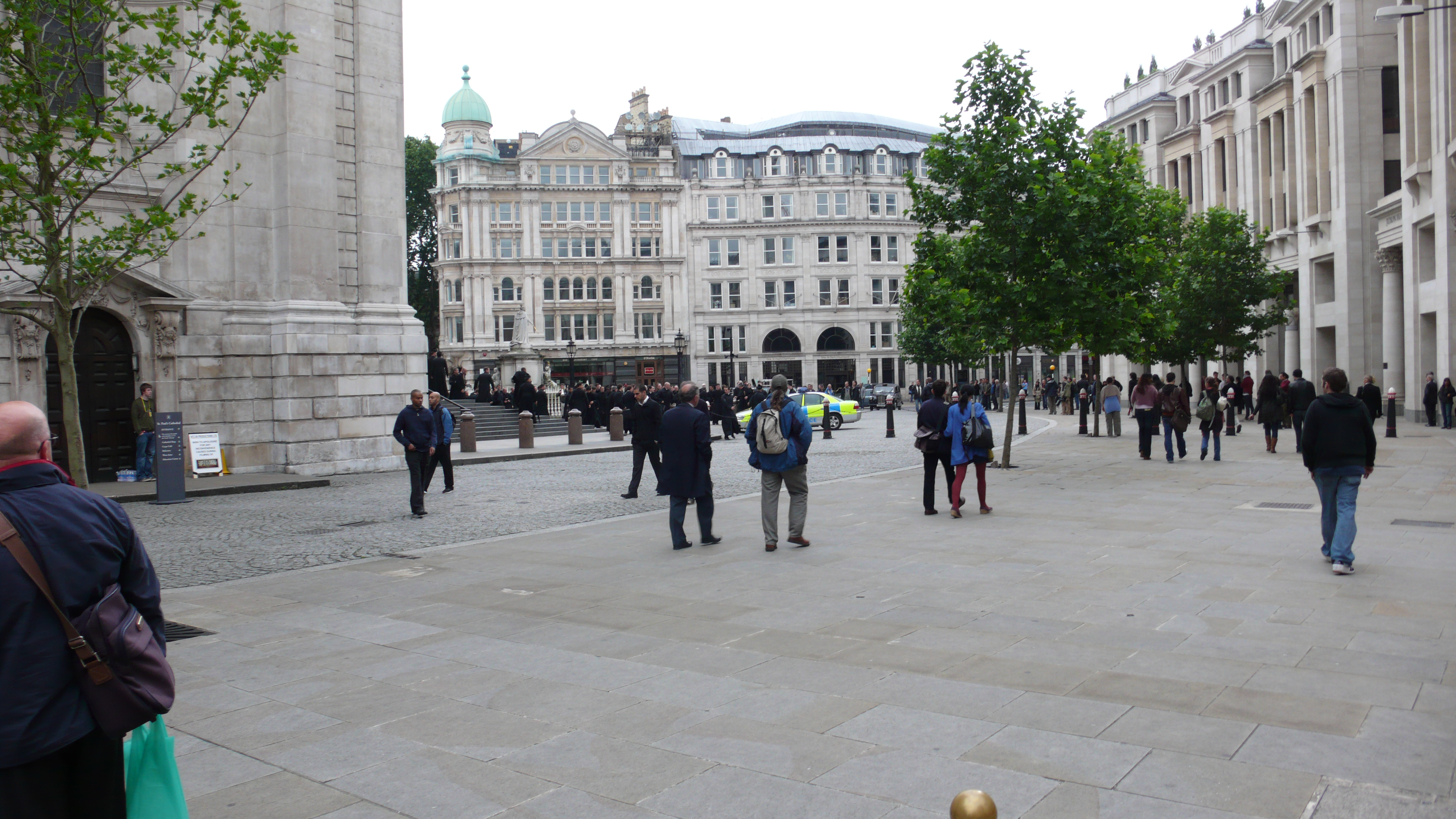
I came upon the above sign between Paternoster Square and St. Paul’s Cathedral, looking around I noticed hundreds of men wearing the same black priest’s cassock.  They were actively engaged in filming sequences for the second installment of the National Treasure movie series called “Book of Secrets”.  Between Dan Brown and the Temple, National Treasure’s secret book, some Jack the Ripper and Sherlock Holmes, add a little Jeckle and Hyde, and the Werewolf saga and you’ve got a real explosive mixture here in London!

Extras dressed in black cassocks during filming of "Book of Secrets"

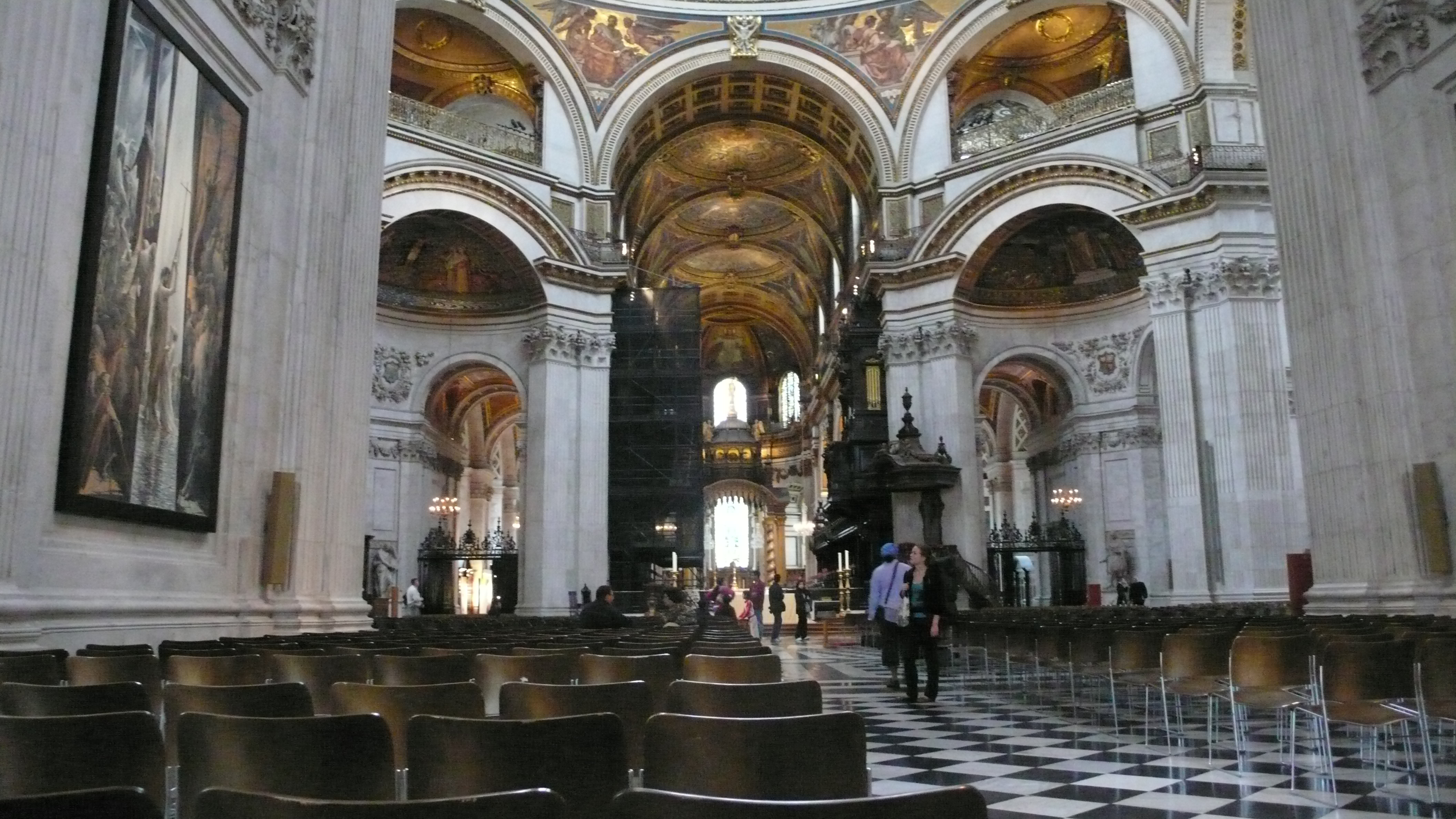
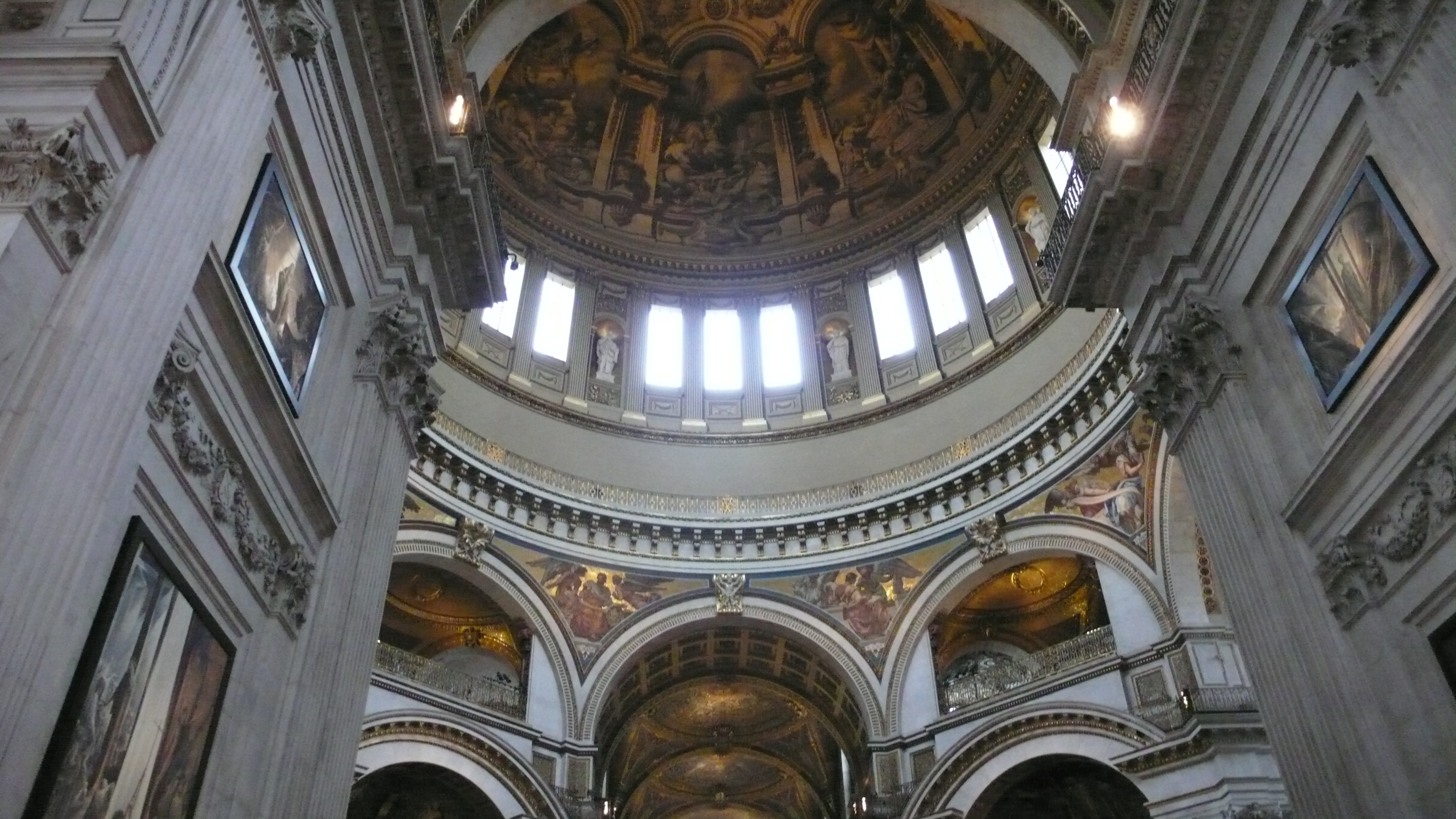
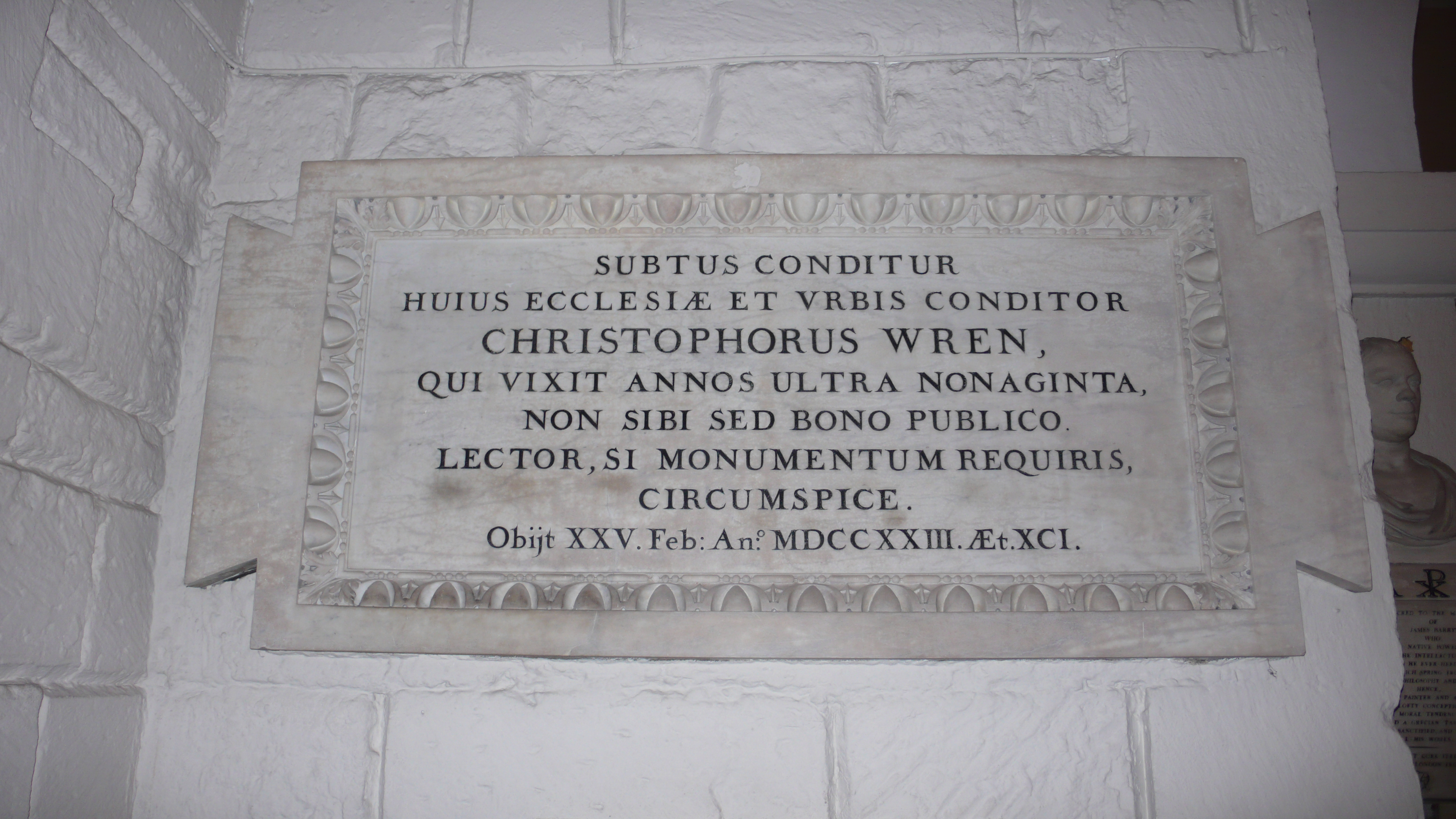
Four cathedrals have stood on this site since the 7th Century.  The third one had a 489-foot spire and was completed in 1283 after a two-hundred year construction cycle – dominating the landscape then, and easily the tallest structure in England if it stood today.  That spire fell down in 1561, which initiated the complete reconstruction and new dome design led by Christopher Wren after the Great Fire left the cathedral in ruin in 1666.  Wren’s legacy included 51 unique churches throughout London and led to his knighthood in 1673. Christopher Wren lies in rest in the Crypt under the Sanctuary of St. Paul’s with this classic epitaph:

LECTOR, SI MONUMENTUM REQUIRIS, CIRCUMSPICE "Reader, if you seek his memorial – look around you"

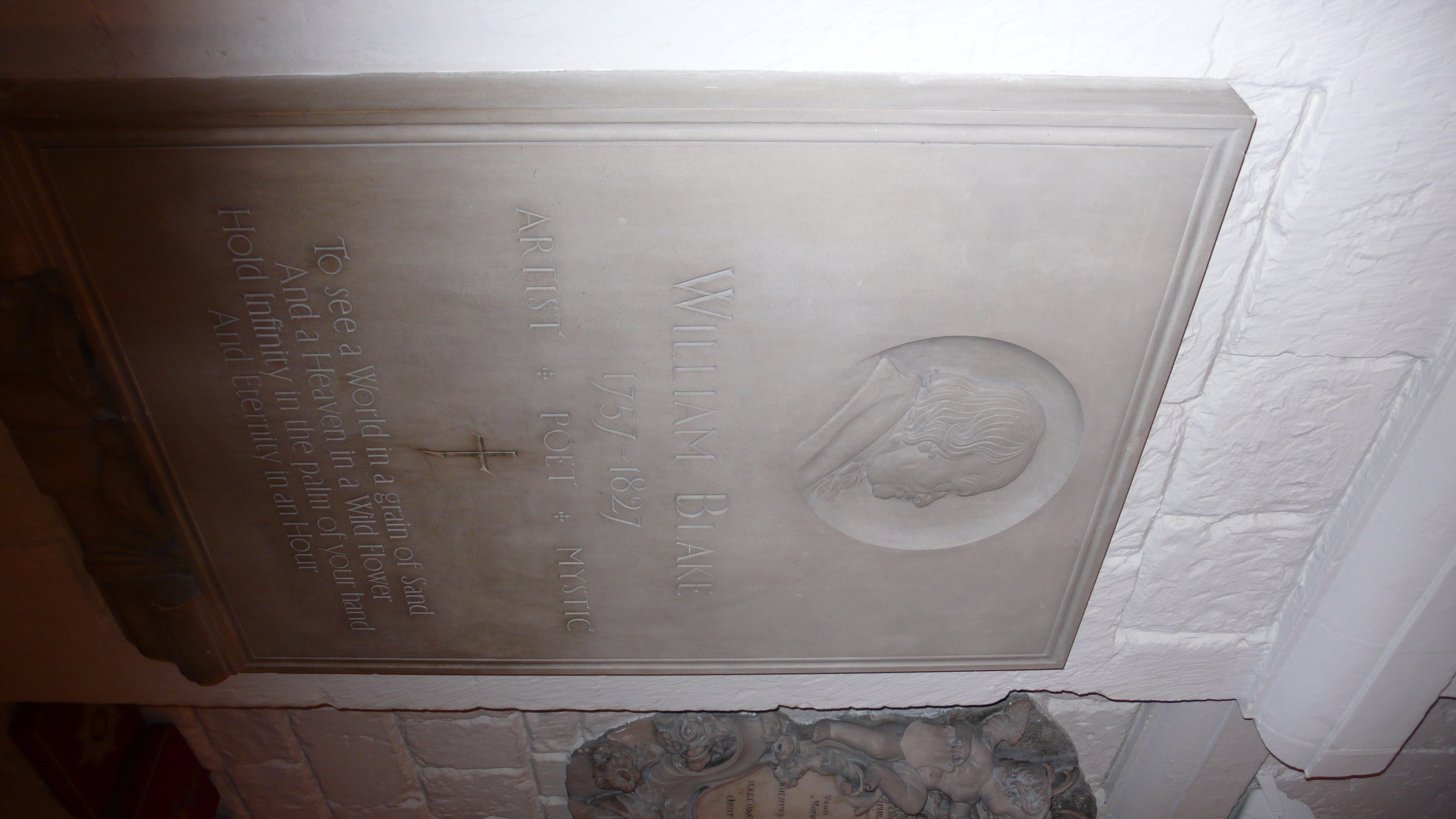
William Blake 1757-1827 "To see a World in a grain of Sand and a Heaven in a Wild Flower Hold Infinity in the palm of your hand and Eternity in an Hour"

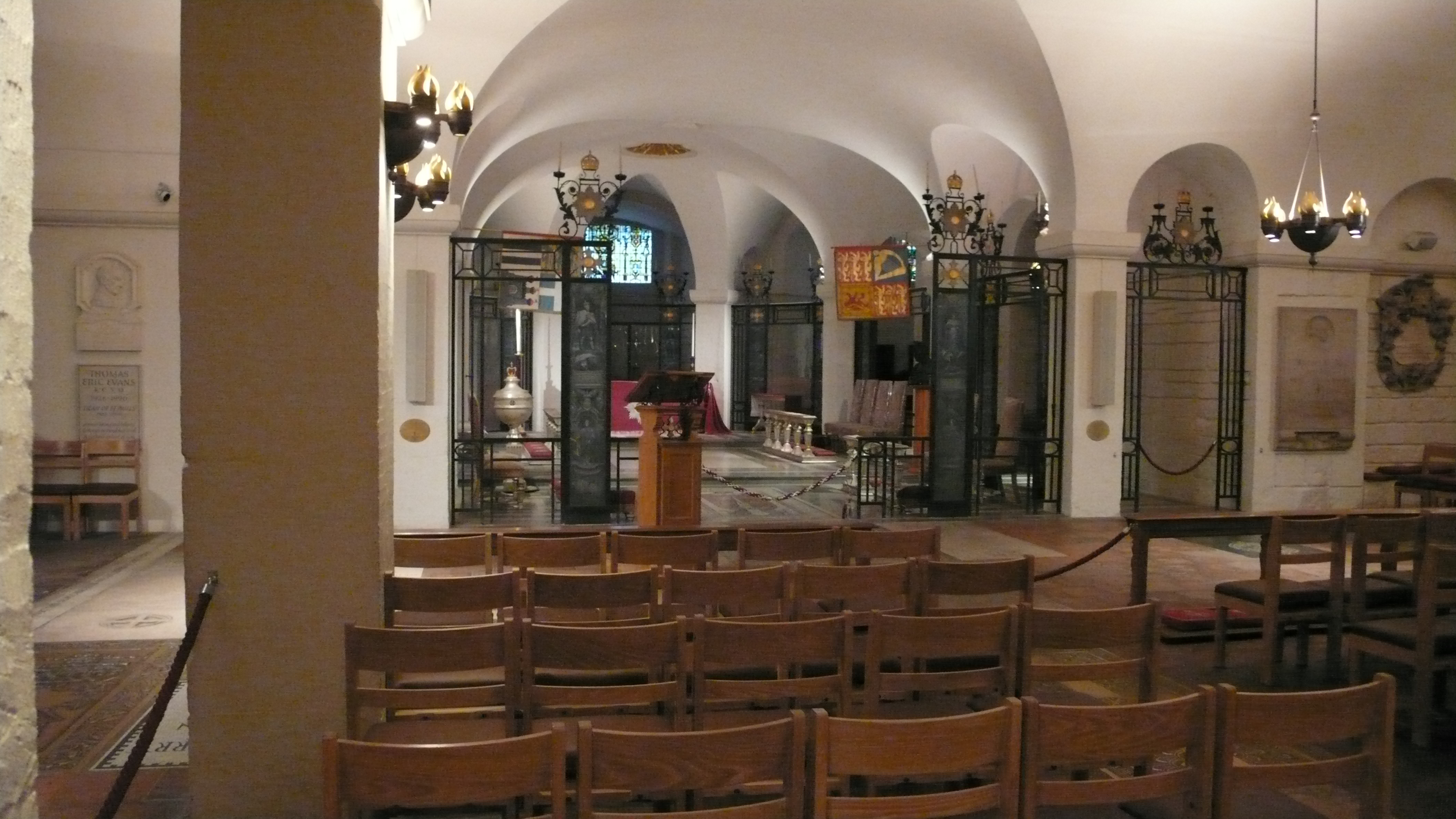
The Crypt under St. Pauls' Cathedral


St. Paul's looking up Peters Hill

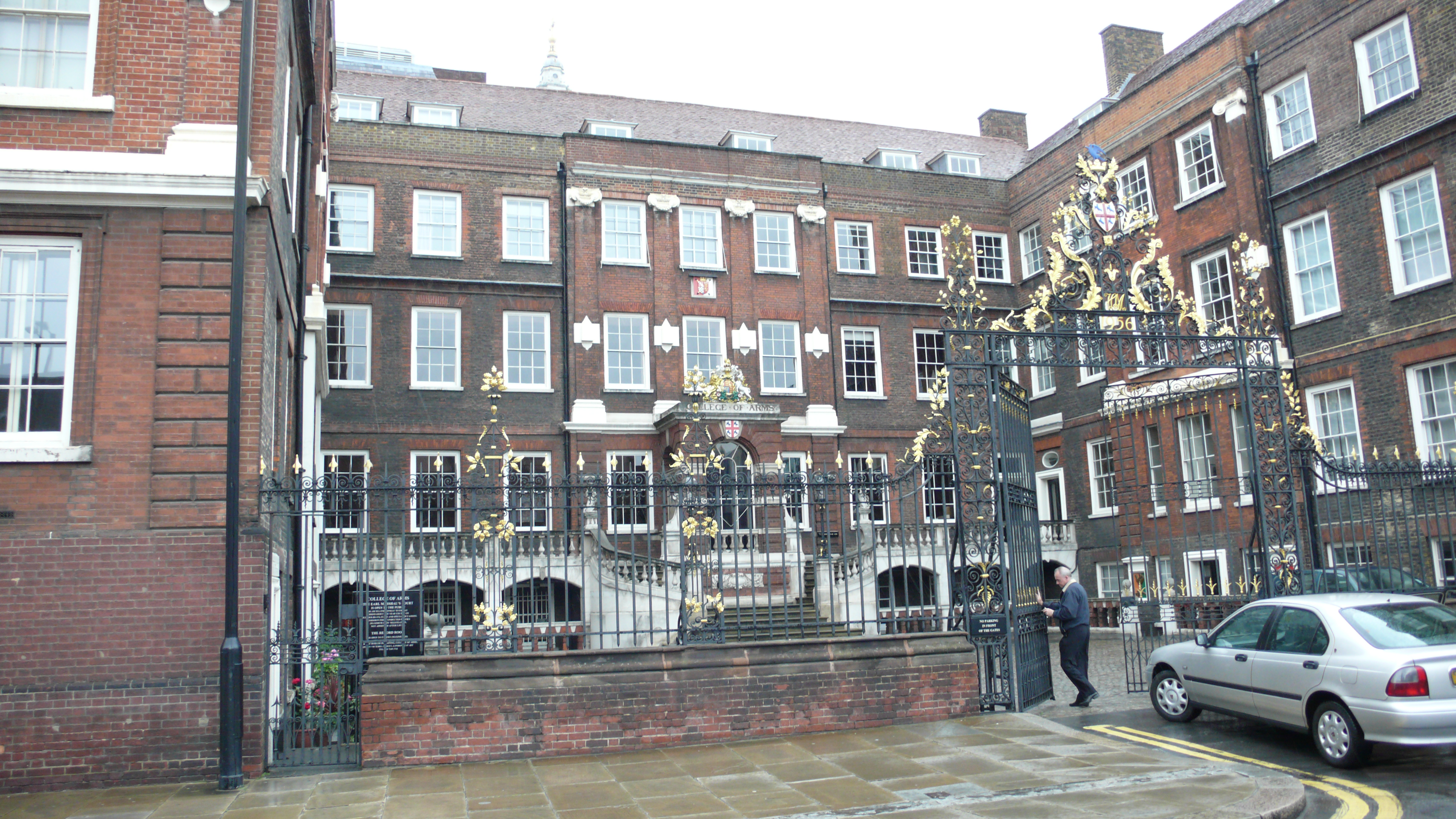
The College of Arms


Ye Olde Watling, a pub established in 1667 after the Great Fire next to an original 2,000-year old Roman Road to Dover

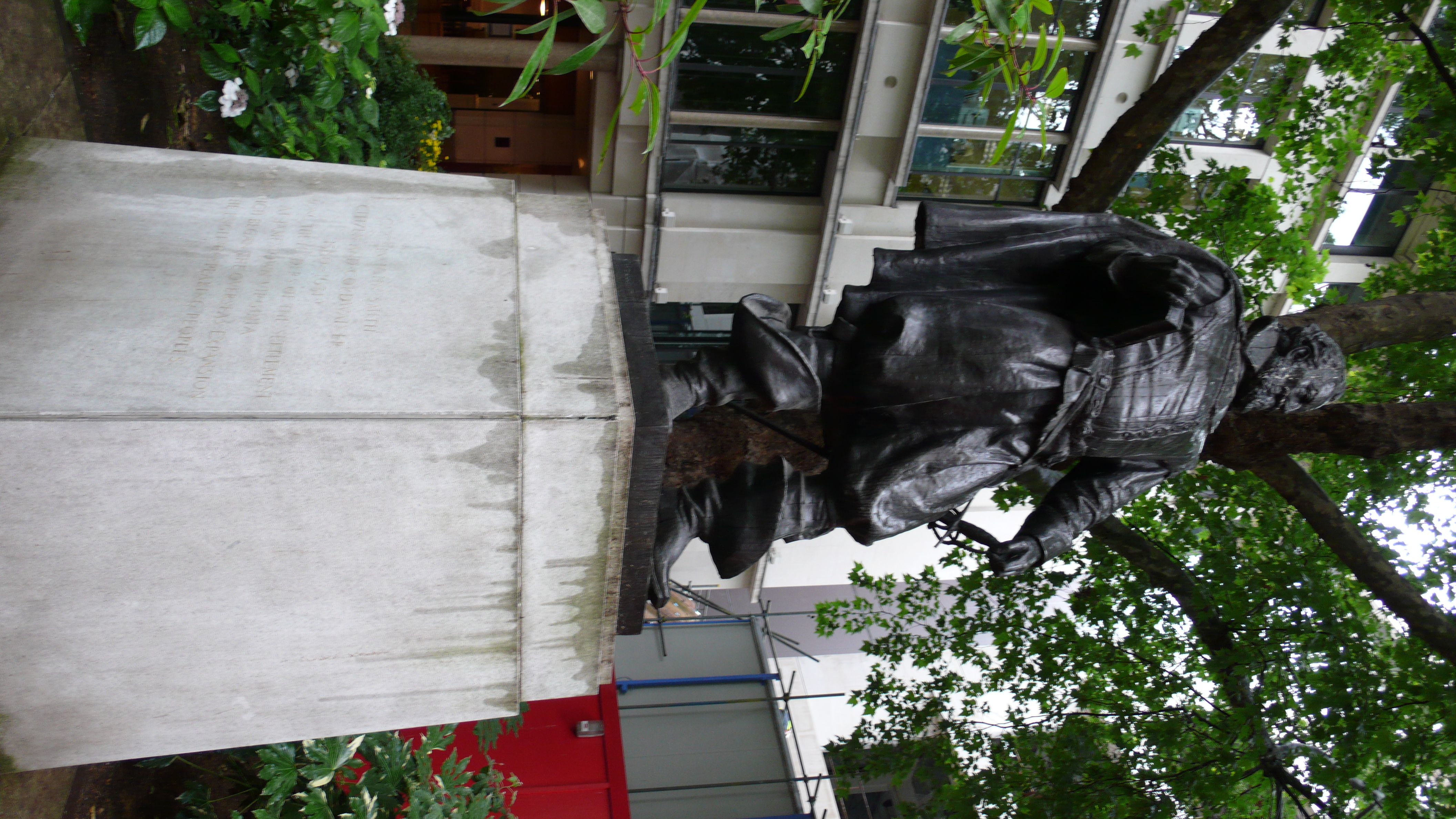
Captain John Smith, founder of Jamestown Colony in Bow Churchyard

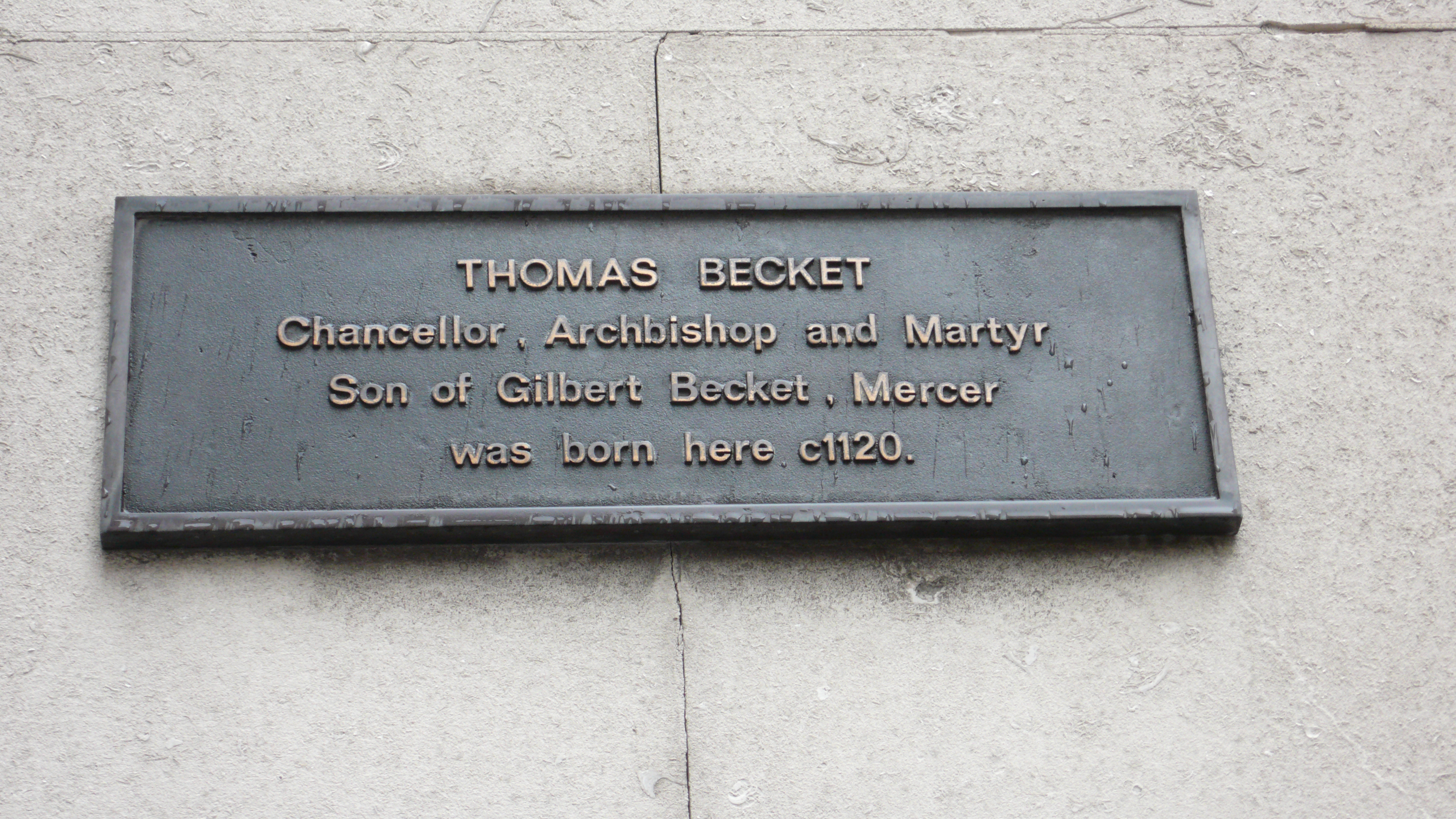
Ironmonger Lane at Cheapside, Mercer's Hall

Thomas Becket (1118 – 29 December 1170), later also known as Thomas à Becket, was Archbishop of Canterbury from 1162 until his murder in 1170. He is venerated as a saint and martyr by both the Catholic Church and the Anglican Communion. He engaged in conflict with Henry II of England over the rights and privileges of the Church and was assassinated by followers of the king in Canterbury Cathedral. Soon after the death of Thomas Becket, Pope Alexander canonised him and the murdered priest was elevated to sainthood.

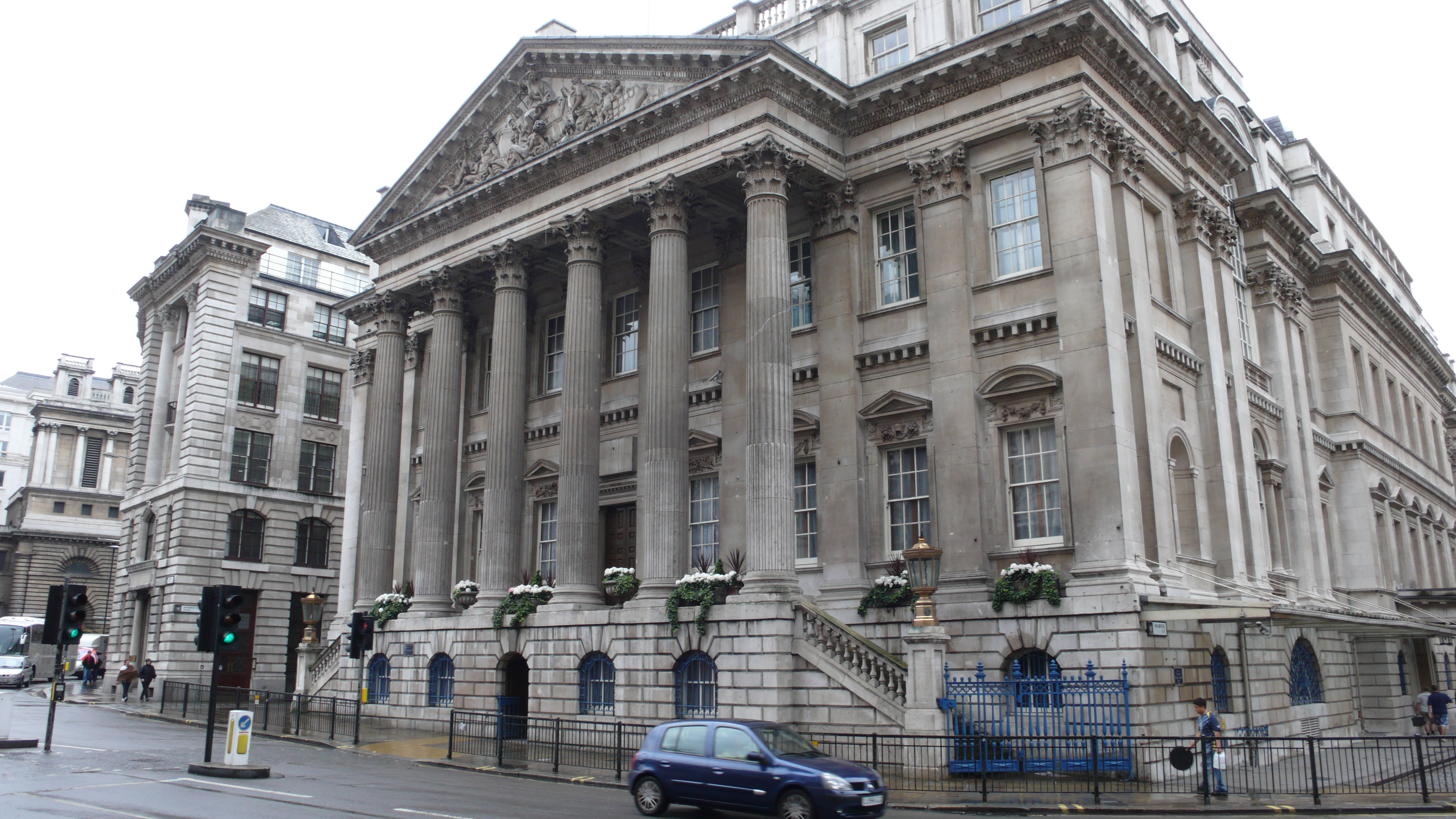
Mansion House, official residence of the Lord Mayor of London

The Royal Exchange, founded in the 1560's as a hub of the City's business life, this building is now a shopping complex dedicated by Queen Victoria

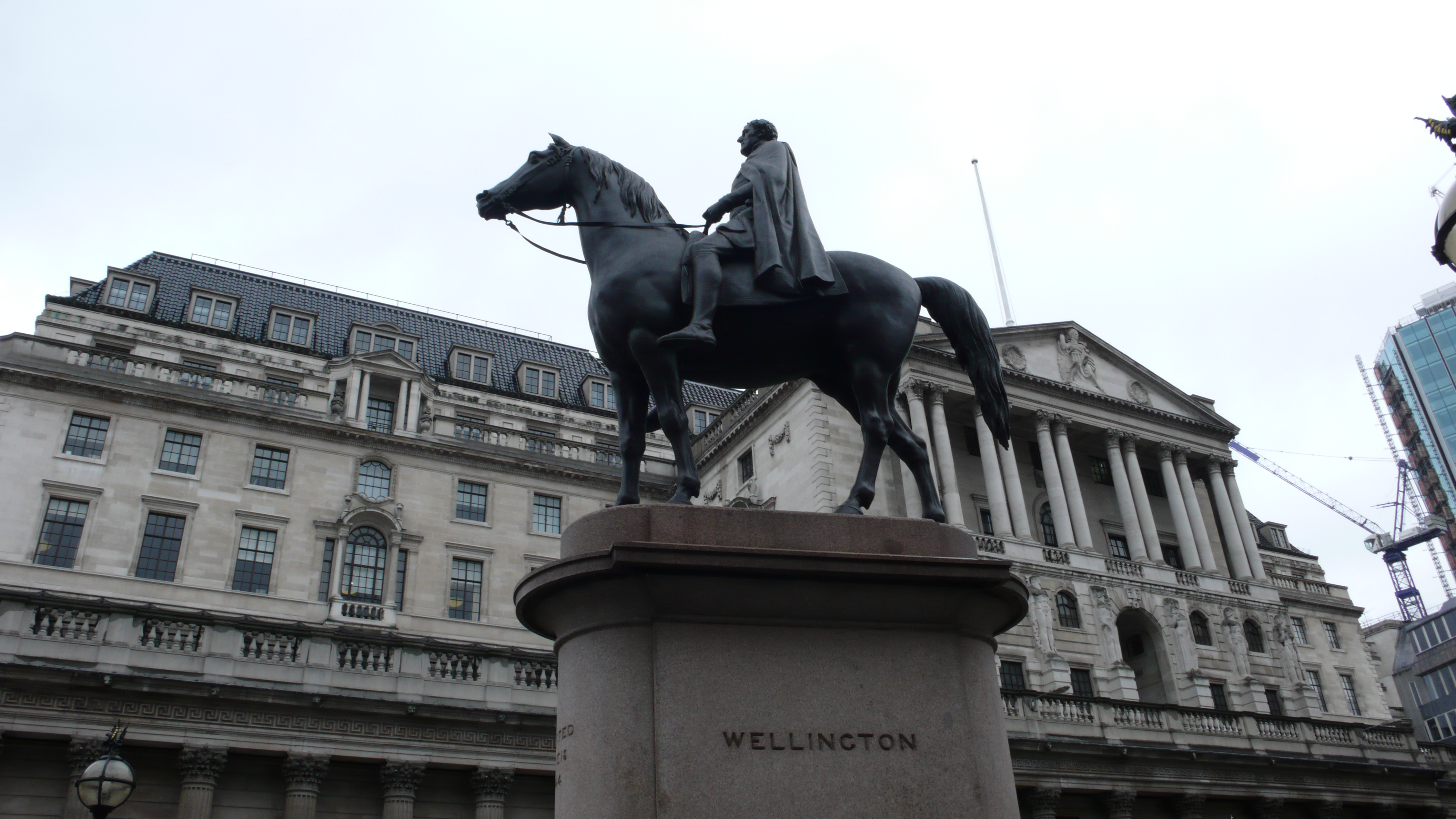
Bank of England and Statue of Wellington

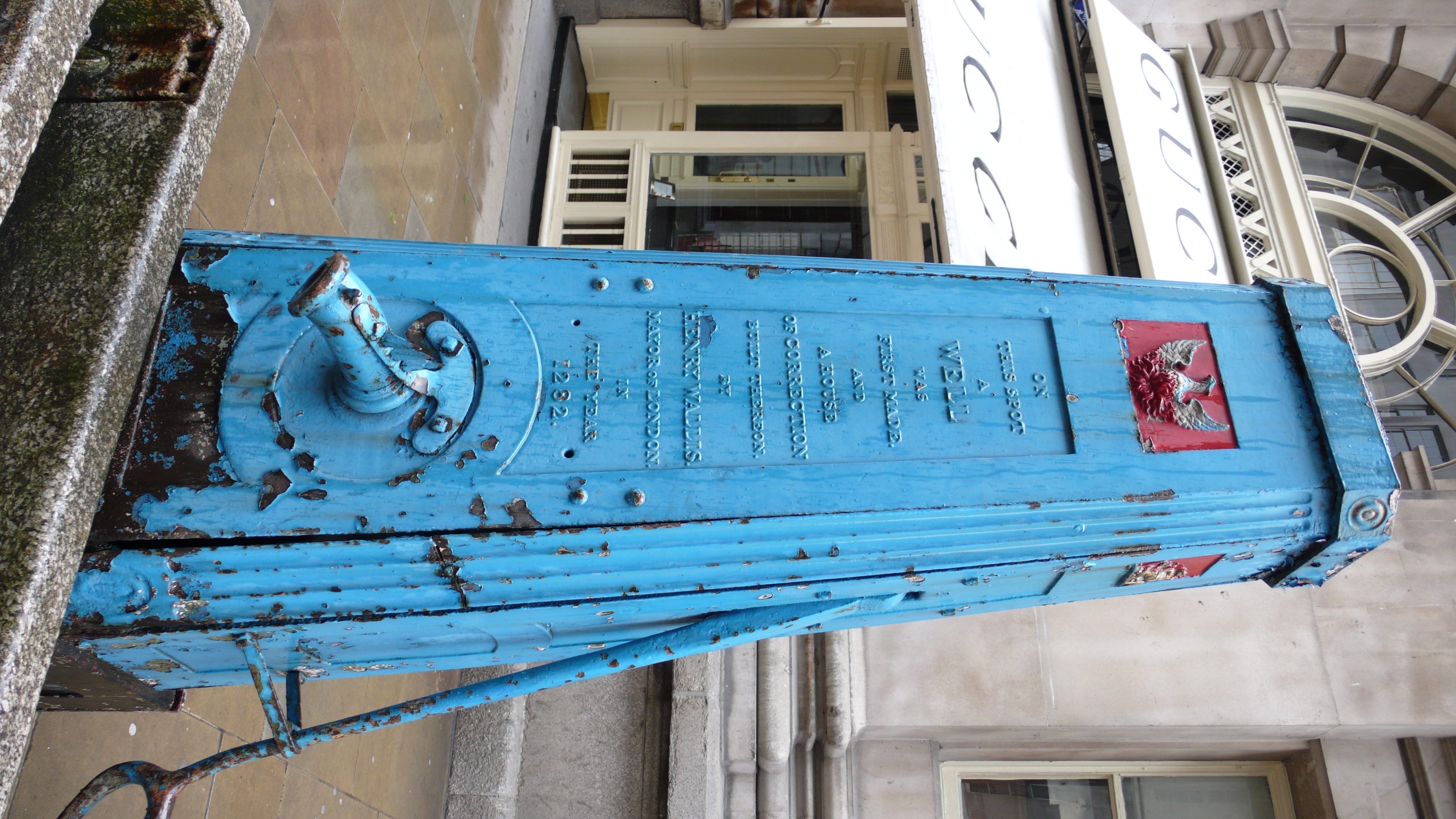
Water well at site dating to the Middle Ages

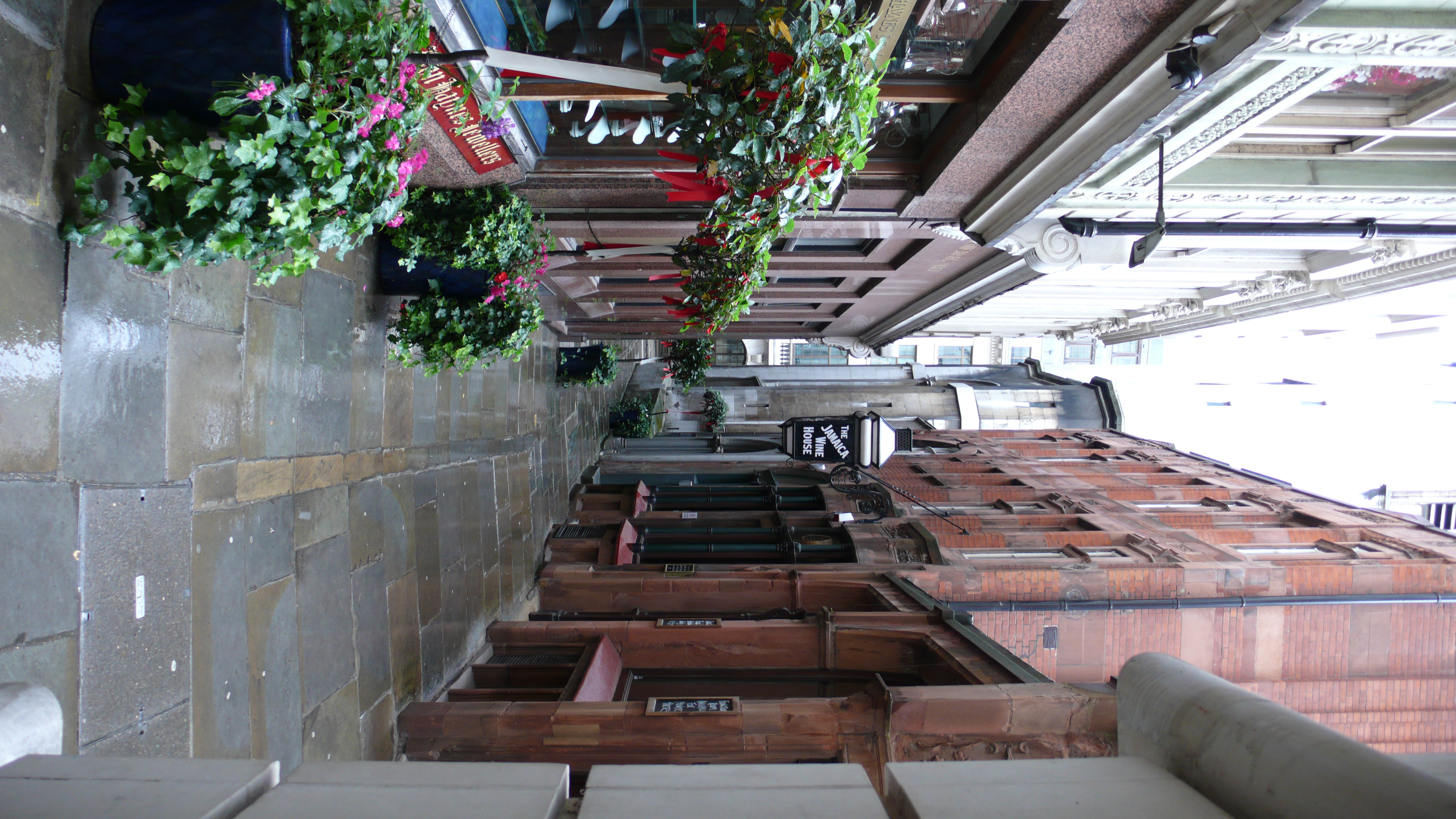
St. Michael's Alley

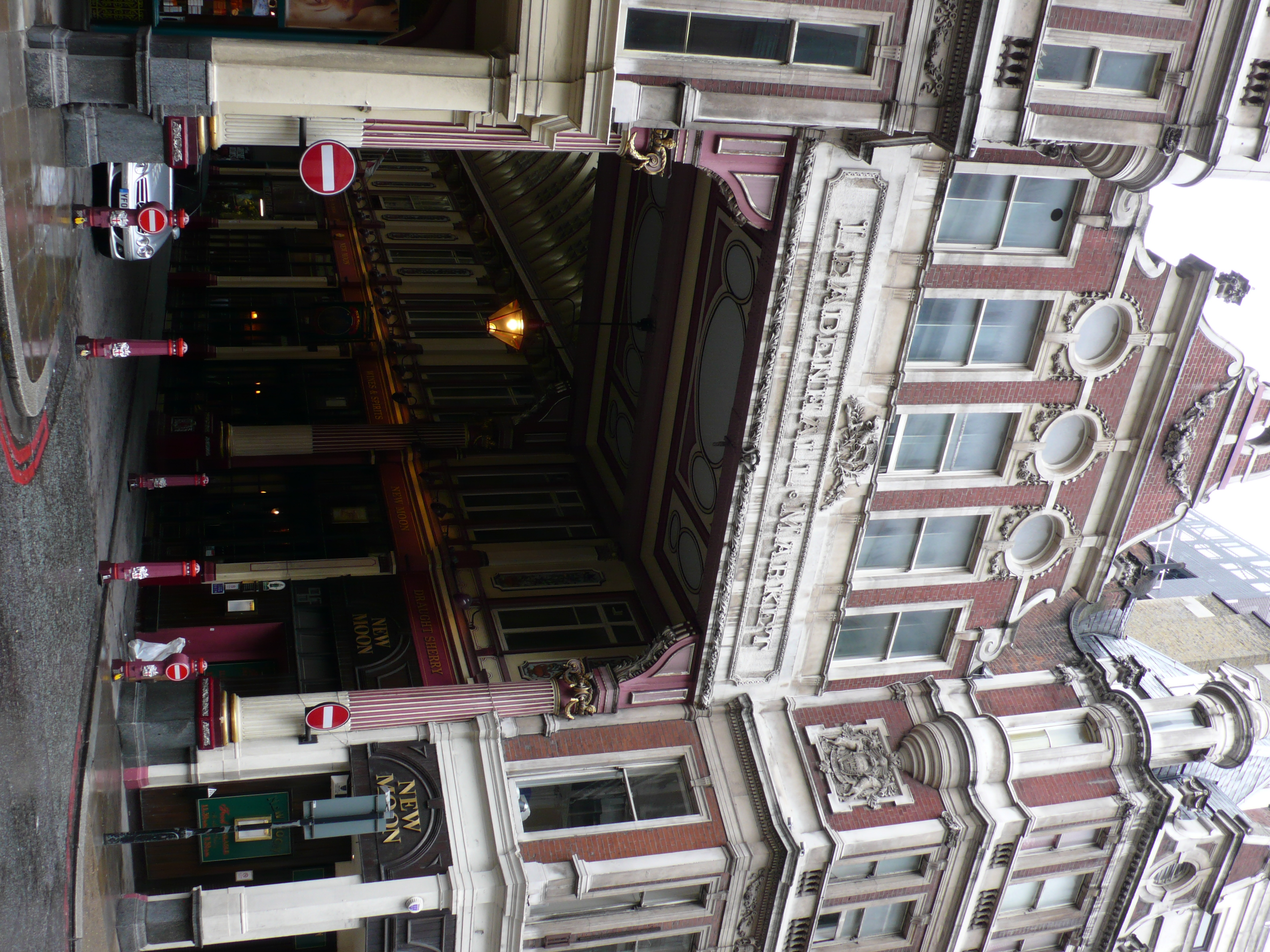
Leadenhall Market: built in the Victorian Era on the site of a Middle Ages marketplace where “foreigners” (non-Londoners) were allowed to sell produce and poultry, is named after a 14th Century mansion with an unusual lead roof.

Leadenhall Market

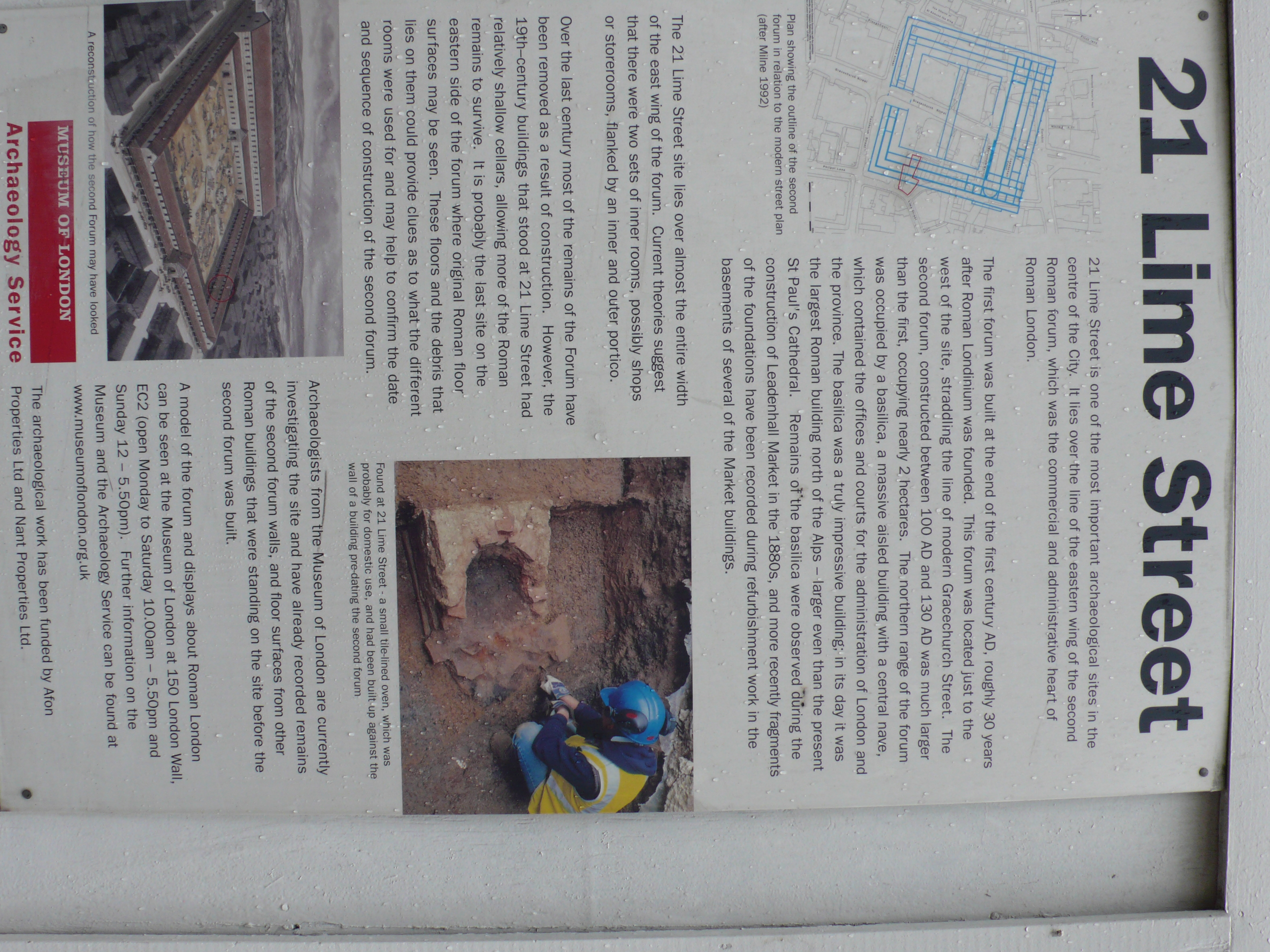
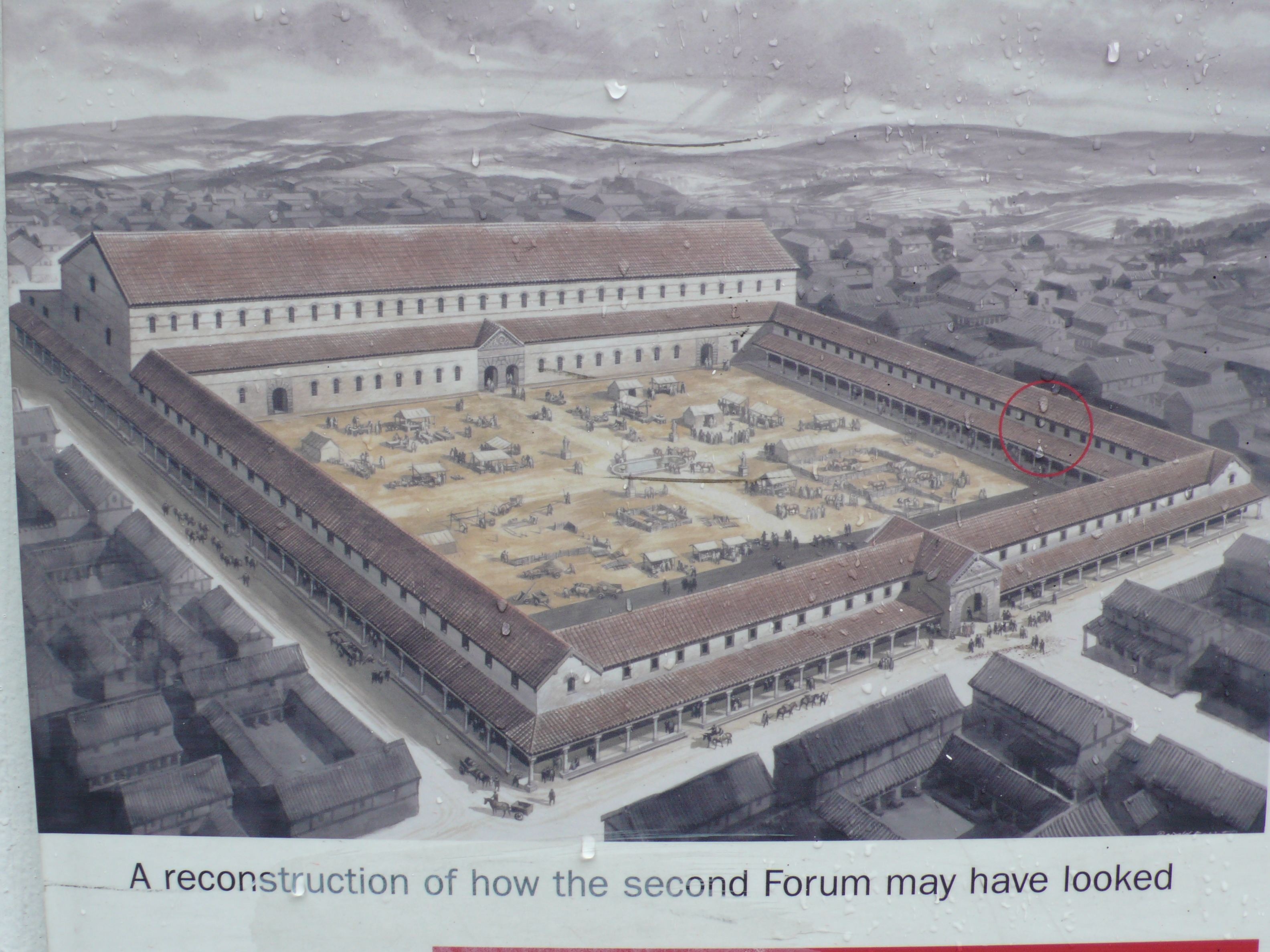
Exhibit on Roman ruins discovered near Leadenhall

Roman building thought to have been on this site near Leadenhall

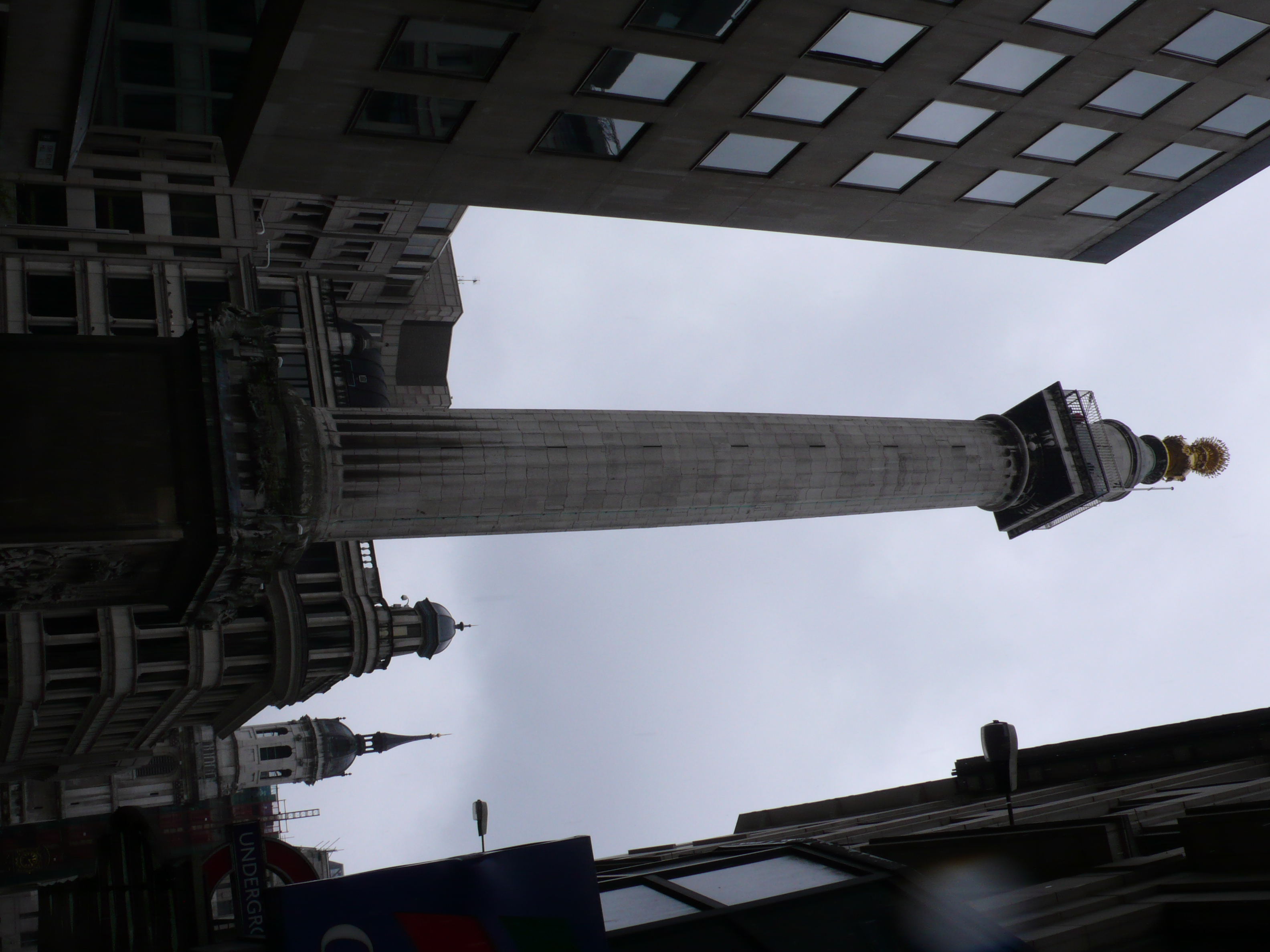
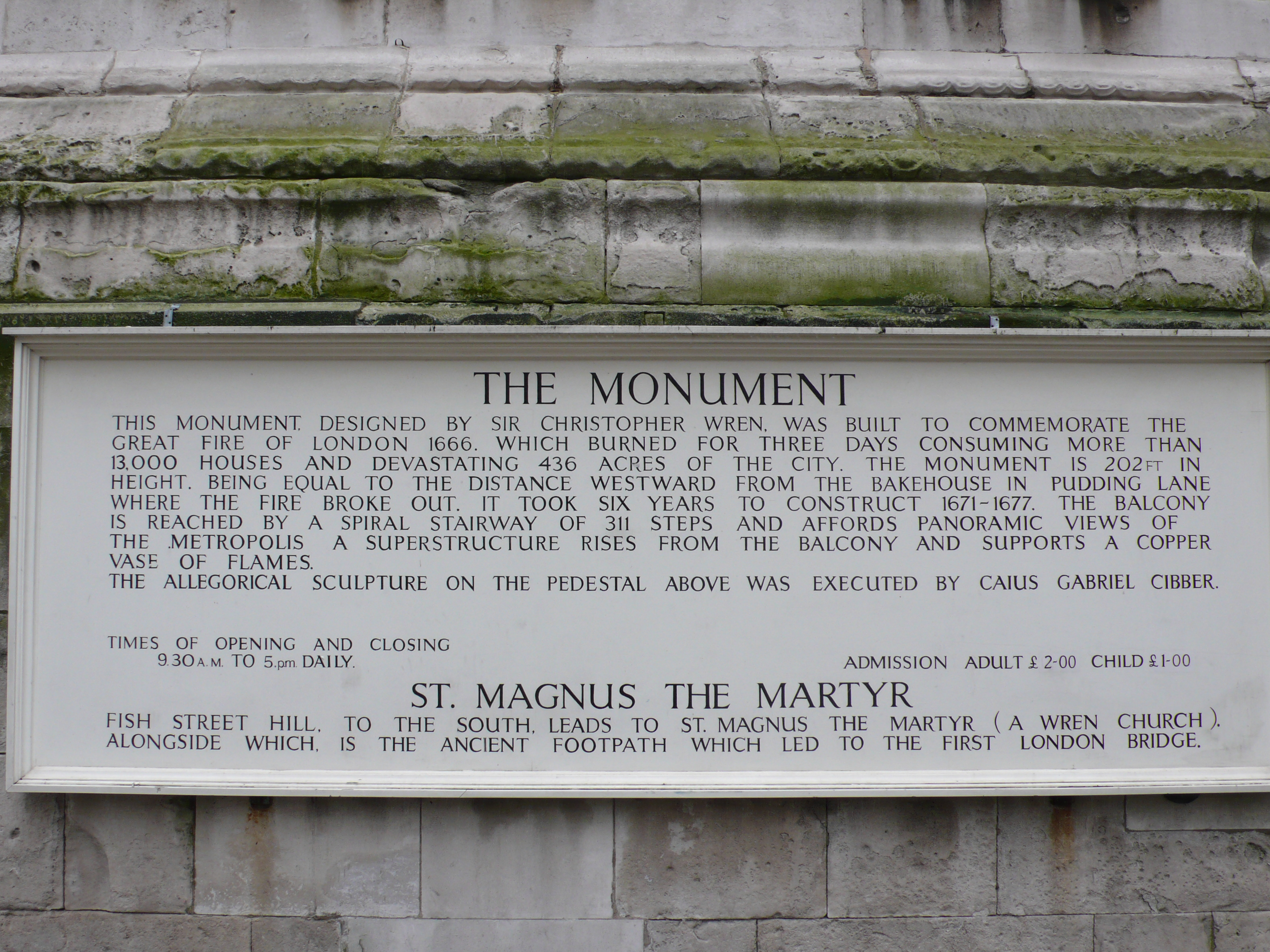
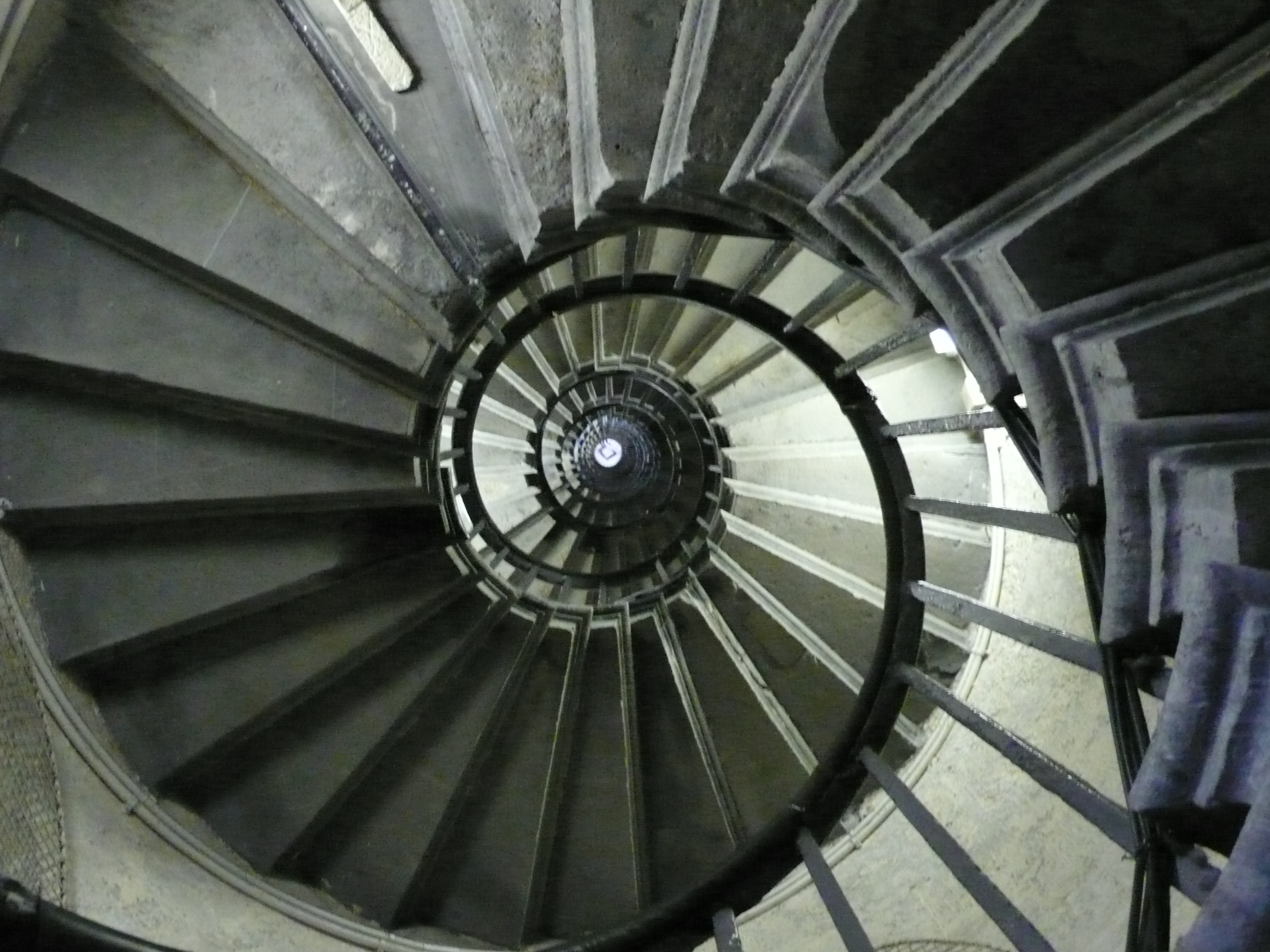
The Great Fire of London in 1666 changed the face and future of the city.  This fluted Doric column (below) designed by Christopher Wren is the tallest free standing stone column in the world, and is exactly 202 feet high – the same distance from the monument to the source of the historic fire: a bakery on Pudding Lane.  The Monument is open to the public and has a viewing gallery at the top of the 311 steps which encircle the interior.  You can even take away a certificate of your achievement!

The Monument by Sir Christopher Wren to the victims of the Great Fire of 1666

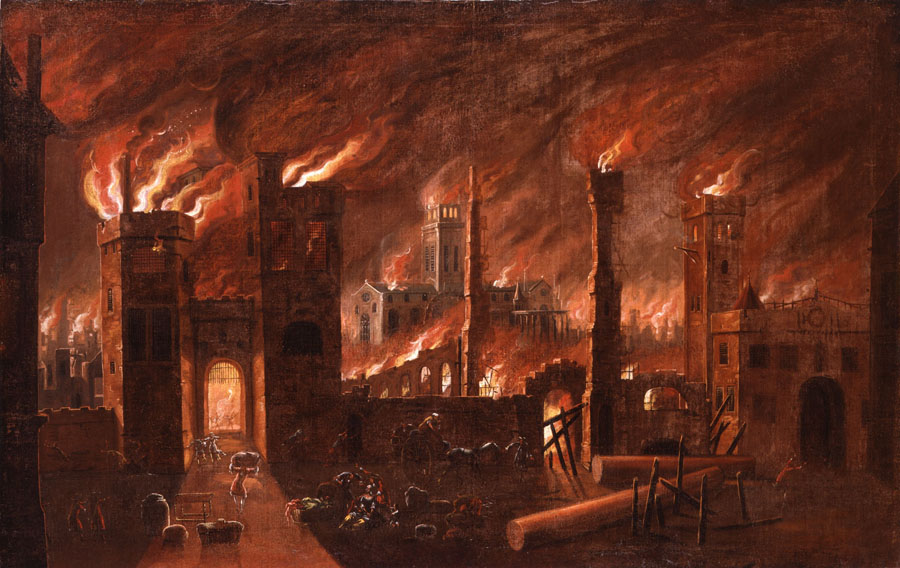
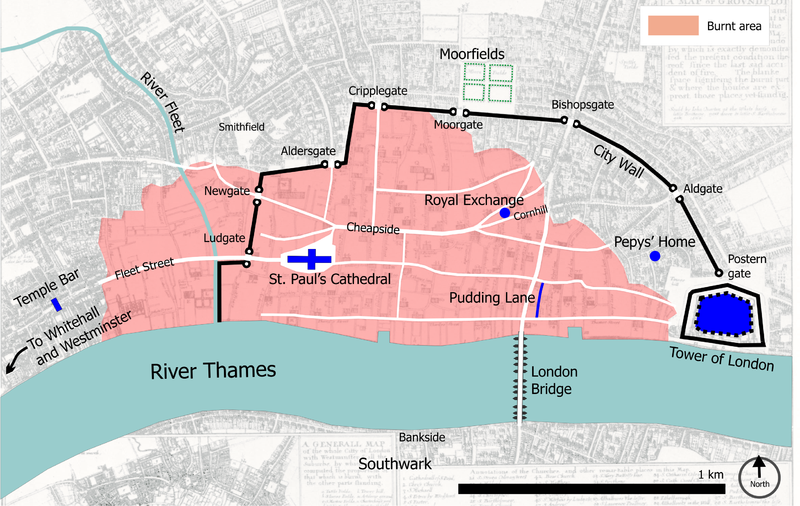
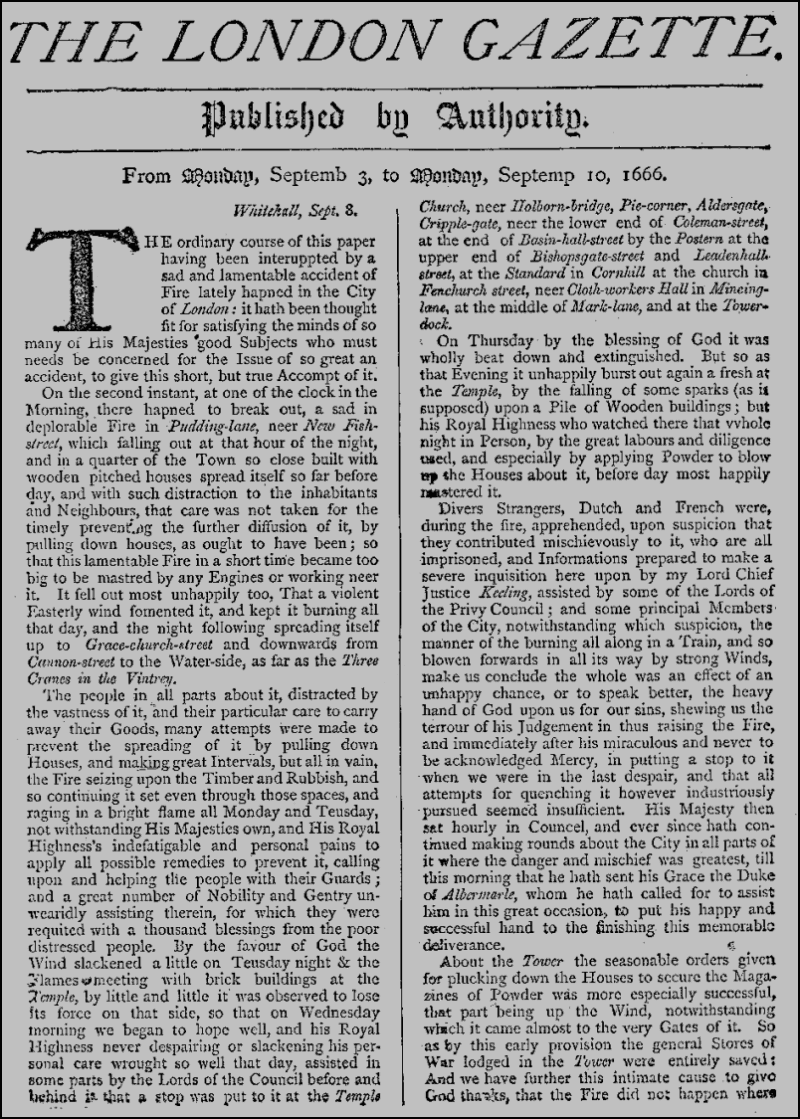
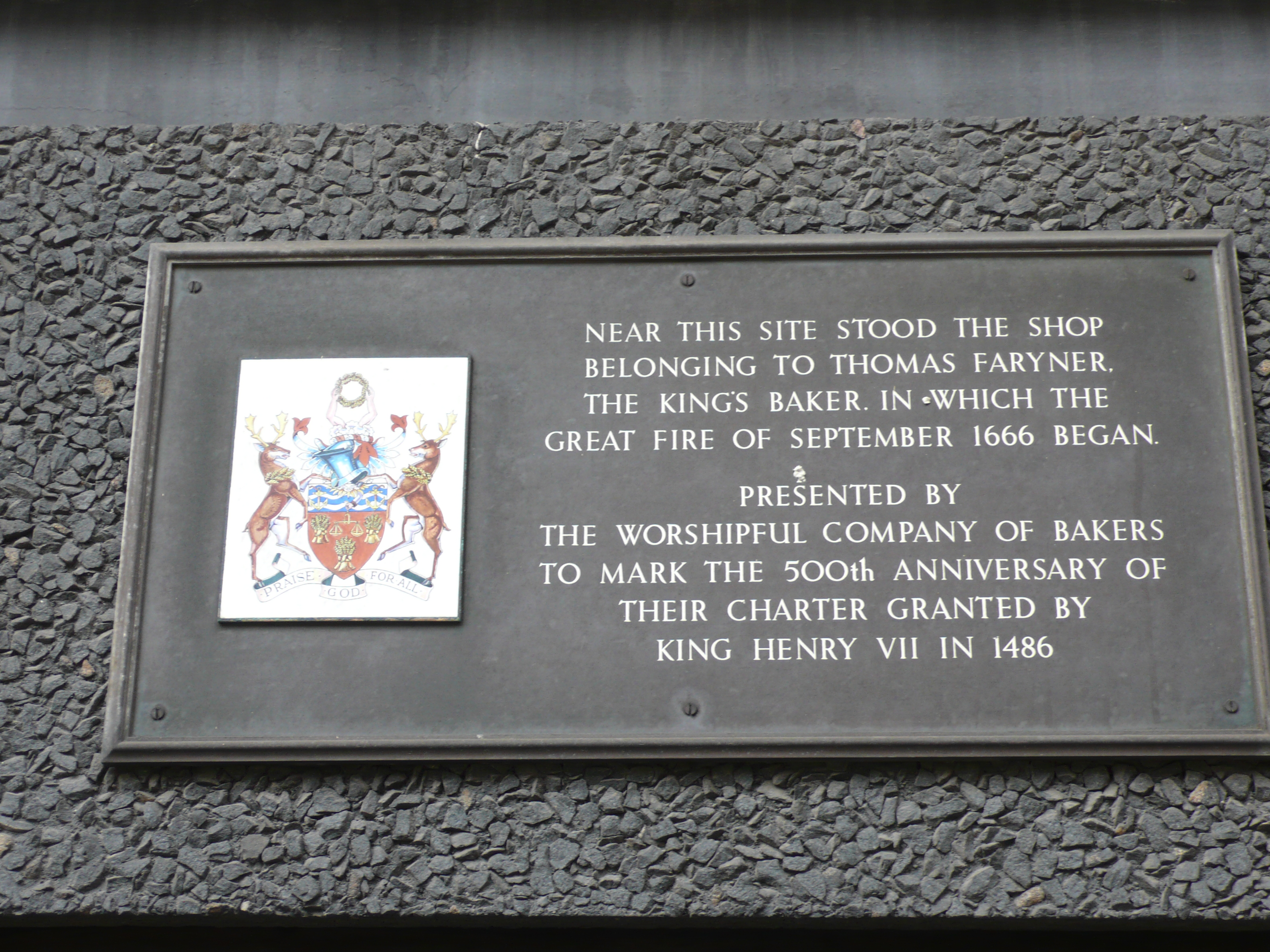
Just after midnight on the 2nd of September 1666, a fire started in Thomas Faryner’s bakehouse on Pudding Lane, and by the evening of the 3rd of September fully one-half of London had been consumed by the flames. Three days later, most of London had been destroyed. 87 churches including St. Paul’s Cathedral and 13,200 houses were decimated by the great fire, though only five people were reported to have died.  That was one bit of bright news to come from the tragedy, another was probably even more dramatic: the fire brought to an end a serious plague which had killed thousands and thousands of Londoners in the months preceding the fire.  It took over six years to rebuild the city, preserving the twisty old medieval street layout which Christopher Wren fought vainly to re-design into a more modern cityscape.

Map of the Great Fire of London 1666

London Gazette Headlines September 10,1666

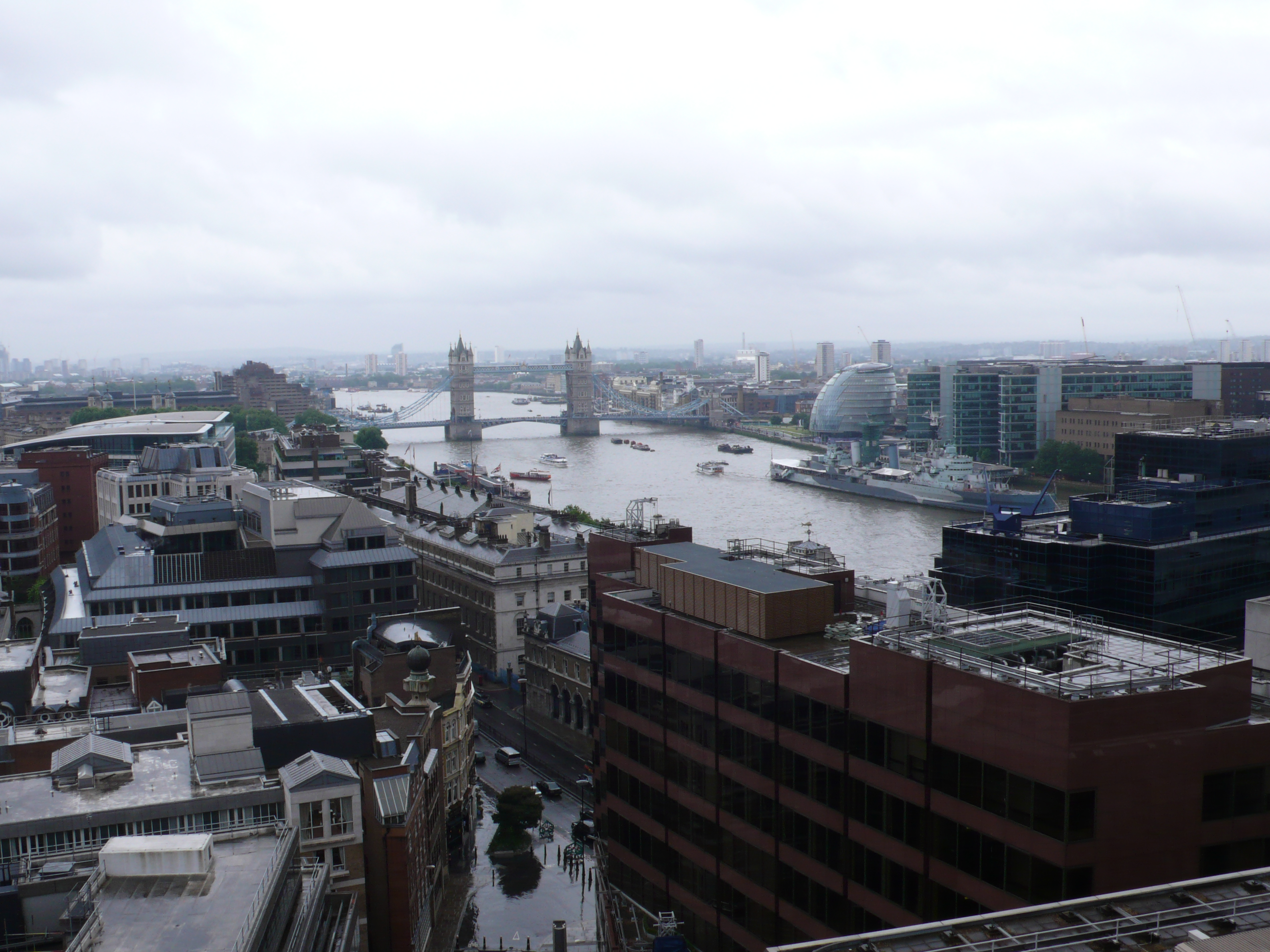
View from the top of the 311 steps, the Monument affords a 200-foot high vantage point overlooking a modern City

Lloyd's of London

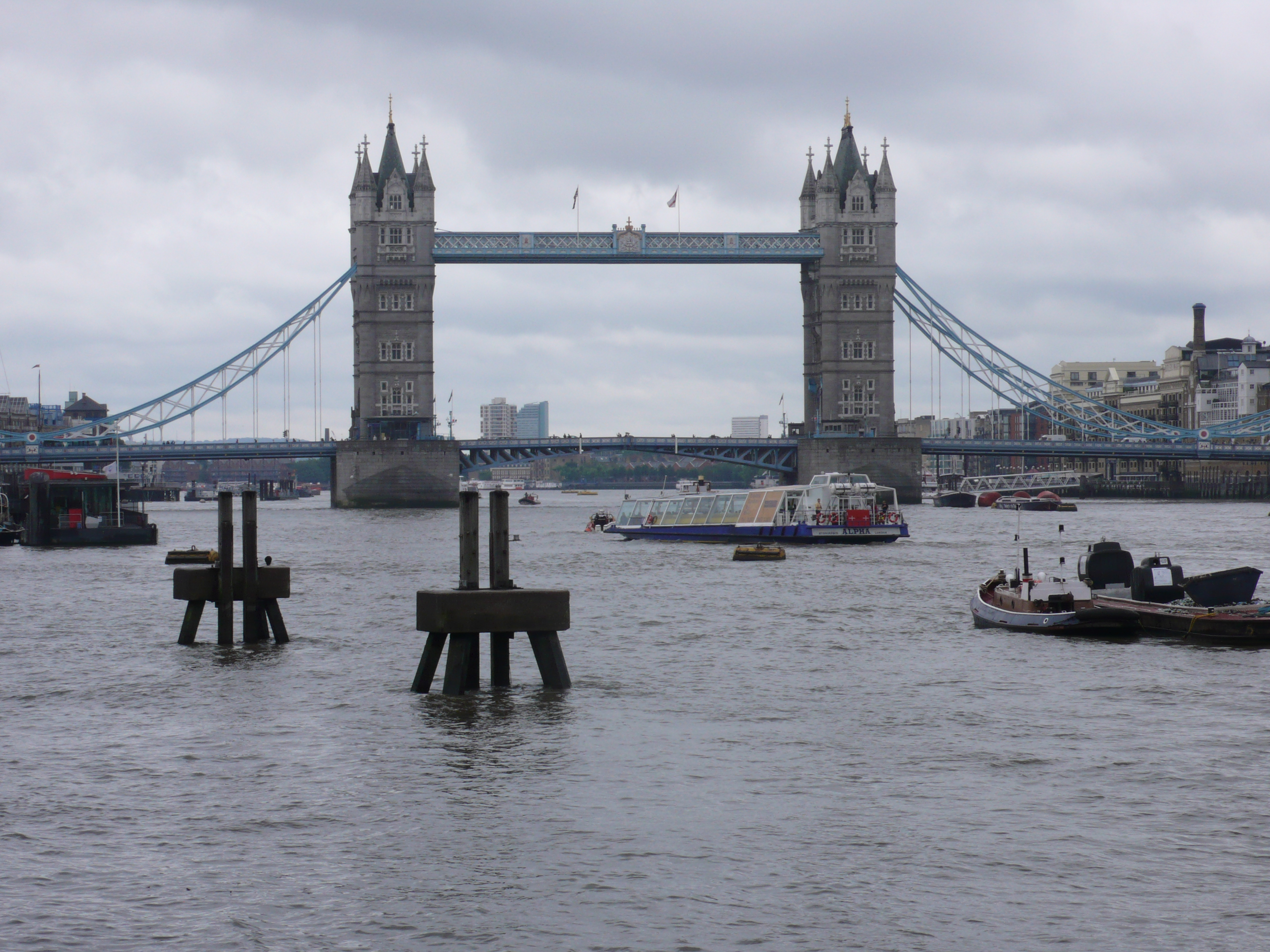
The Tower Bridge

Custom House on the Thames

Detail of wind vane on roof of Custom House

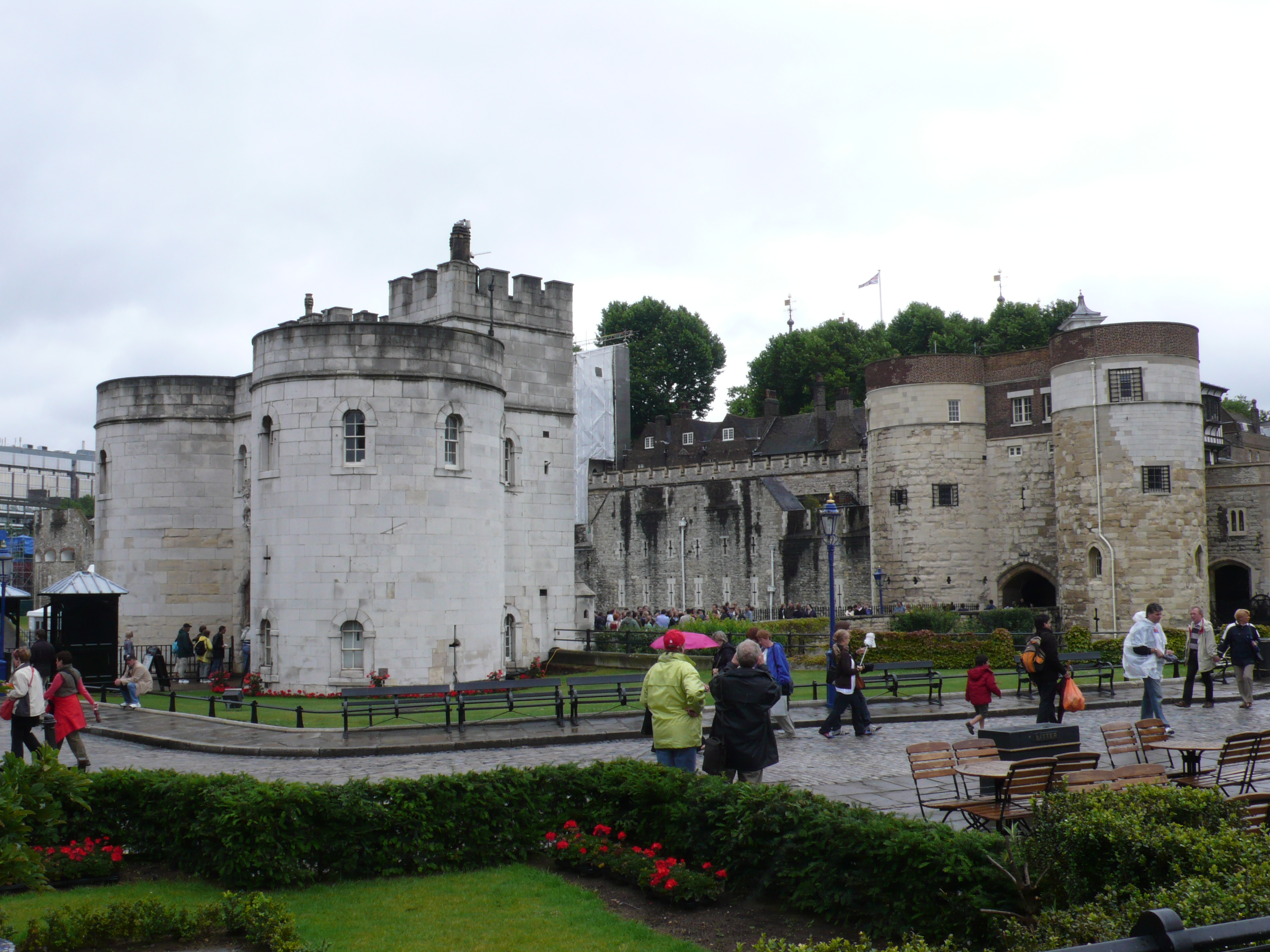
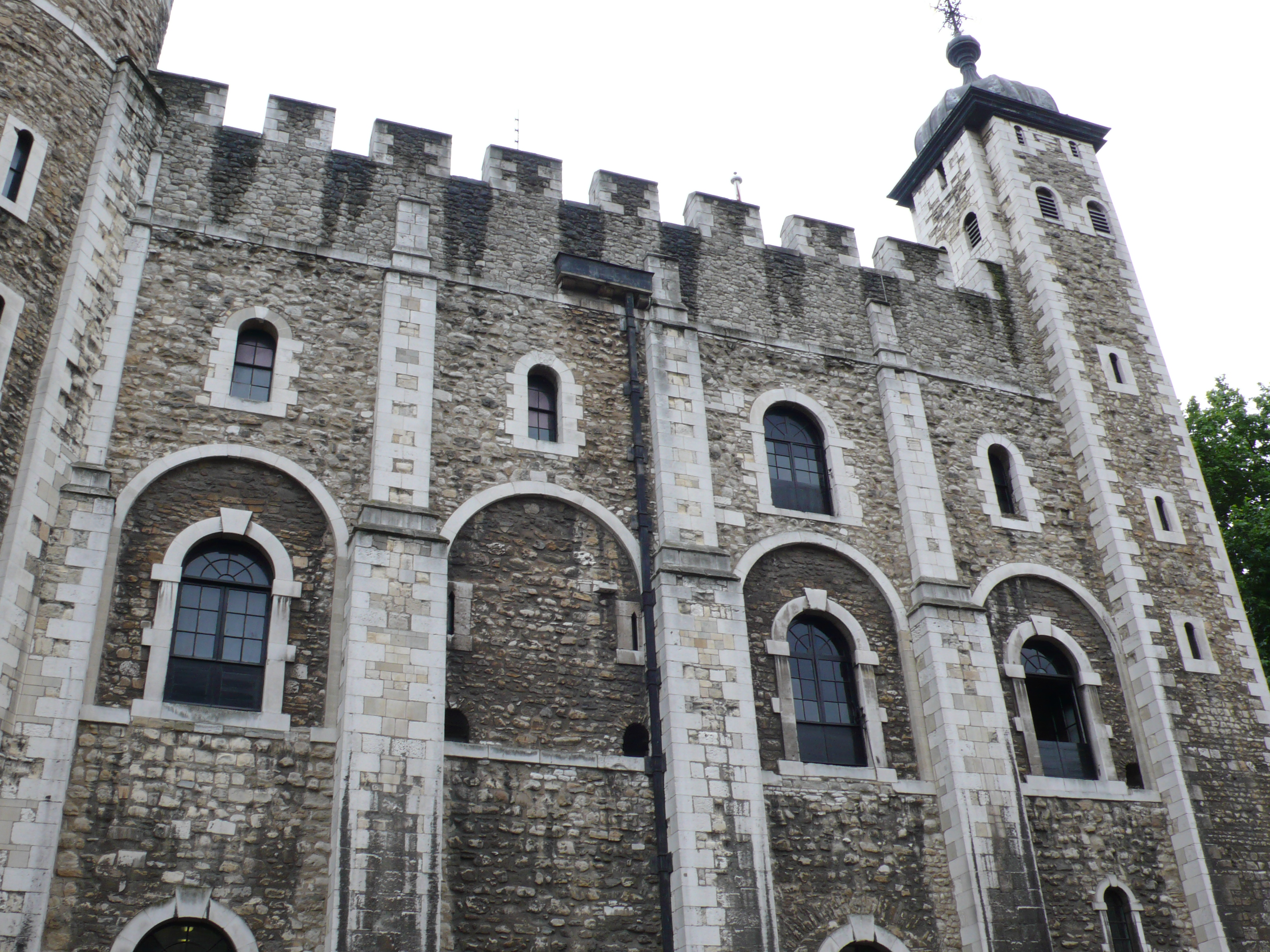
The Tower of London, first established as a military bastion on this Thames-side location by King William I as a symbol of his authority over his newly acquired Empire, later replaced with stone works and the central “White Tower” which was built in the 12th Century of Cairn Stone from Normandy.  The Beefeaters, special guard who are stationed at the Tower, have served the King and guarded the Crown Jewels at this location since the reign of King Henry VIII.

Tower of London Complex

King Henry VIII

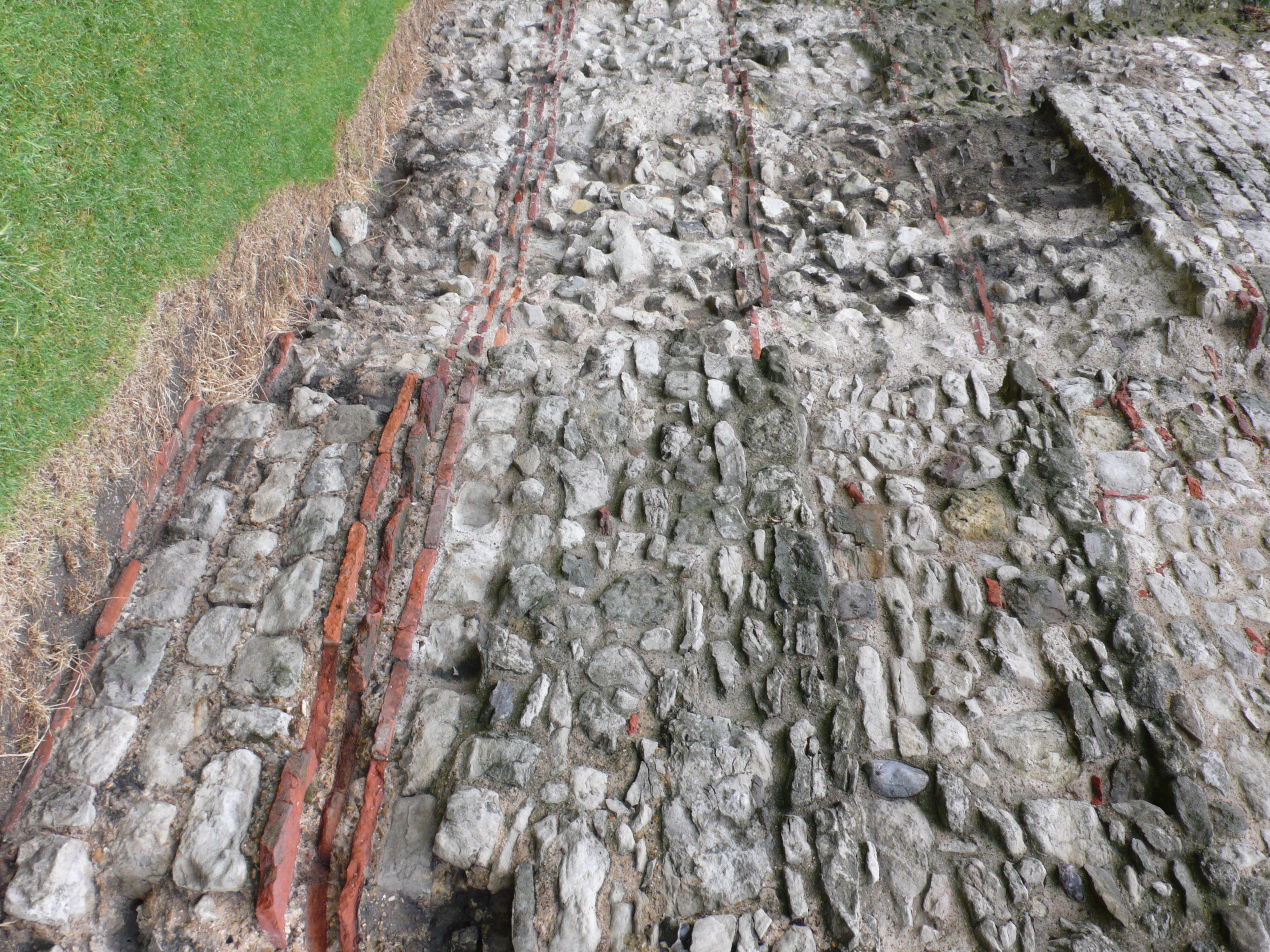
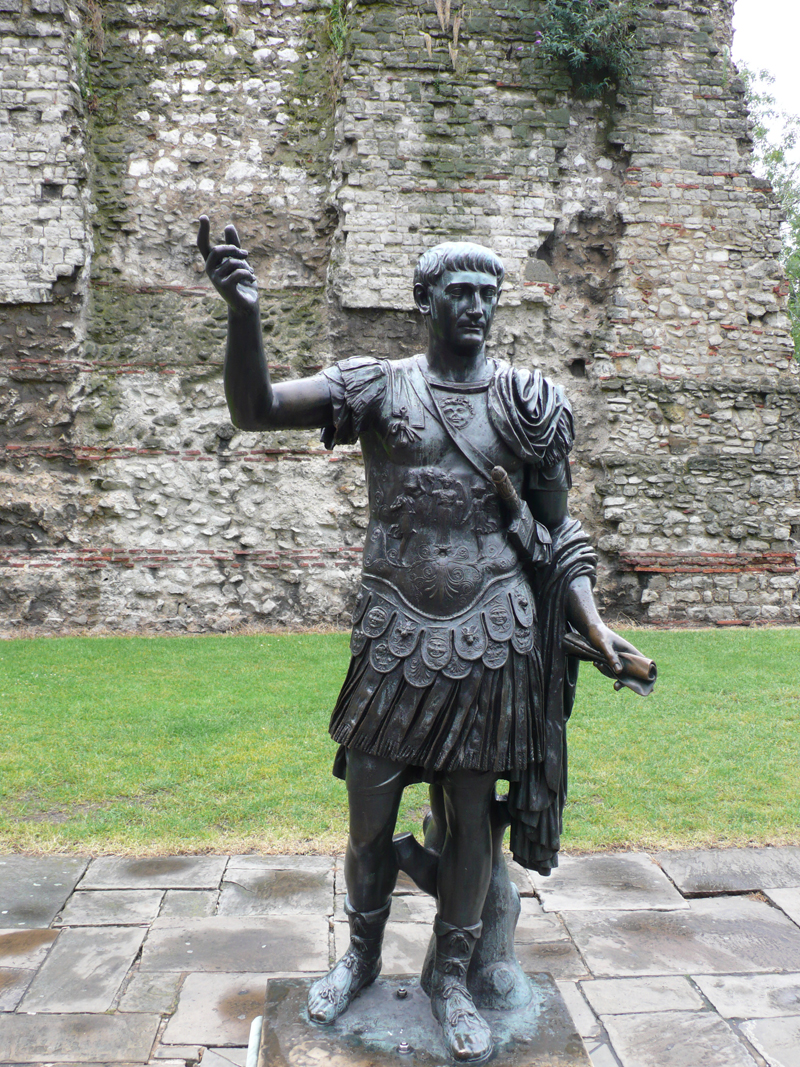
Up the street from the Tower of London, next to Tower Hill and the Underground Station of the same name, you’ll find a section of original ancient Roman wall, identifiable by the course of red brick laid in horizontal layers to give the stone wall strength, and a statue depicting a Roman citizen from that era nearly 2,000 years ago.  Layers of millennia through which this metropolis has endured are stacked in thin bands along and above this wall, each layer silently holding onto memories and tales that will never be revealed.  The city hums and buzzes by, hardly noticing the green swale and chiseled stone that mark its beginnings.

End of The City and Tower Tour, next: “The West End”.

City of Pubs

•August 28, 2010 • 2 Comments

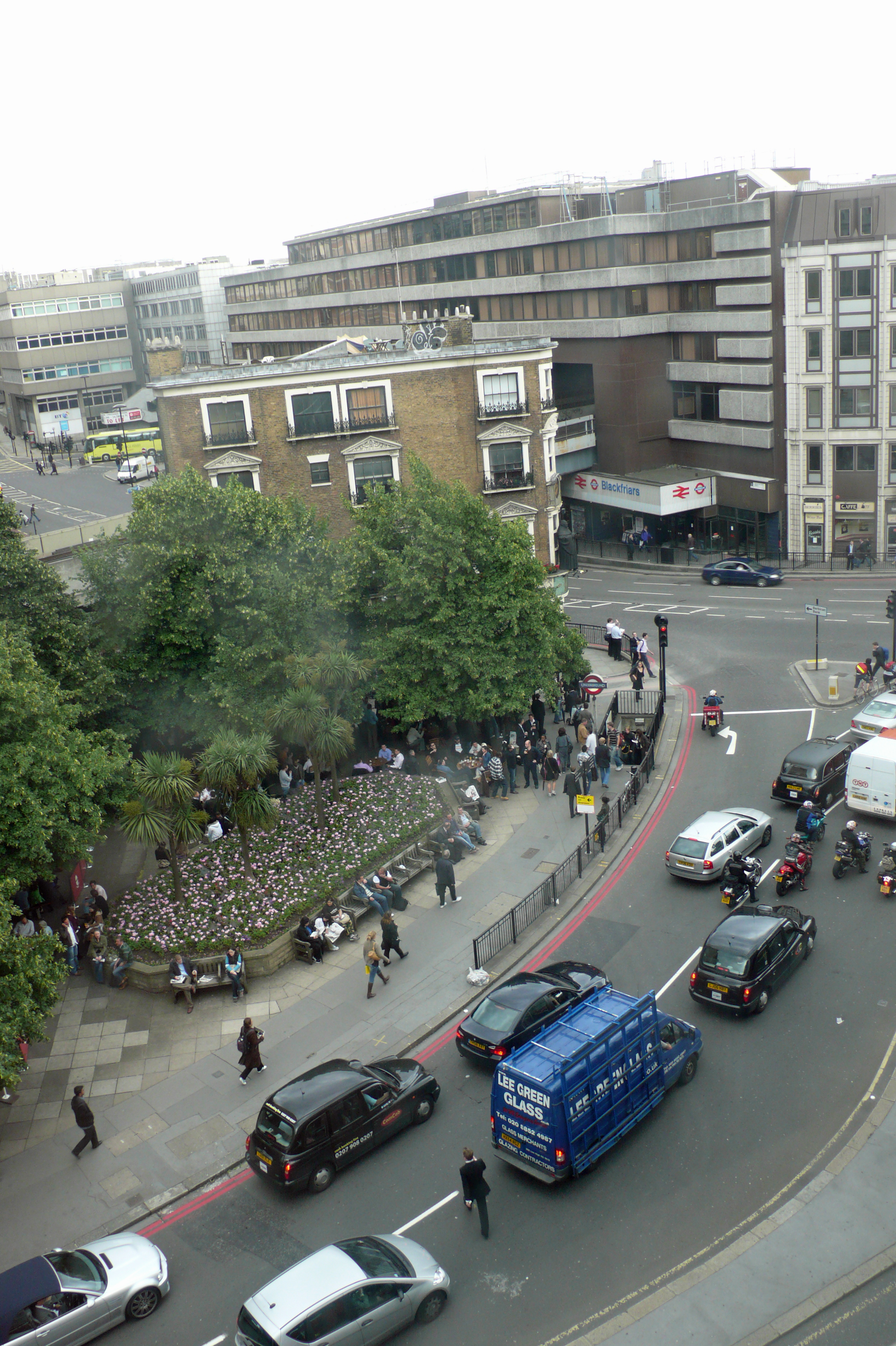
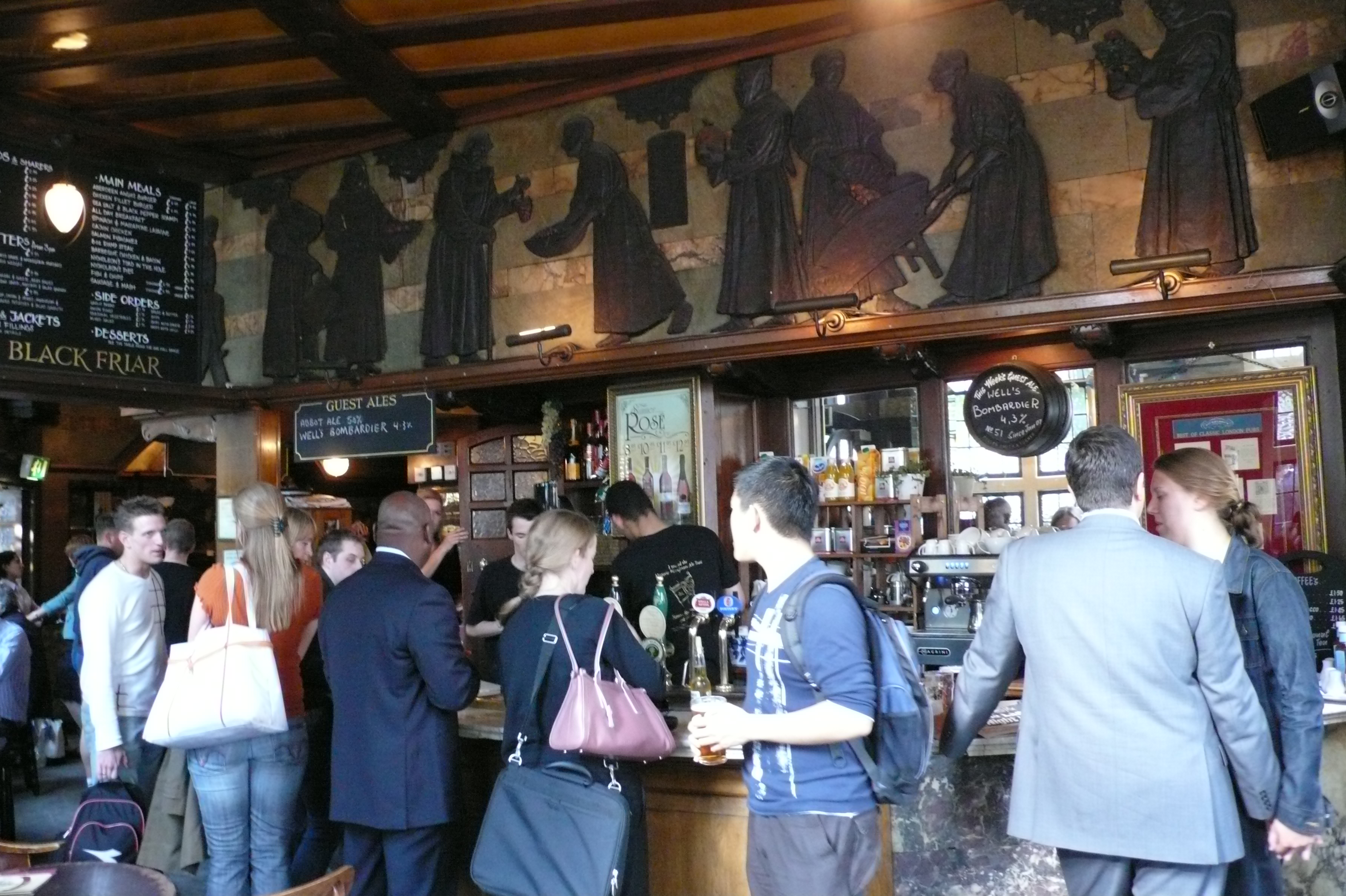
LONDON, ENGLAND June 29th –  Across the road from my hotel is one of the classic pubs in London: Blackfriar’s. It wasn’t hard to understand why there are so many references to London pubs (public houses) in literature, theater, televison and movies. The reason for this catches your eye at every turn in the crowded heart of that huge city.  Literally, every block had at least one – with a brightly colored sign, some ornate painted wooden framing and spectacular flowers to invite you in from the hard-edged streets. Sometimes there were several in an area with high traffic and nearby office density.  Always, they were crowded after work.  The pub-food was some of the best “comfort food” I’ve ever eaten.  The company, for an old American tourist traveling alone over a few days, was remarkably friendly.  I even corresponded by email for a few months after returning to the States with a couple I met in the garden outside Blackfriar’s one evening. Yes, remarkably friendly, indeed!

Now, I had four days before Devin’s tour group departed and she moved her things to my room on a different floor of the Crowne Plaza. She certainly wouldn’t want me around the hotel, God forbid a startled encounter with her Daddy in the lobby or the restaurant!  They had a full series of tours and expeditions planned.  I did, too.  We’d meet up on Sunday July 1st for a surprise I’d arranged with the help of the hotel concierge: Tickets to the Concert for Diana at Wembley Stadium!  So, until then, I must keep myself both busy and away from the hotel.  Easily done. Alright then, let’s go dive into this place!

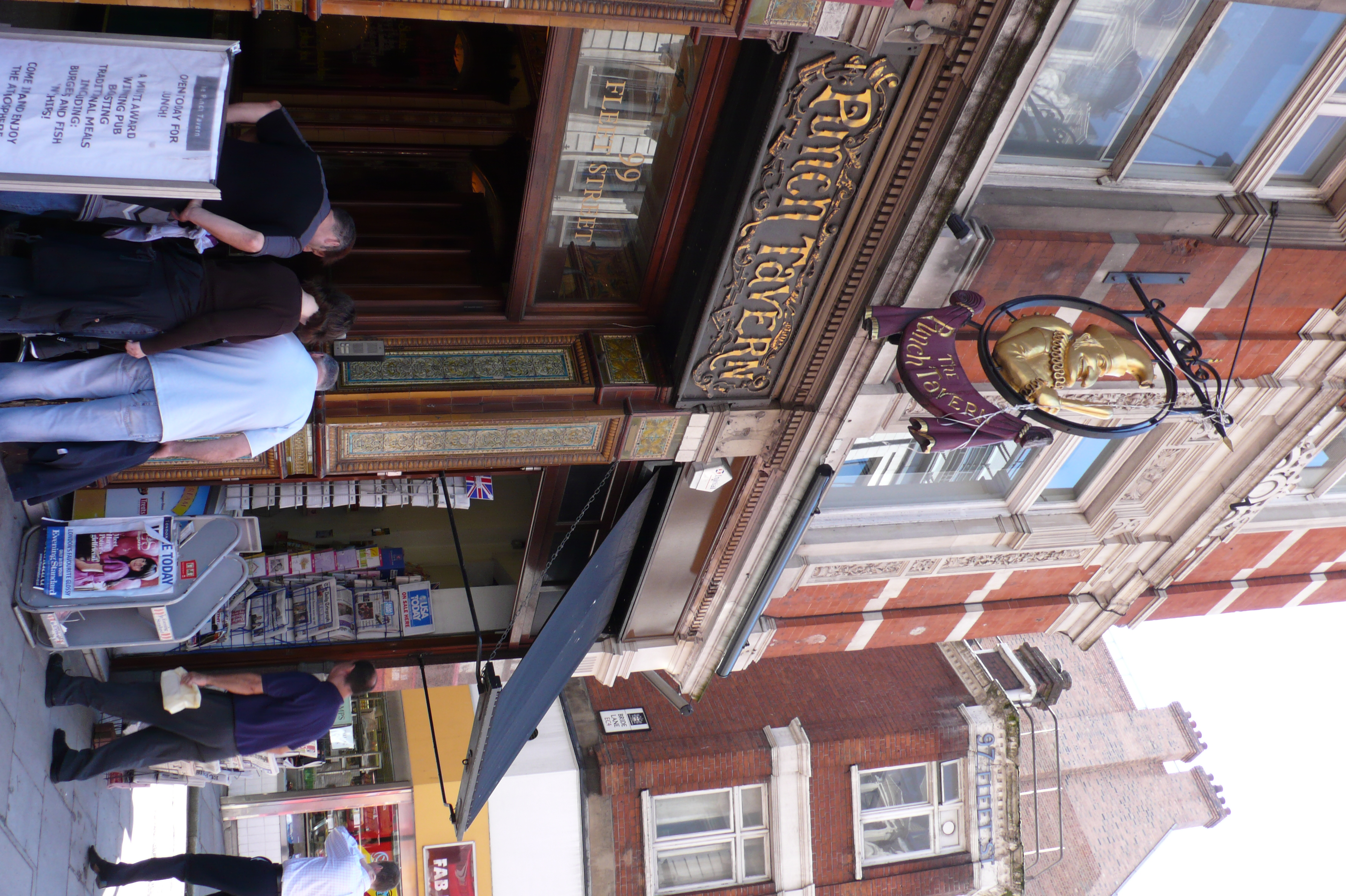
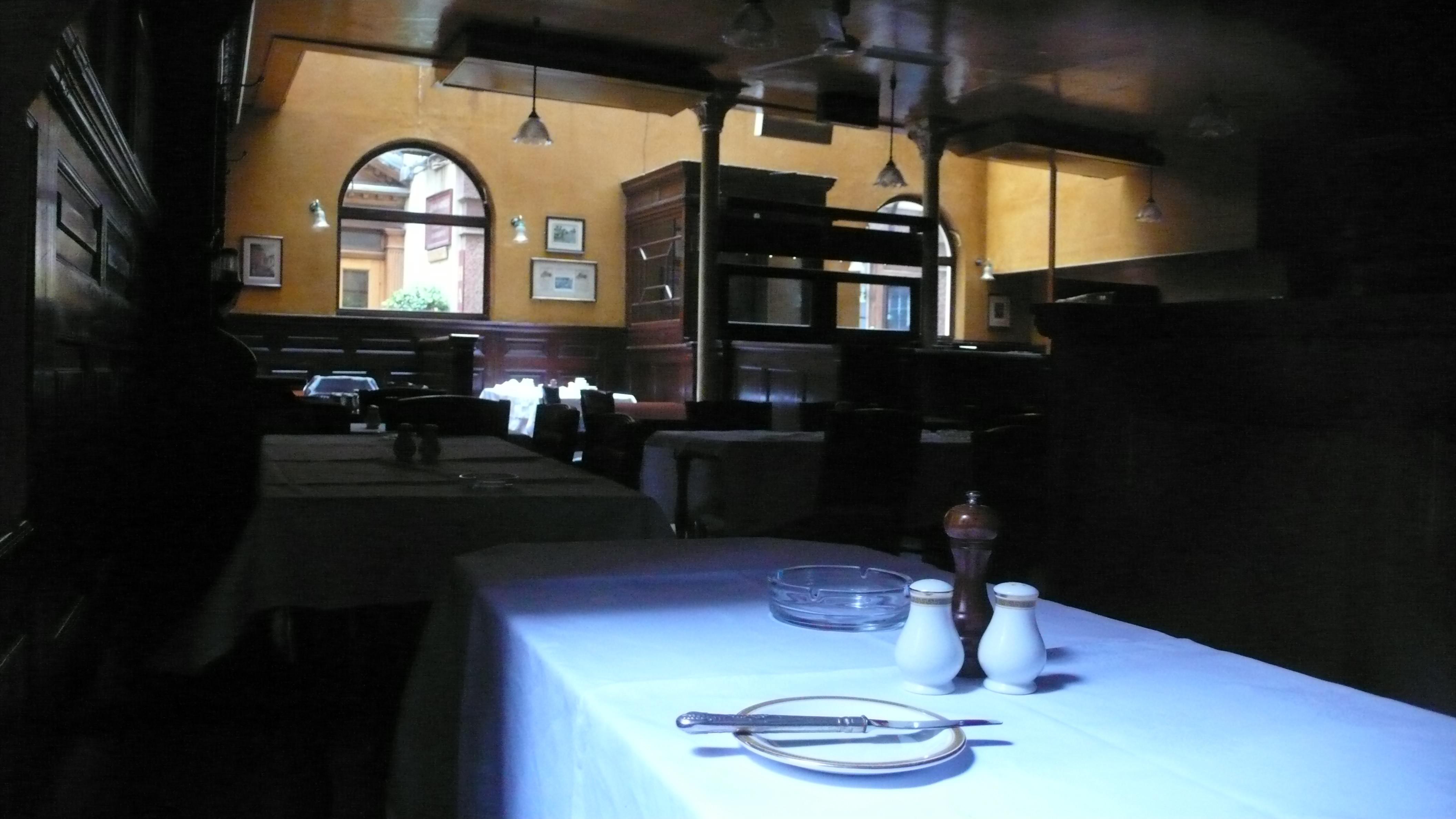
The Punch Tavern 99 Fleet Street, London

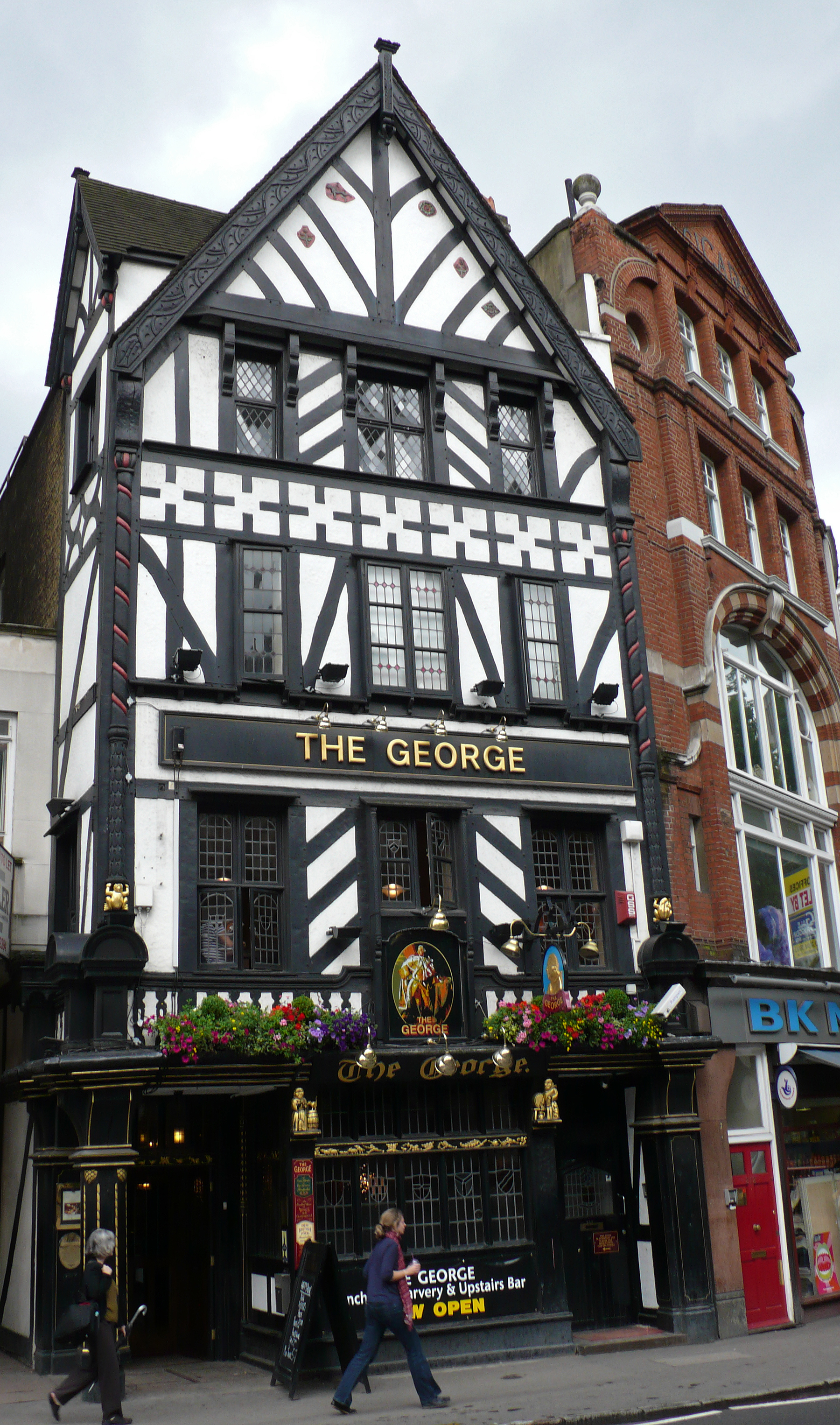
The historic road variously called Fleet Street, The Strand, Ludgate Hill, Cannon Street and other names is still the same by-way generally following the north bank of the River Thames in an East-West direction from the Tower of London westward to St. James Park, Green Park and Buckingham Palace.  Along this fantastic road are some real architectural gems.  Just down the street from The Punch Tavern, towards the Royal Courts of Justice, is this marvelously middle-ages-looking The George. Frommer’s review of the place is as follows:   “Although the George’s half-timbered facade would make you believe it’s older than it is, this pub has been around only since 1723, when it was built as a coffeehouse. Set on the Strand, at the lower end of Fleet Street opposite the Royal Courts of Justice, the George is a favorite of barristers, their clients, and the handful of journalists who haven’t moved to other parts of London. The pub’s illustrious history saw Samuel Johnson having his mail delivered here and Oliver Goldsmith enjoying many tankards of what eventually became draught Bass.”

The George 213 Strand, London

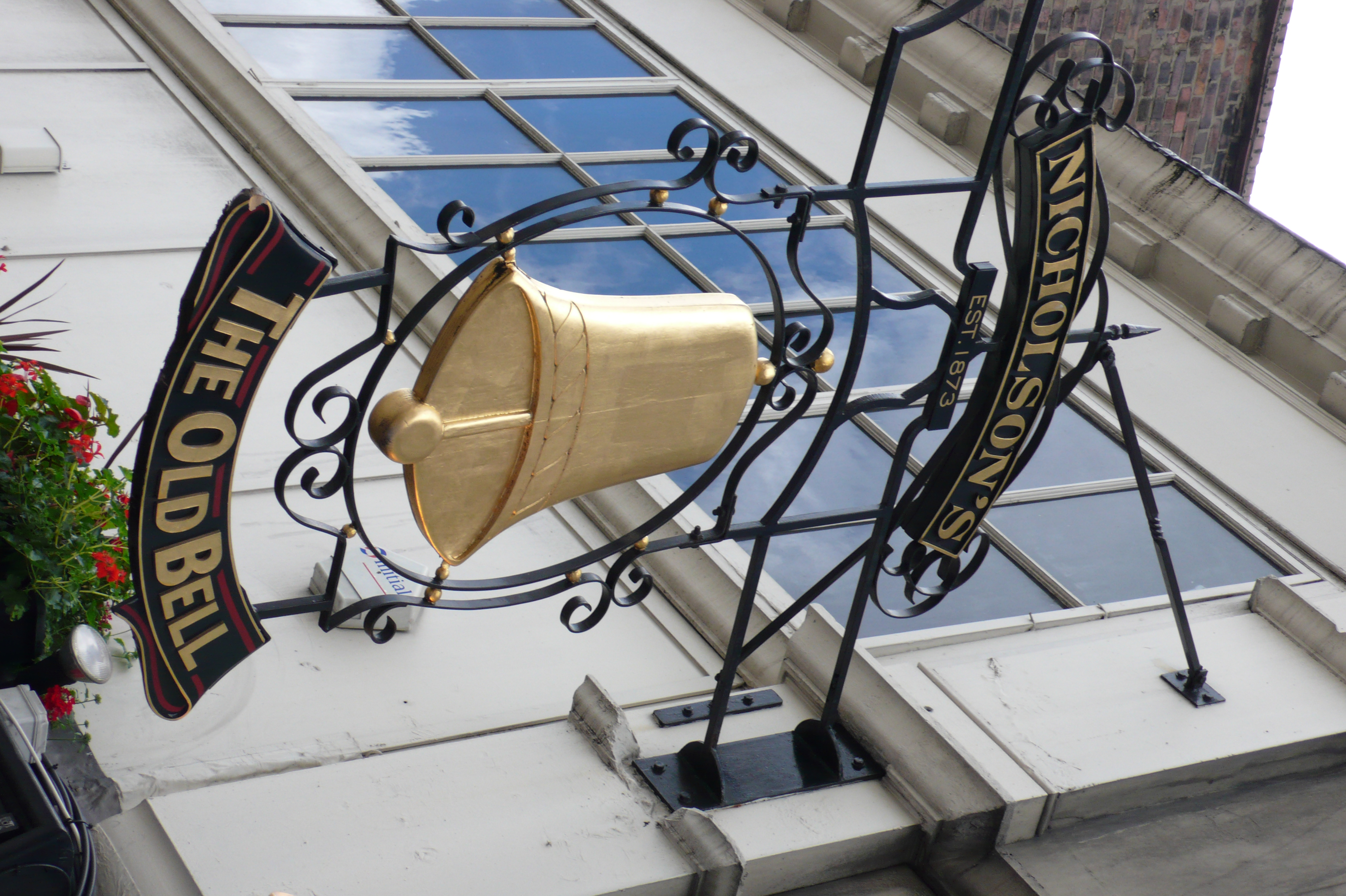
The Old Bell Tavern was built in the 1670’s and has been a licensed tavern for over 300 years. Its worn appearance gives it a lived-in, cosy atmosphere. The rear leads out into the courtyard of St Bride’s Church.

The Old Bell Tavern 95 Fleet Street, London

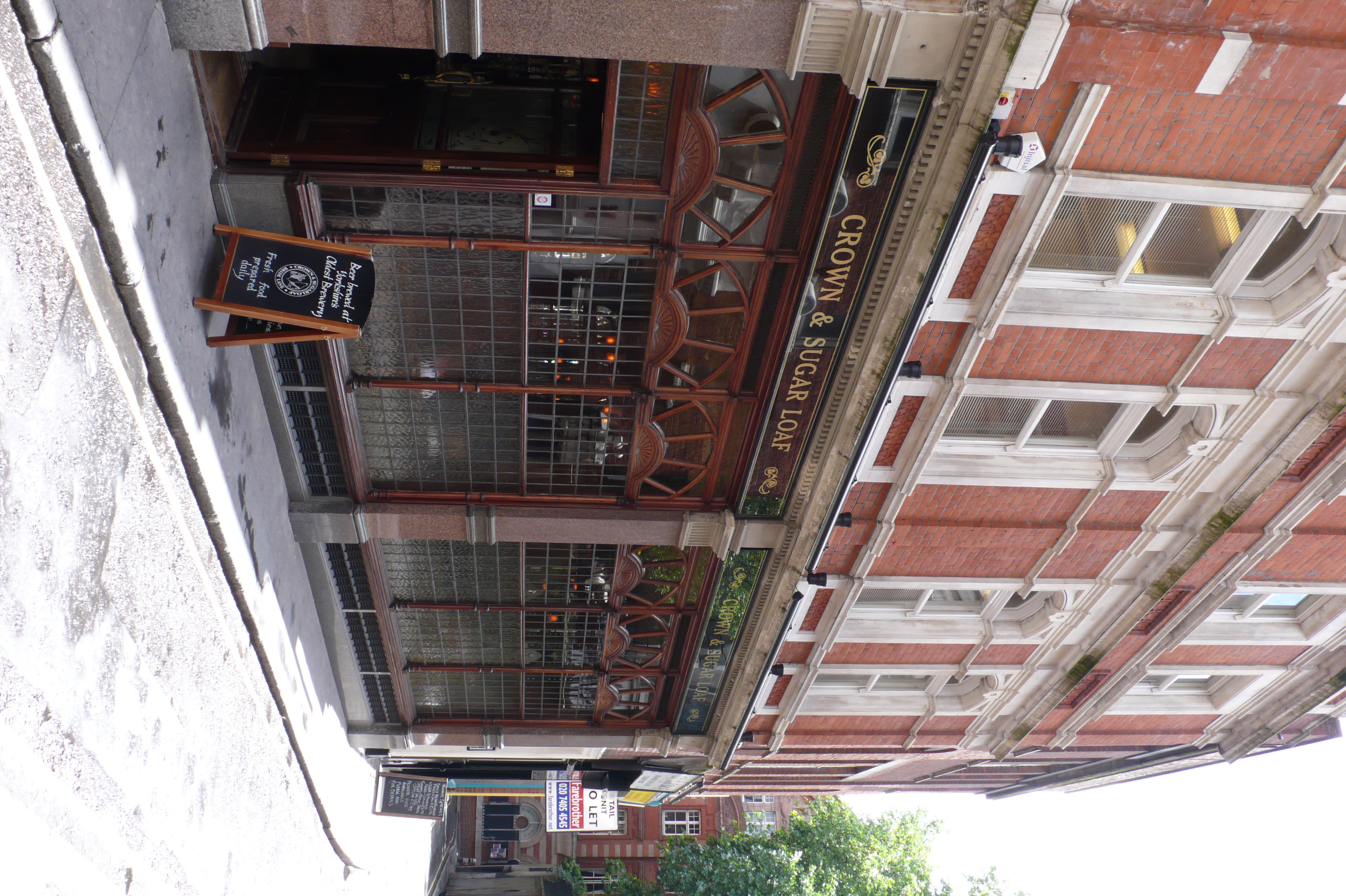
Crown & Sugar Loaf 26 Bride Lane, London

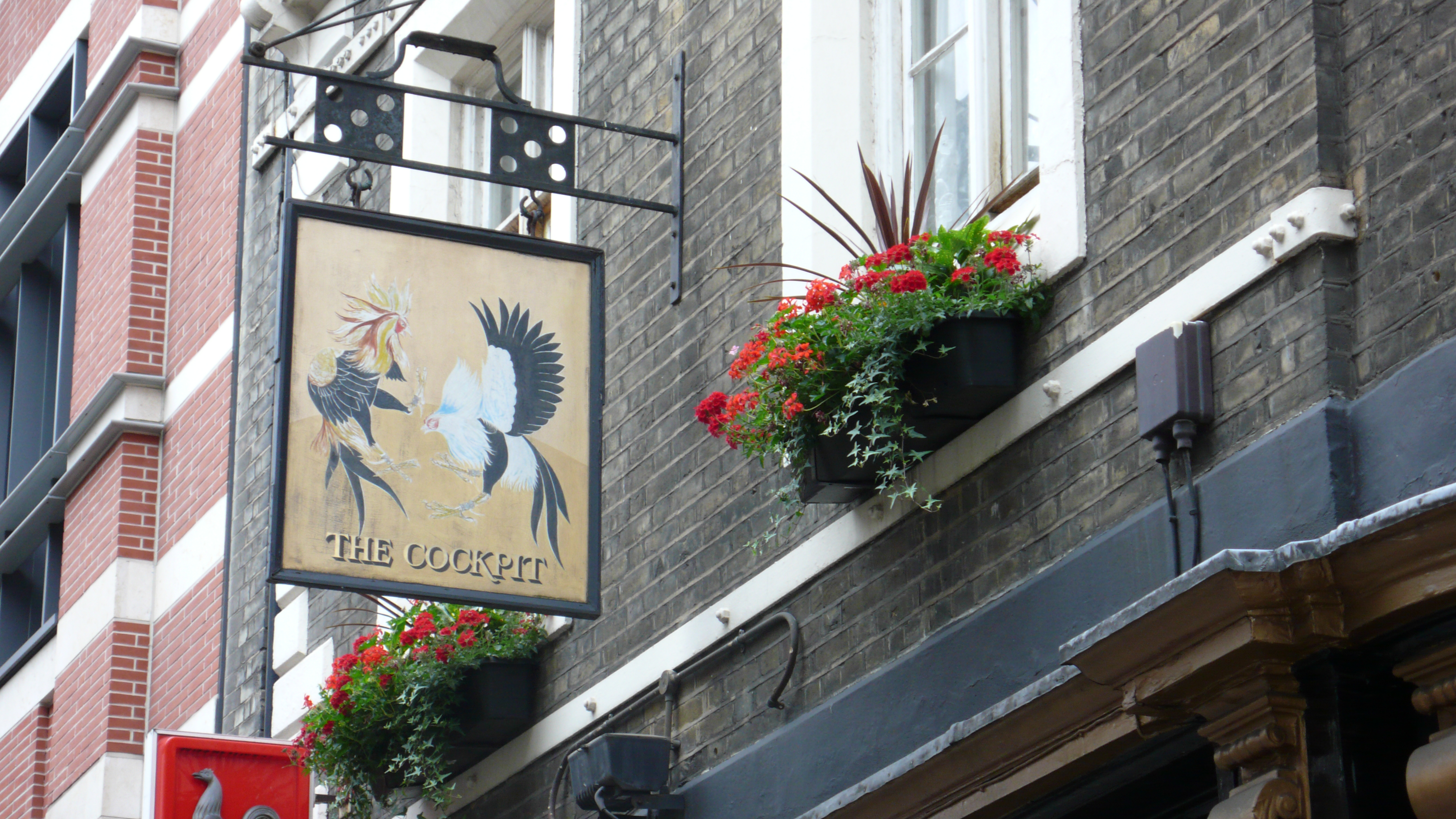
The Cockpit 7 St Andrew's Hill, London - in the narrow alleys between Blackfriar's and St. Paul's

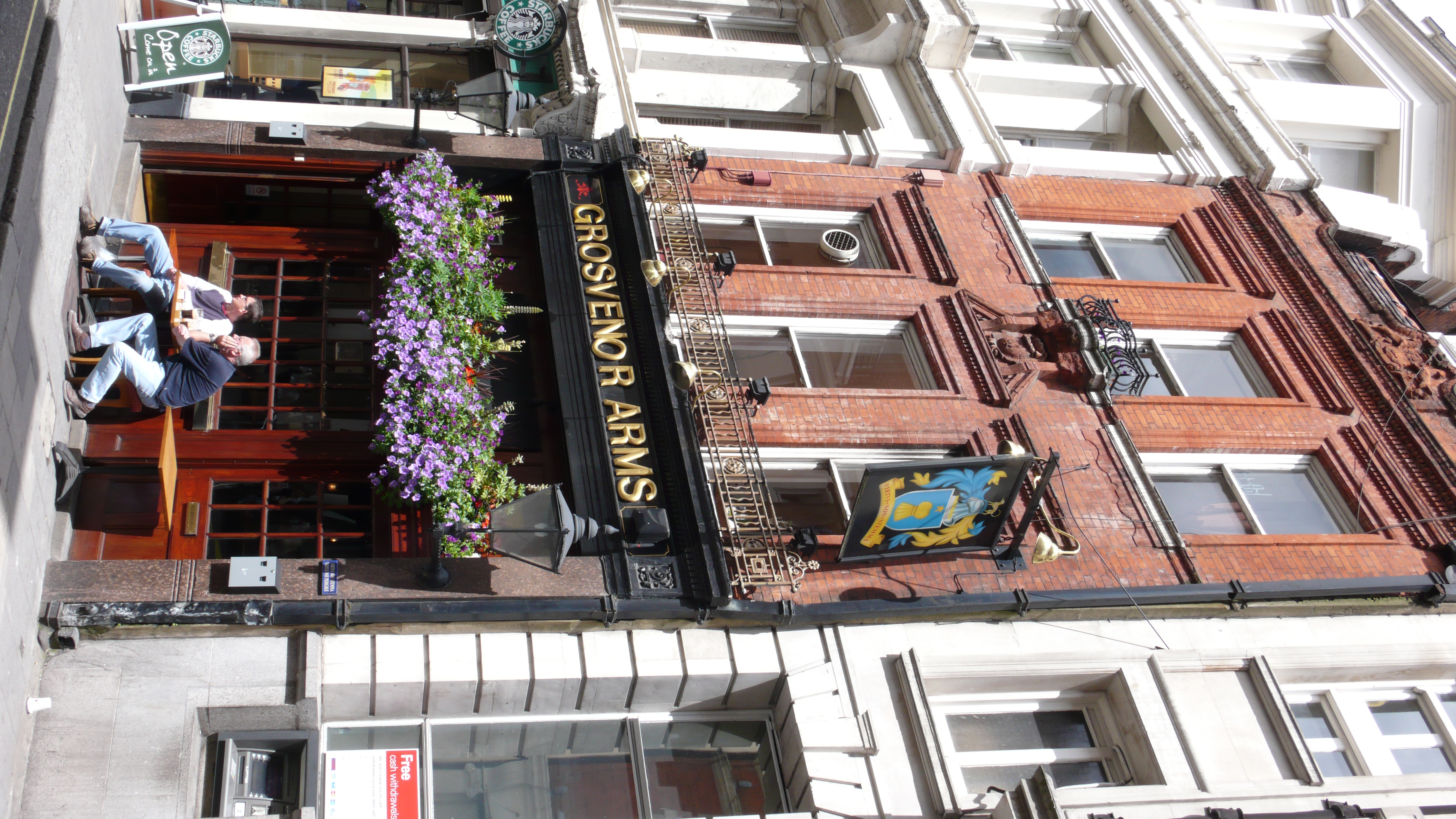
The Grosvenor Arms 2 Grosvenor Street, London

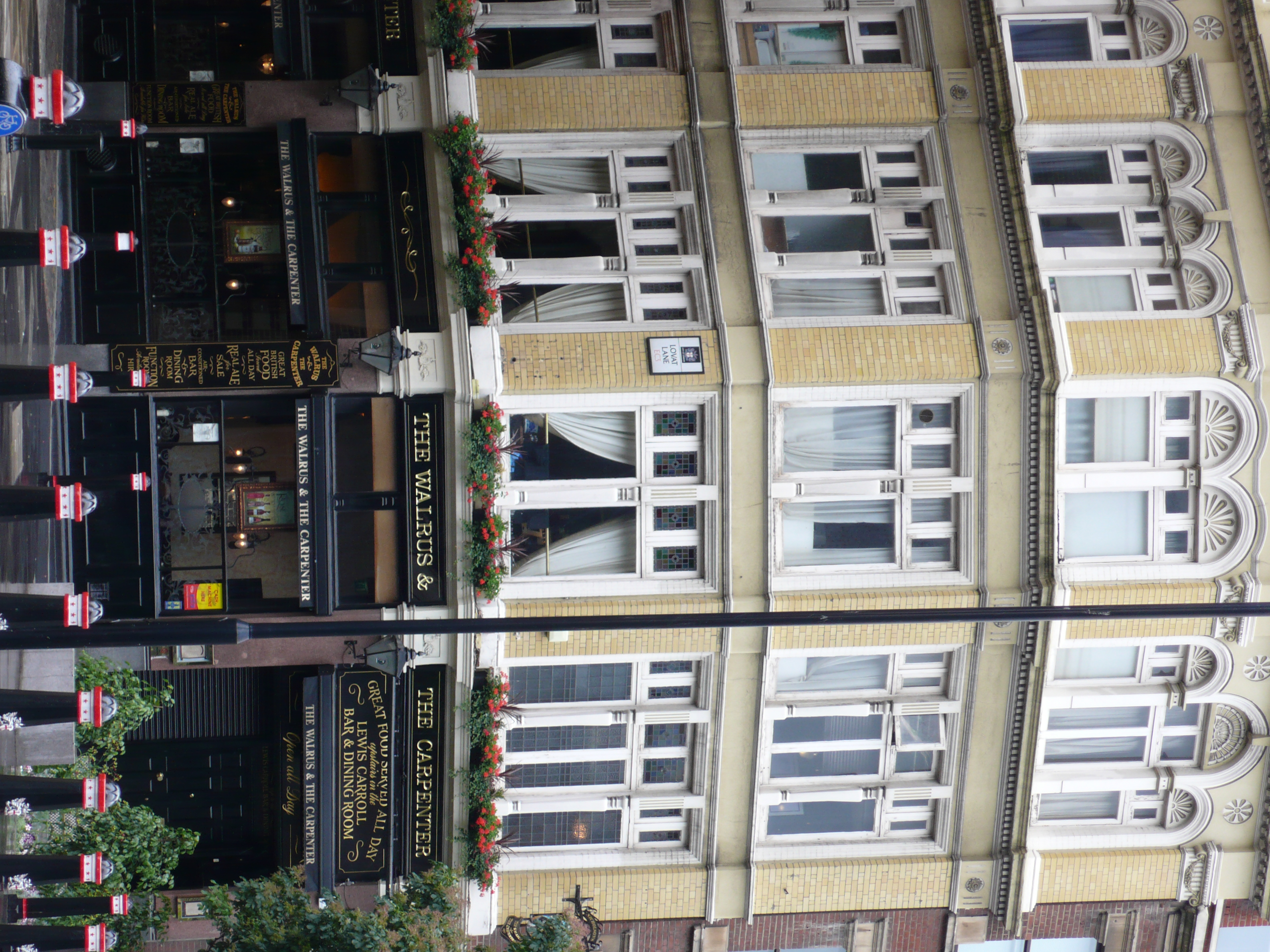
The Walrus & The Carpenter 45 Monument Street, London

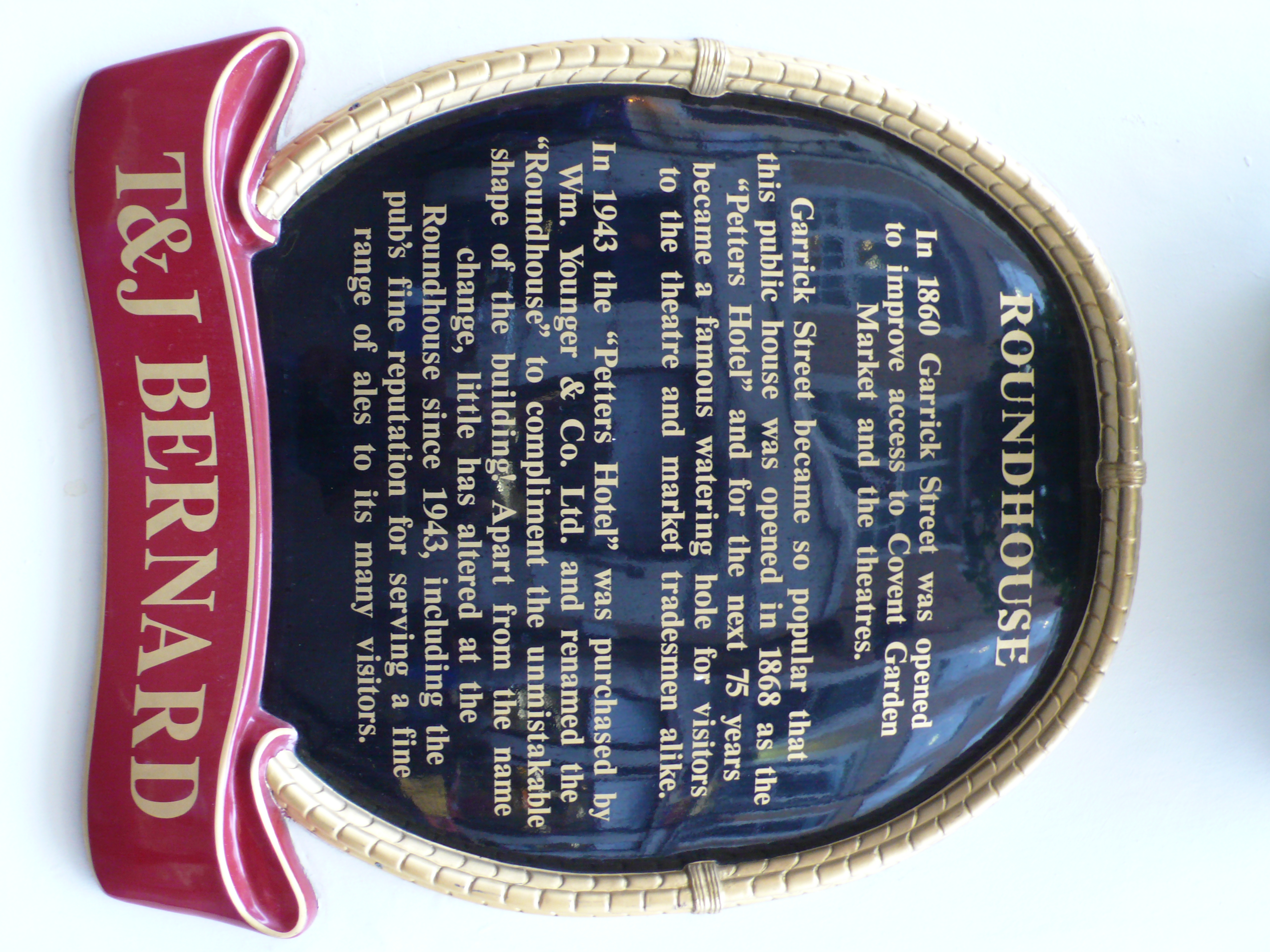
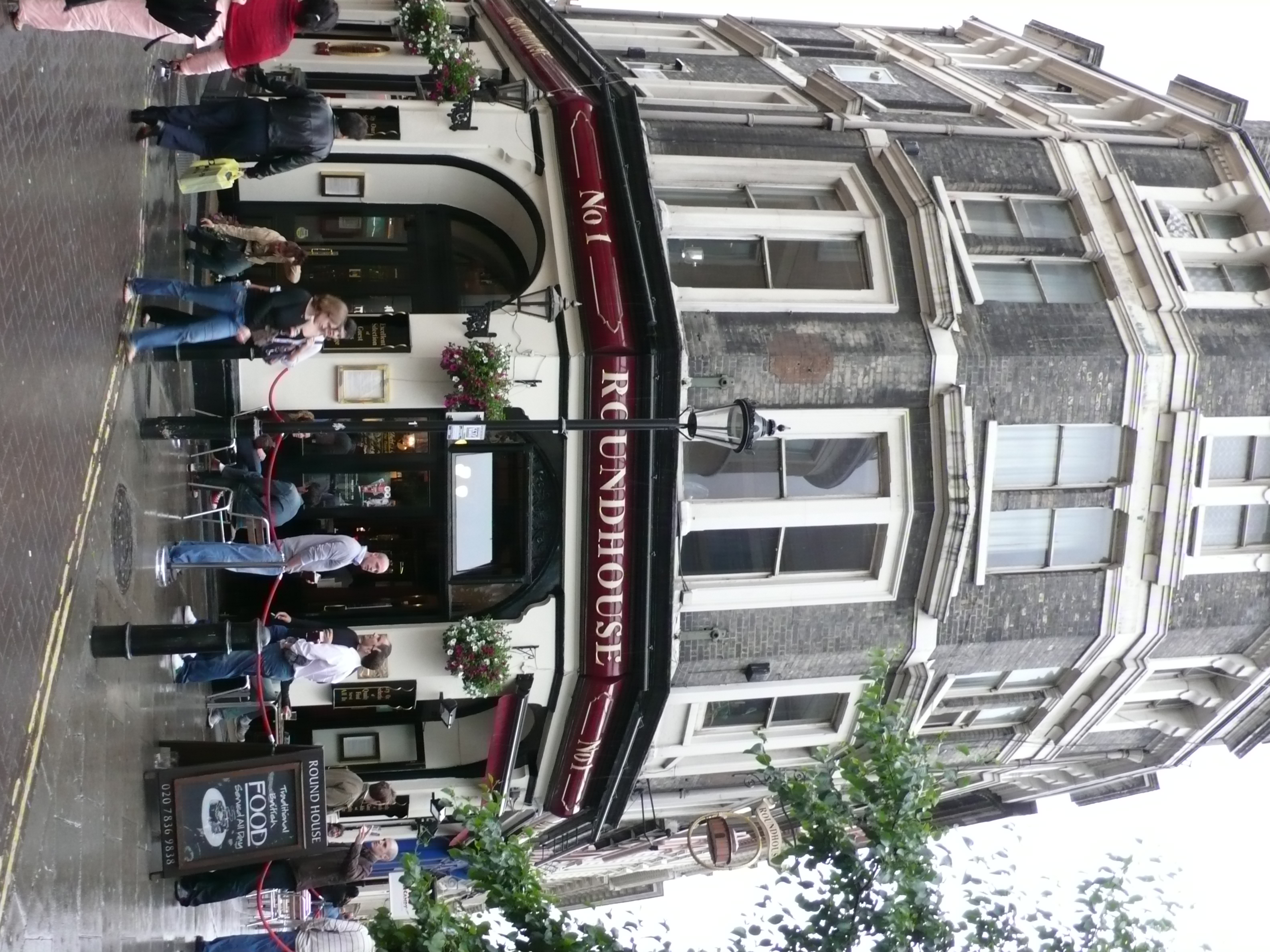
The Roundhouse 1 Garrick Street, London

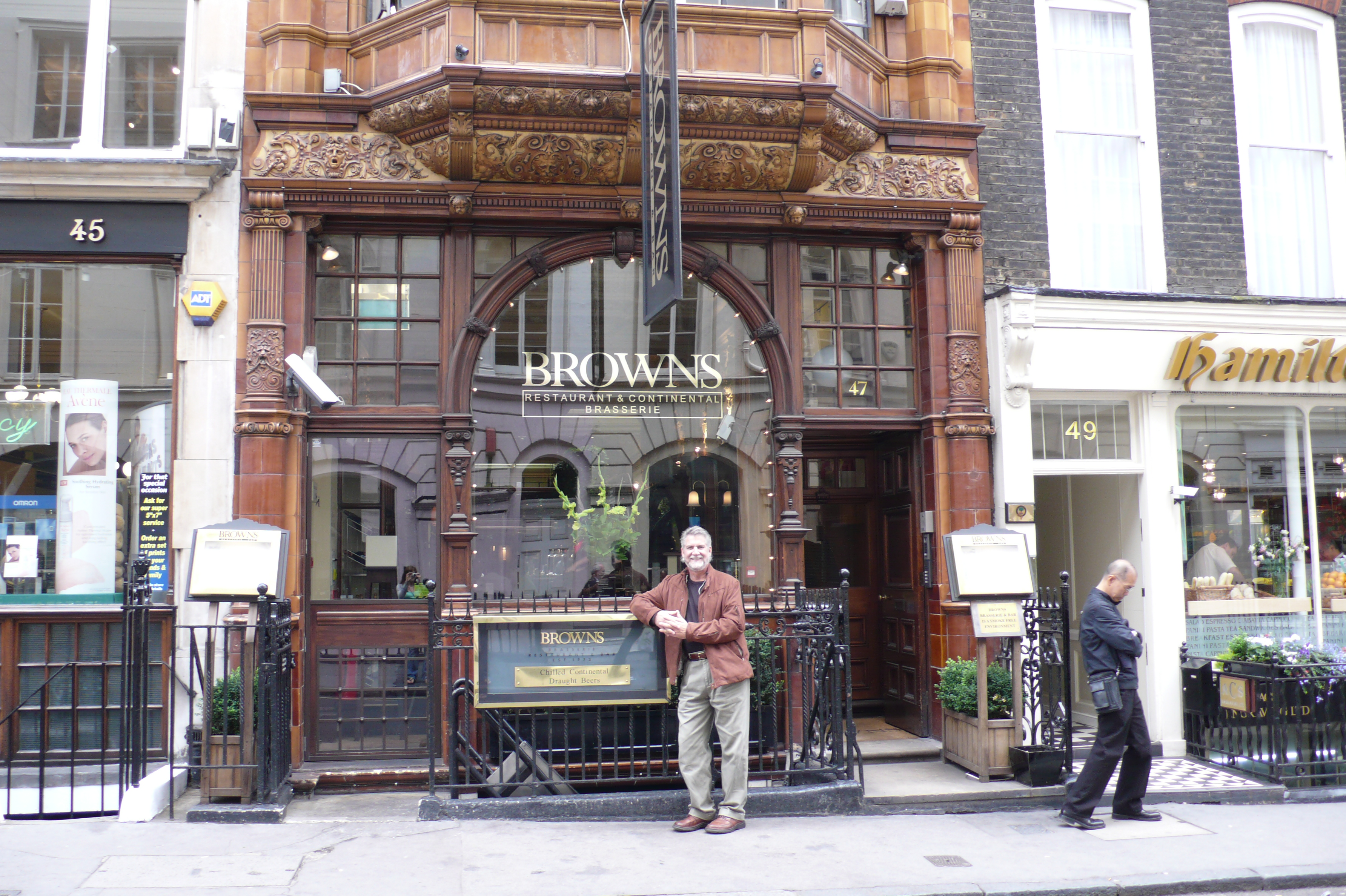
David in front of Brown's Pub 47 Maddox Street, Mayfair, London

Ye Olde Watling was rebuilt after the Great Fire of 1666.    Review from Frommer’s:  “On the ground level is a mellow pub. Upstairs is an intimate restaurant where, sitting at trestle tables under oak beams, you can dine on simple English main dishes for lunch. The menu varies daily, with such choices and reliable standbys as fish and chips, lasagna, fish cakes, and usually a vegetarian dish. All are served with two vegetables or salad, plus rice or potatoes.”

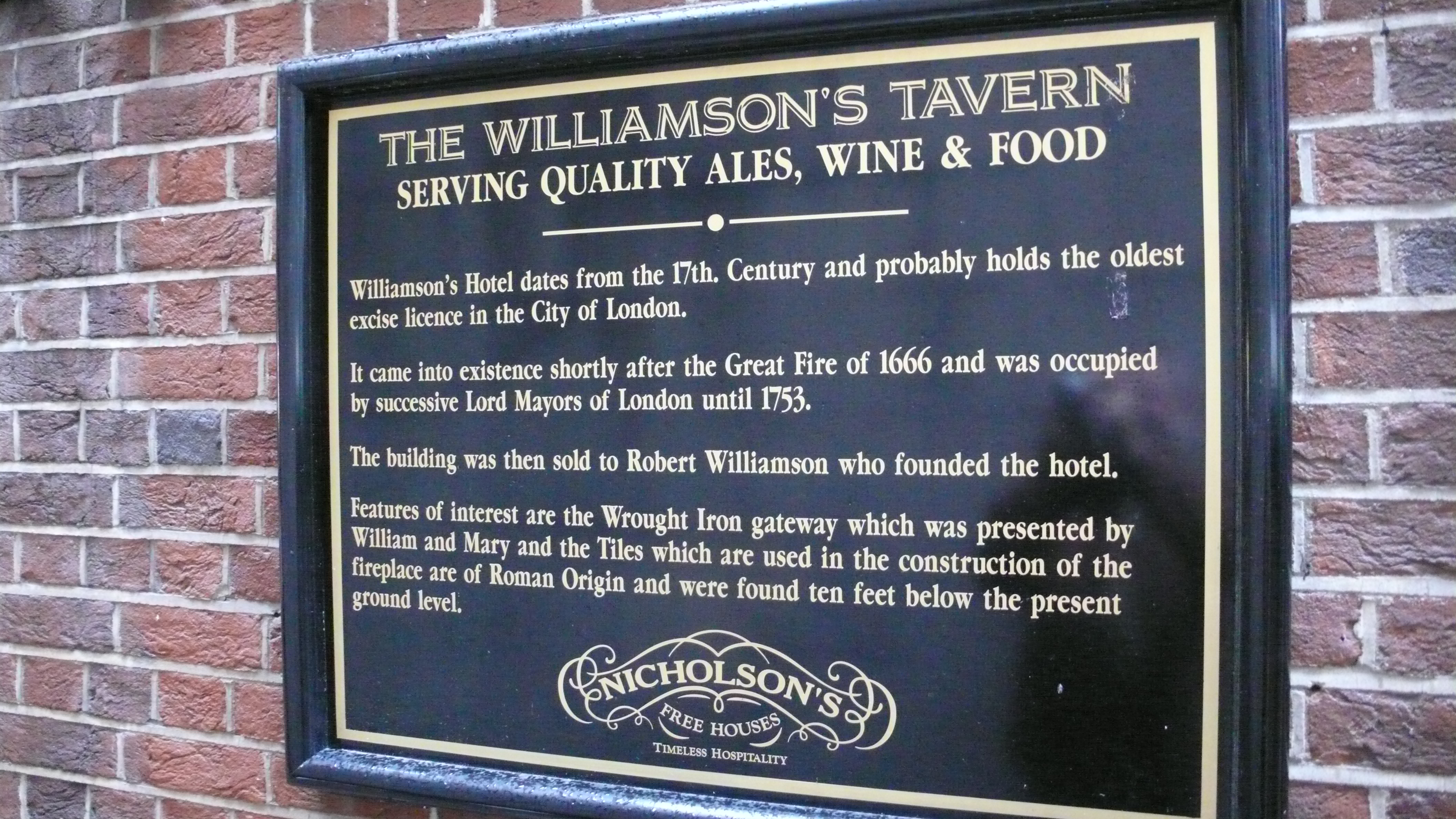
Ye Olde Watling dates to just after the Great Fire of 1666, and sits on an ancient 2,000-year old Roman road to Dover illustrated on their sign

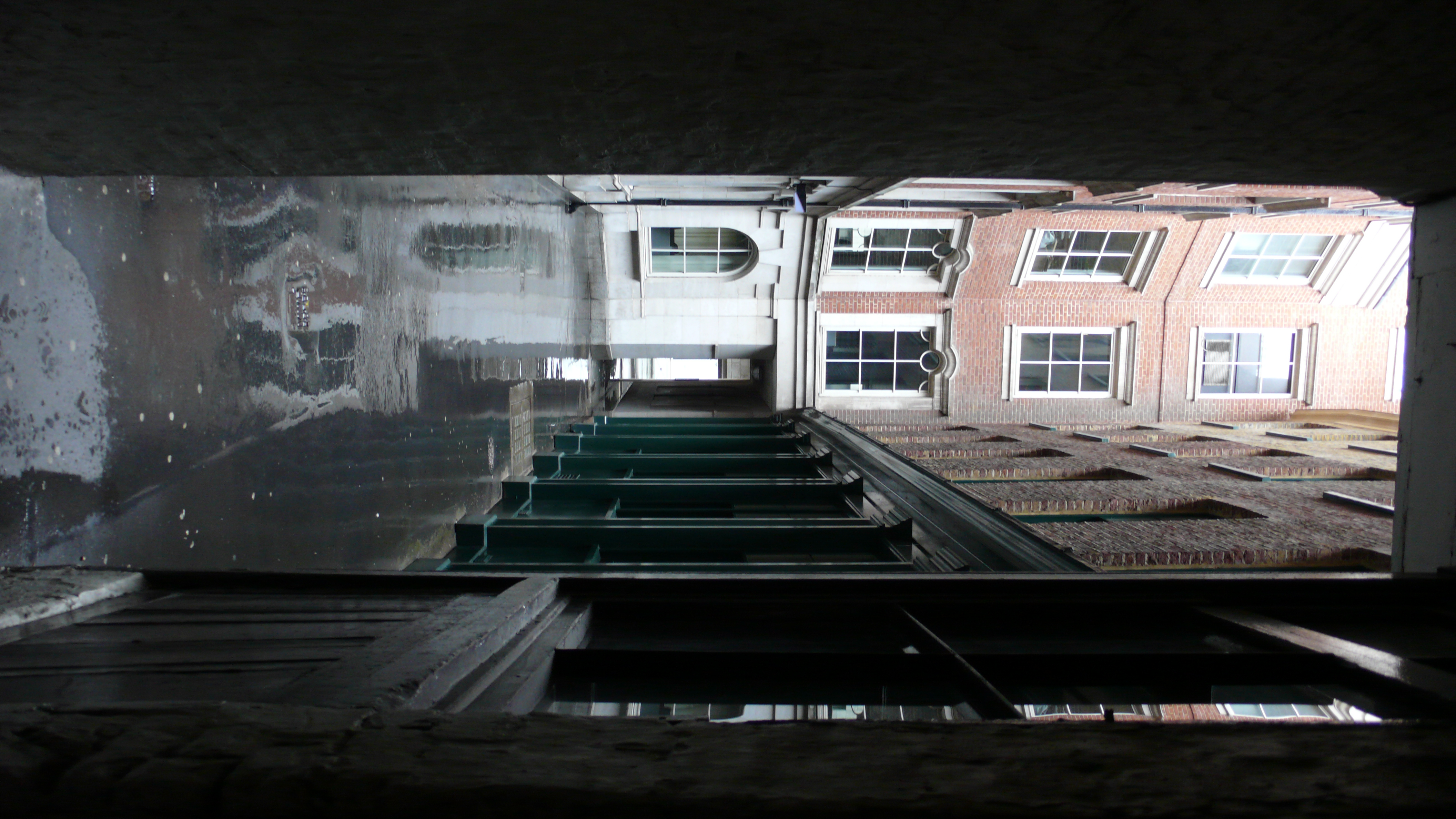
Rainy passage through St. Michael's Alley

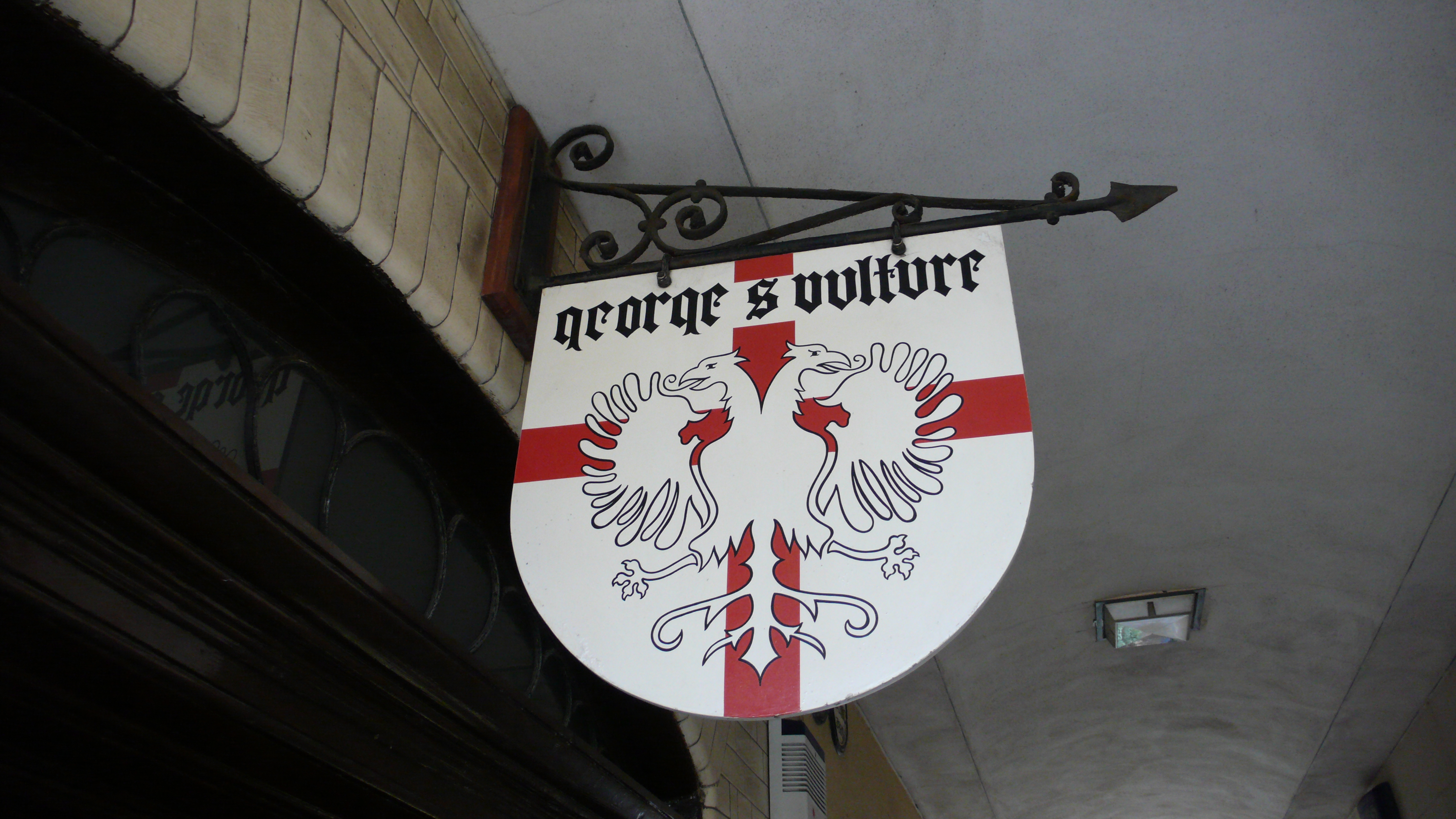
George & Vulture, review from http://www.Squaremeal.co.uk: “Thanks to several appearances in Dickens’ Pickwick Papers, The George & Vulture had its fame assured long ago. Its image as a classic Olde English drinking tavern has softened over the years, although the place still has charms aplenty to win over the tourists. Wedged into the same atmospheric warren of lanes as the Jamaica Wine House & Simpson’s Tavern, this Samuel Smith’s pub is rather more plush than its neighbours but still puts on a jovial face. Honest British food ‘without any fancy names’ is the order of the day. Start with devilled whitebait or perhaps a baked field mushroom & Stilton, before setting your sights on a Barnsley chop, steak & kidney pie, or fillet of plaice meunière. Be sure to leave room for a calorie-laden school pudding, cheese or savoury to round things off. G&V’s cider also comes highly recommended.”

The George & Vulture 3 Castle Court, London

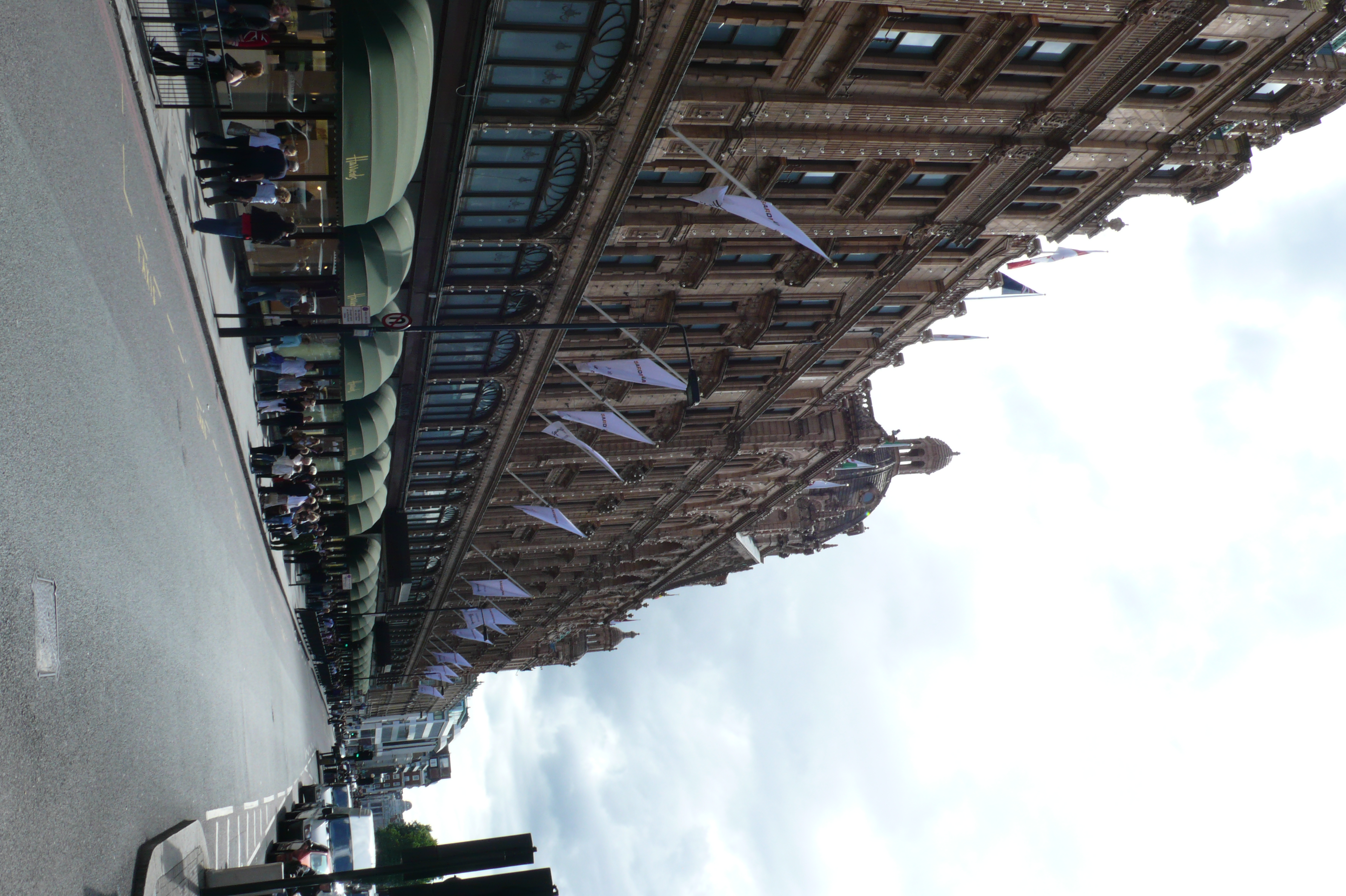
"Harrod's" - The most amazing department store in the world!

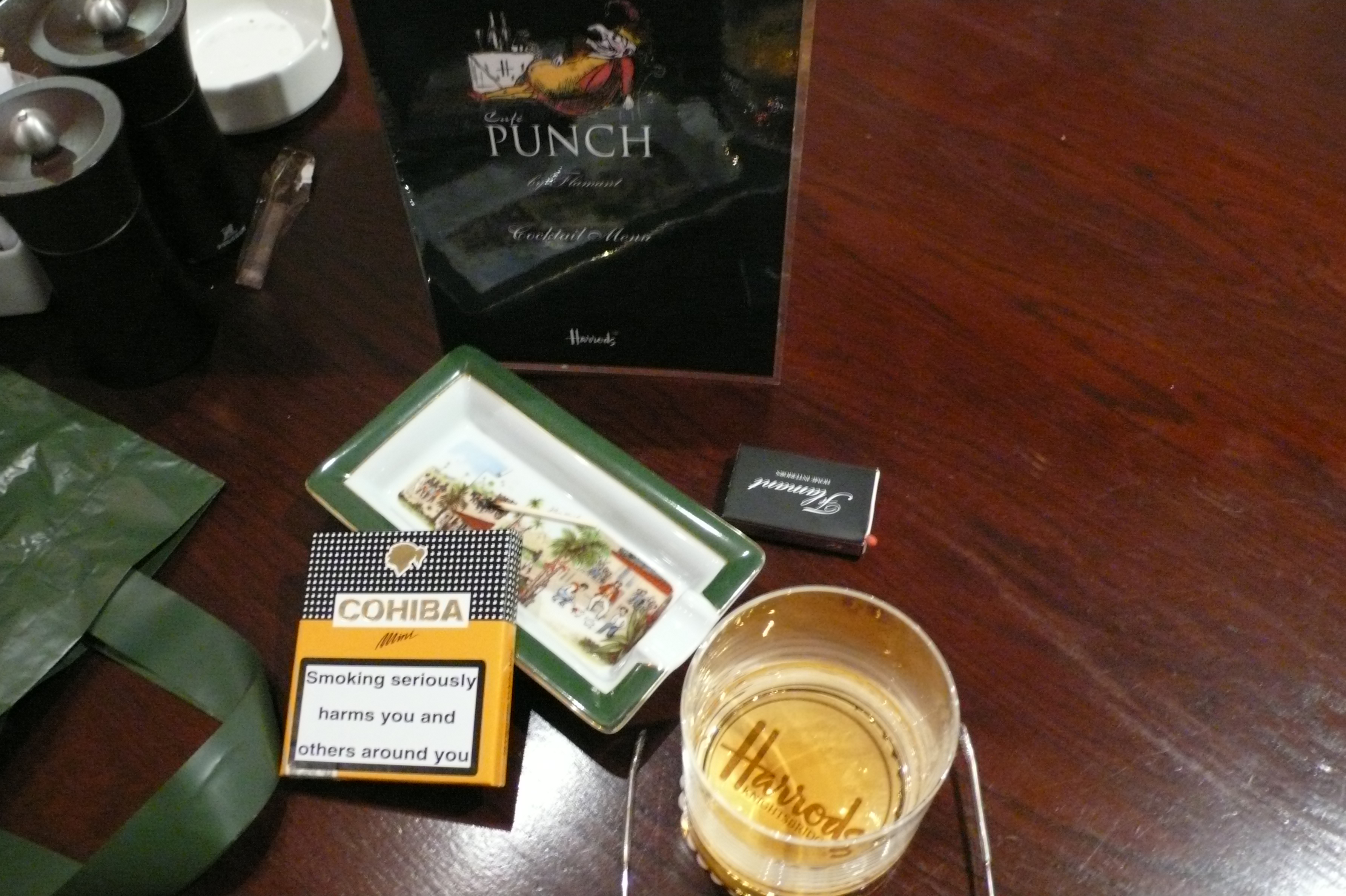
Cuban cigars and single-malt scotch at The Punch Cafe in Harrod's

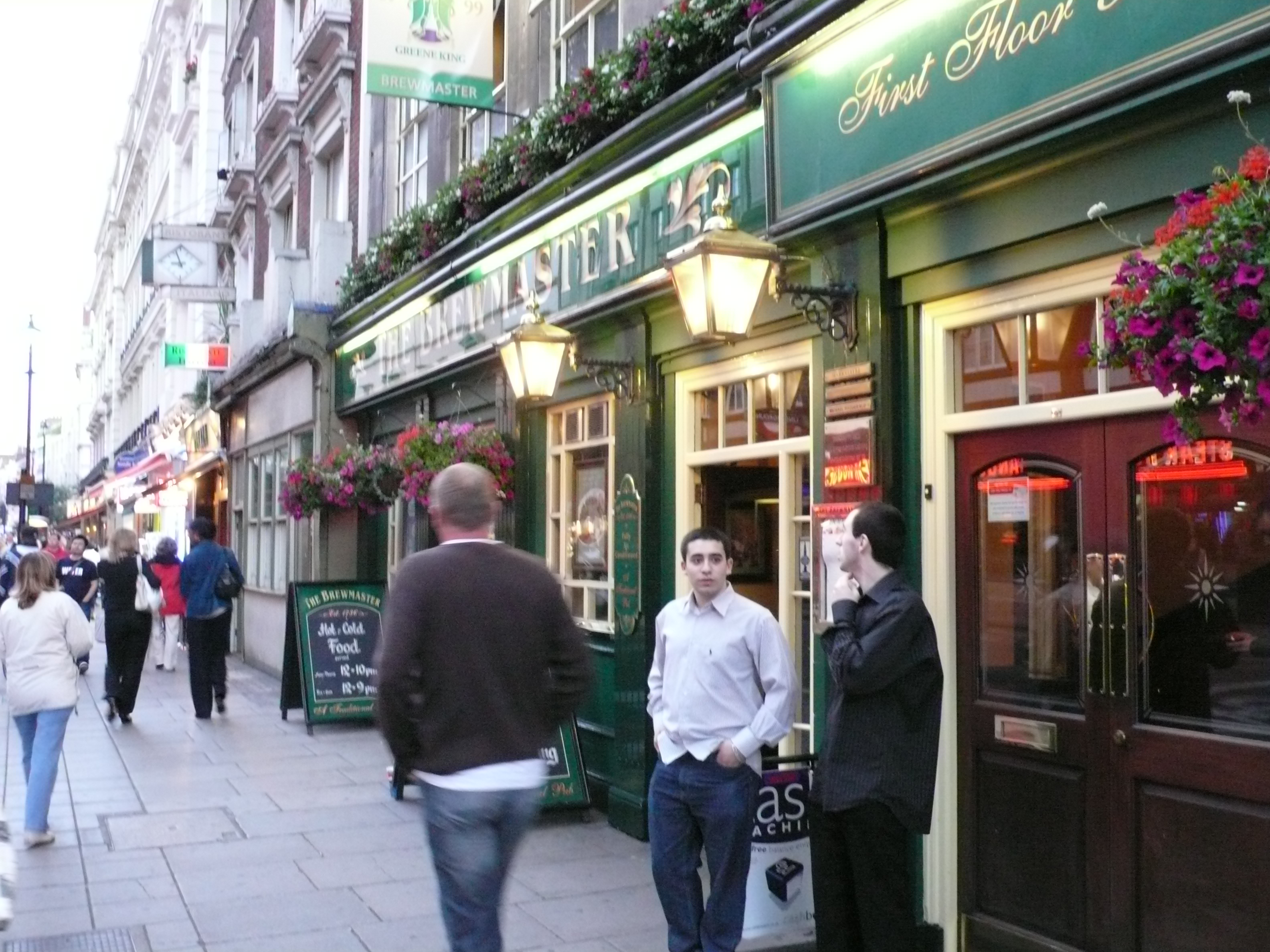
The Brewmaster 37 Cranbourn Street, Leicester Square, London

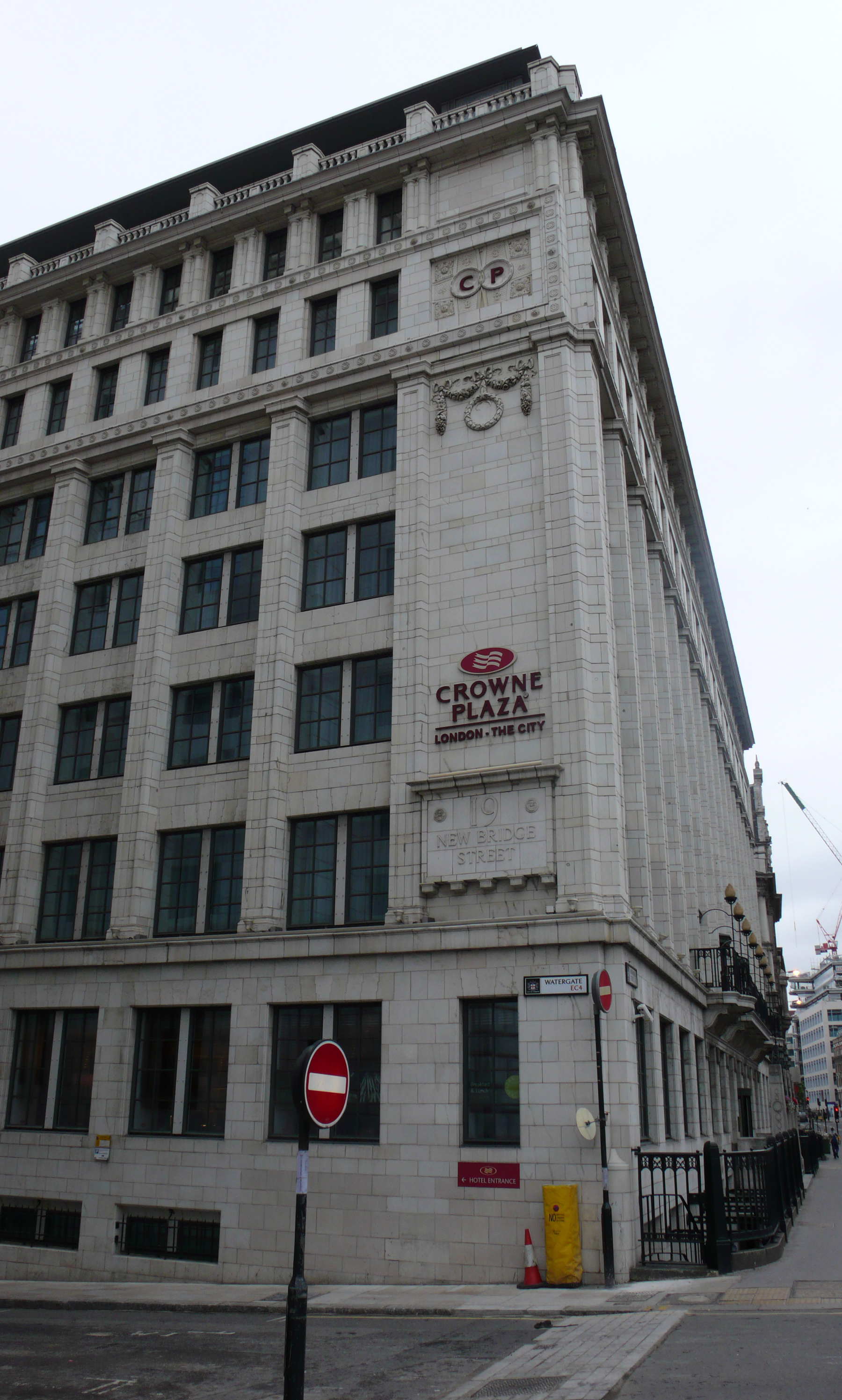
Crowne Plaza Hotel London-The City

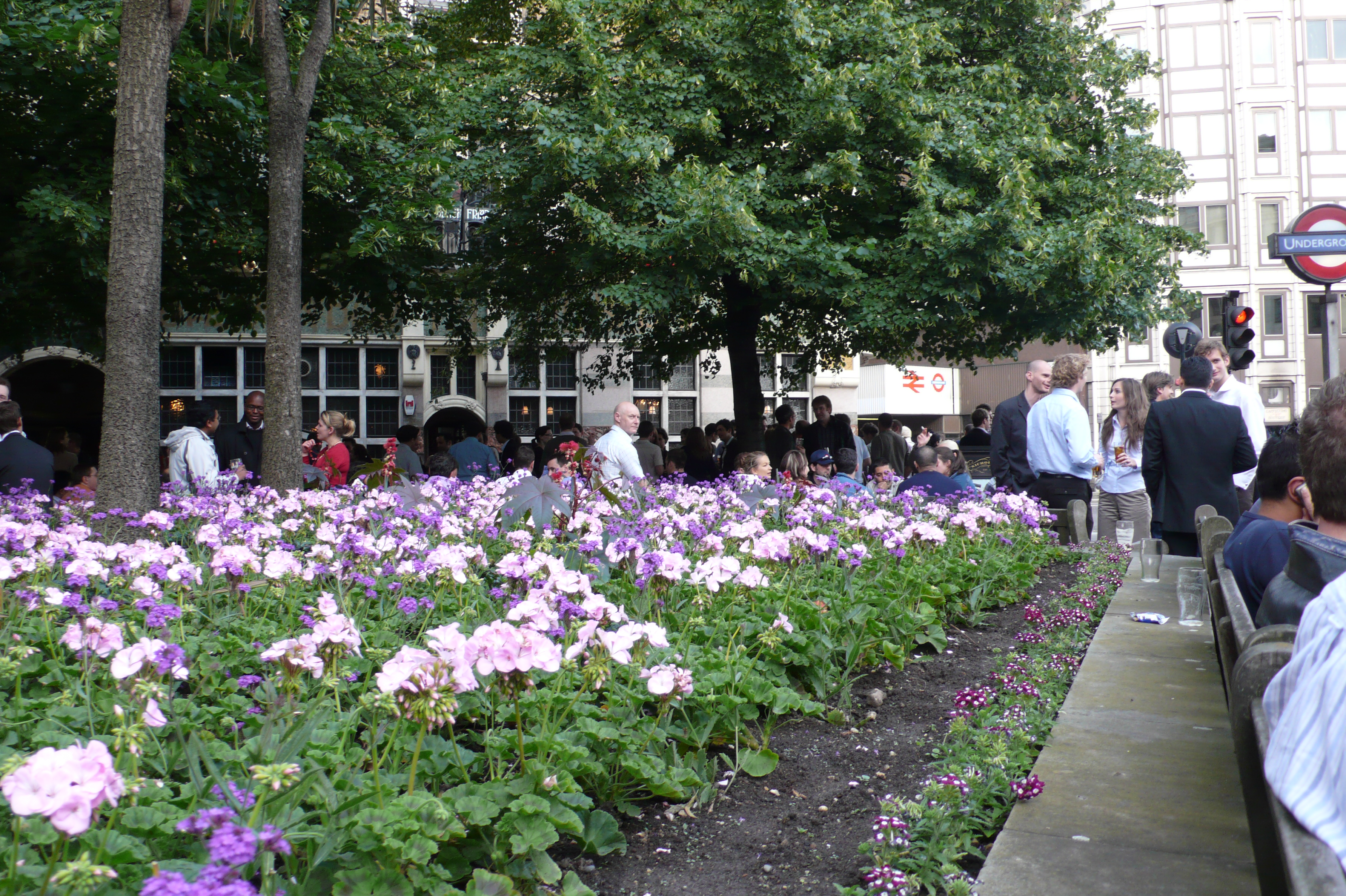
Friday evening, the 29th of June, returning to the hotel after a good afternoon’s exploration on foot and tube, Blackfriar’s across the road from the hotel draws a crowd of executives and young people mingling inside and out in the pleasant garden before catching the train at the Blackfriar’s Station home for the weekend.

From hotel room, the Blackfriar's Pub and garden across the road

Friday - a summer's evening in the garden outside Blackfriar's

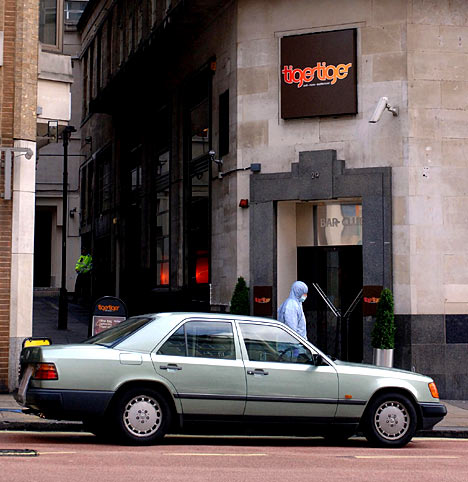
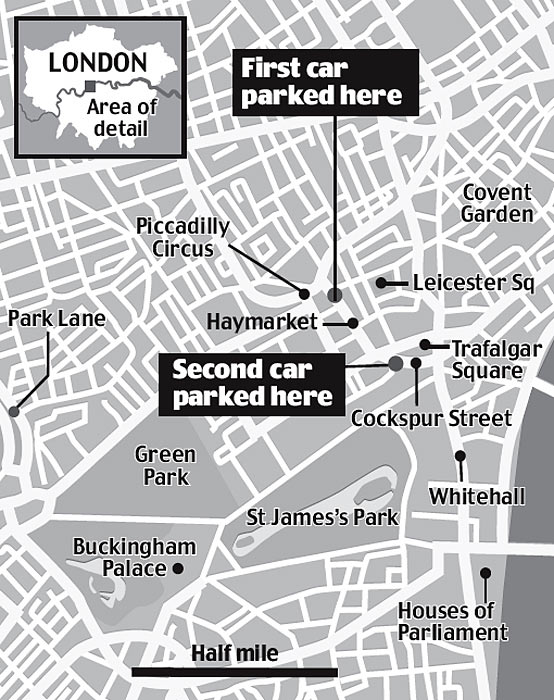
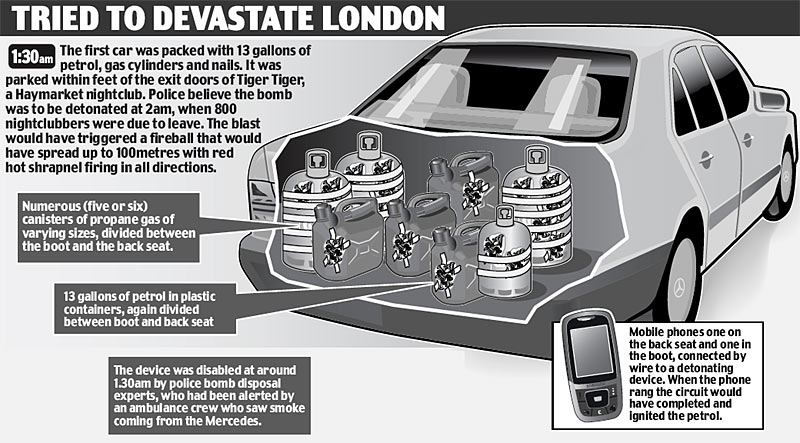
The talk this evening was of the foiled terrorist car bomb attack in Piccadilly earlier that same morning.  It seemed that, outside a West End nightclub “Tiger Tiger” on Haymarket Street, alert officers called in a bomb squad about 2:00am Friday who proceeded to defuse a smoking silver Mercedes-Benz parked on the street with several propane tanks, petrol cans, explosives, detonators and hundreds of nails packed inside!

The Mercedes rigged as a car bomb in front of Tiger Tiger in Piccadilly

Had the car bomb gone off when the club crowd swarmed into the streets after closing hour, as had been planned, a horrendous scene might have unfolded. Thankfully, the detonation system that the terrorists used was faulty. Nearby, hours later officials also found another similar car, illegally parked and packed with the same explosive combination…probably a backup. Neither car bomb detonated, thankfully.

Little did we know that the investigation, chase and arrest of the members of the group responsible for that failed attack on Haymarket Street would play out in the newspapers and television screens of London over the next few days.  This was INTERNATIONAL NEWS playing out in front of our eyes.  Two of the group eventually attempt to crash their petrol-filled Jeep into the Glasgow airport terminal up north, trying to commit suicide while attempting to blow up innocent travelers.  They failed on both counts, well that is, except one terrorist died of his burns a few days later.  The driver and his colleague were treated at Royal Alexandra Hospital in Paisley.  No travelers in the airport terminal were hurt.  So much for a quiet first day in London!

Jeep driven by London terrorists explodes in flames after crashing into the Gatwick Airport Terminal

The City of London has a resilient quality, pushing back at adversity and enveloping tragedy within its arms for centuries.  Nothing seems to rile it. The beat hardly skipped, from our vantage point as observers of this violent attempt at anarchy.  The only change noticeable to us was the changing type font size and theme of the headlines and glaring photos on the front pages of the free newspapers in the Underground stations over the ensuing days.

It was nice, finally, to slide into a dark corner of Blackfriar’s and know that I could slip across the street to my hotel anytime I felt like it.  What an amazing place!  The sights, the sounds, the pulse of this vibrant London…what an awesome first day!

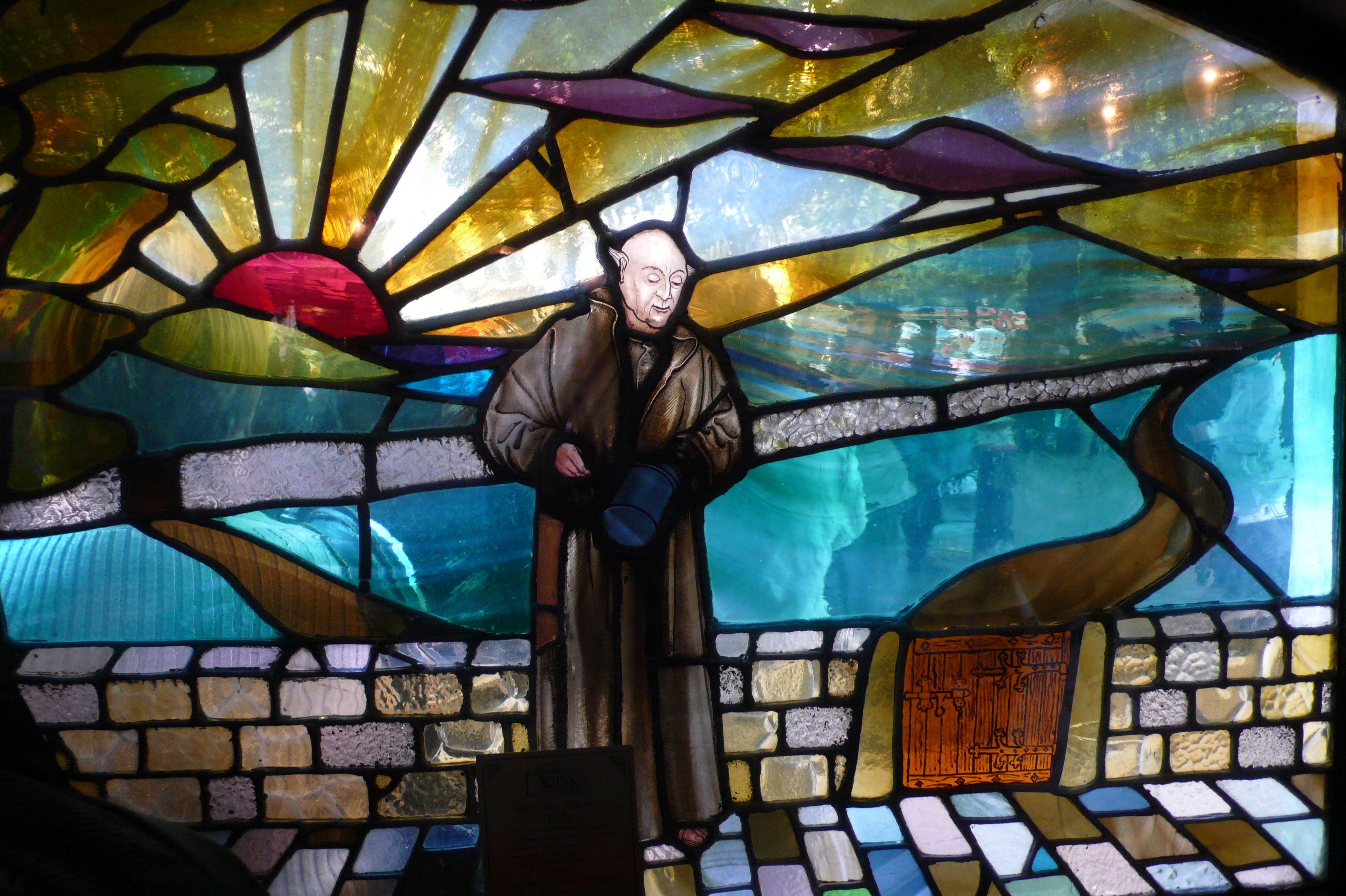
Stained glass window inside Blackfriar's

London Calls

•August 21, 2010 • 3 Comments

EL PASO, TEXAS – It was almost Summer in 2007 and Devin, our middle child, was leaving shortly with a group of Coronado High School friends for a three-week ACIS tour of Europe.  Mr. Briggs, a beloved teacher at Coronado, had hosted these tours for 25 years and this would be his last before retiring.  The final months of Devin’s Junior Year at El Paso High School were winding down, and it was a rare treat for her to get a slot on the “famous” Briggs European Tour for Coronado High students.  Melinda had almost come to terms with the idea of her youngest daughter flying to Europe and touring for a few weeks with a group of young people and couple of chaperones, but still didn’t like it.  For my part, I thought Devin’s choice to take this tour rather than be a debutante in the annual Symphony Ball was a refreshing, bold decision.  I thought she would certainly learn more from this trip.  How much more, as it turned out, would surprise even me!

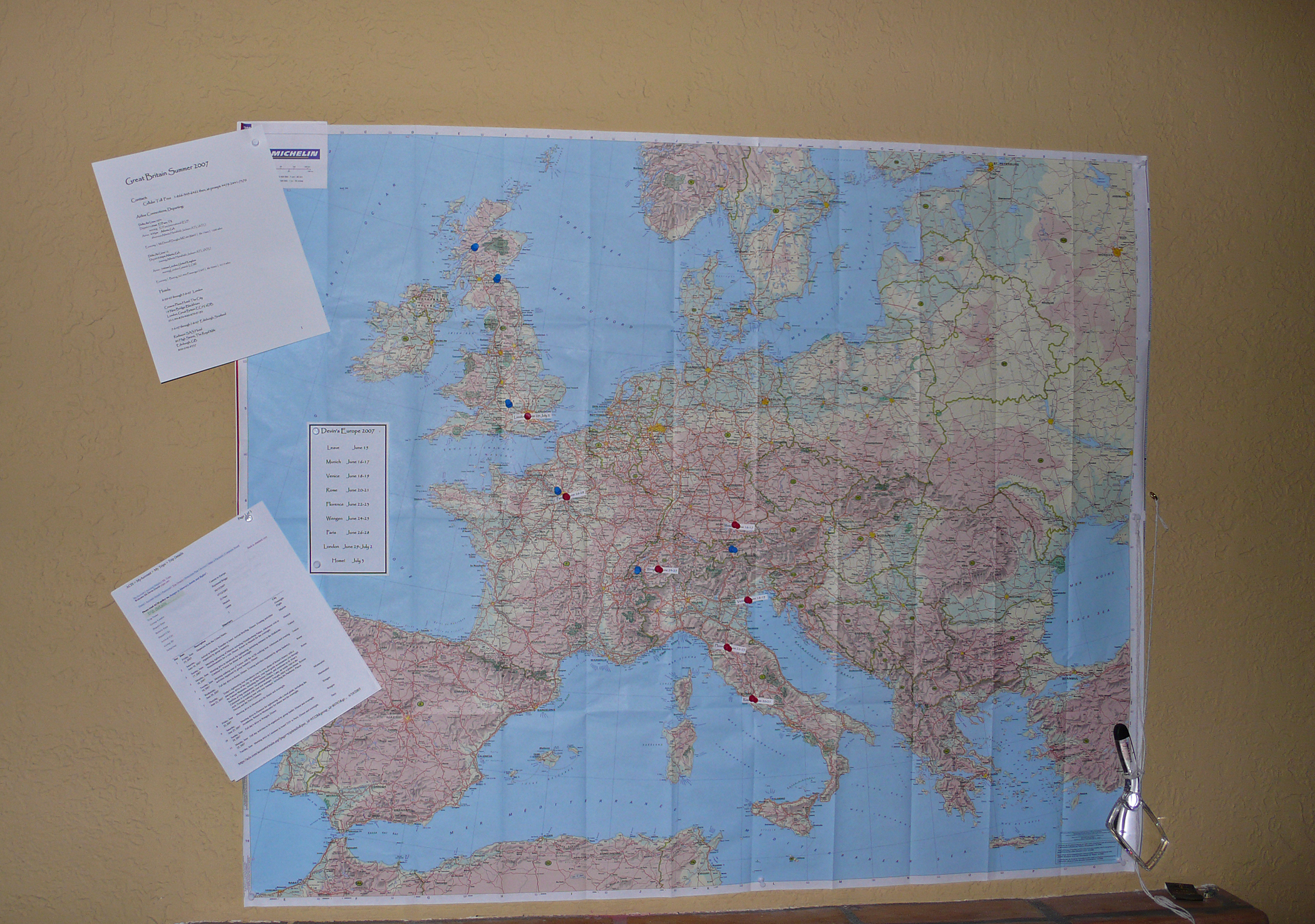
I hung a Michelin Map of Europe in the Master Study and marked the route she would take with pins so that the journey would have some realty for those of us left behind.  It actually helped Melinda find some comfort by focusing on the schedule and route Devin would take. The map often drew me away from the desert Southwest where, in my mind, I wandered through the streets of the Old World again.  I would find myself staring at that map, remembering places that I had seen once in my life, many years ago… during a college summer in 1973 when Walker Jackson and I backpacked and rode the trains throughout the Continent for 2 1/2 months.  We never got to England on that trip, however.

Devin’s last stop before returning home this Summer would be London.  I thought: How great would it be to take Melinda and Liam and meet her there?   I’ll never really know where this idea came from but it proved providential.  However, the greater plan was soon dashed.  In spite of great insistence on my part, including offers that approached bribery, I couldn’t get Melinda to jump the pond.  Her family was coming to visit from Colorado around the Fourth of July, anyway.  Graciously, sweet Melinda encouraged me to go on my own – sort of a classic “Father-Daughter Trip”.  This would work, a smaller more efficient plan!  Within a few days of the idea (after assuring Devin that I’d be totally inconspicuous while her group had their own London experience) the plans were made.  Two weeks abroad, meet Devin in London the first week and tour Scotland the second, flight home from London with Devin in mid-July.

I arrived in London early in the morning of the day Devin’s ACIS group arrived, June 29th, checking into the same hotel they would use, for convenience: the Crowne Plaza Hotel London-The City, at Blackfriar’s.  The Delta Airlines flight from El Paso (non-stop to Atlanta then on an overnight flight to Gatwick Airport) was smooth and trouble-free.  On the flight over, it was exciting to think of spending the next two weeks touring England and Scotland with Devin.  We had a rental car reserved in Edinburgh for the second week, and I anxiously anticipated learning to drive on the wrong side of the road!  I reflected on how beautiful and responsible my little princess had become, and how exciting the next few years of her life would be as she graduated high school, applied to colleges, moved away from home, and met new friends from far-flung places. How excellent to have this great chance to build stronger bonds before the world pulled us apart.

Mindful that my daughter would rather not have her Daddy around the hotel when her tour group checked in late that day, I freshened up and changed clothes early in the room and headed out for a walk through one of the oldest part of London…The City.  Named for the original walled settlement on the banks of the Thames River, this was now the “business, legal and banking district” of London.  The small side roads, like Bride Lane and Blackfriar’s Lane nearby, were cobbled and narrow and echoed the sounds of a vibrant modern urban landscape around us, buildings crowded up to the edge of the streets.  Woodwork and signs nicely painted, brass polished, windows cleaned and planters filled with blooming fresh flowers lined the narrow alley-like streets.  I had purchased from AudioSteps and downloaded onto my iPod Shuffle two self-guided narrative walking tours.  One on “The City and Tower of London” and the other on “The West End”.  Before staring the first tour though, I had to find a pub and enjoy a local brew and a bite to eat.

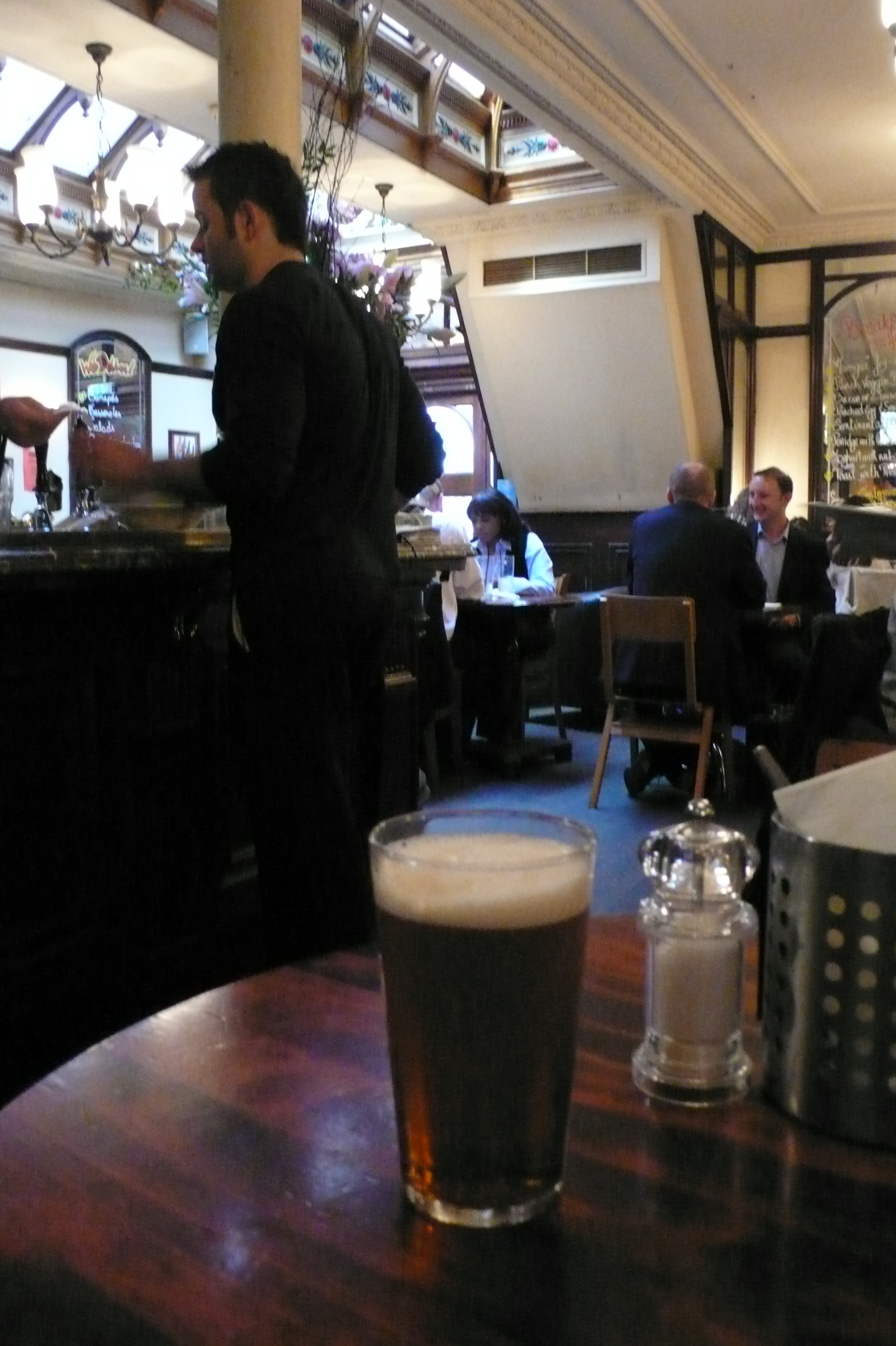
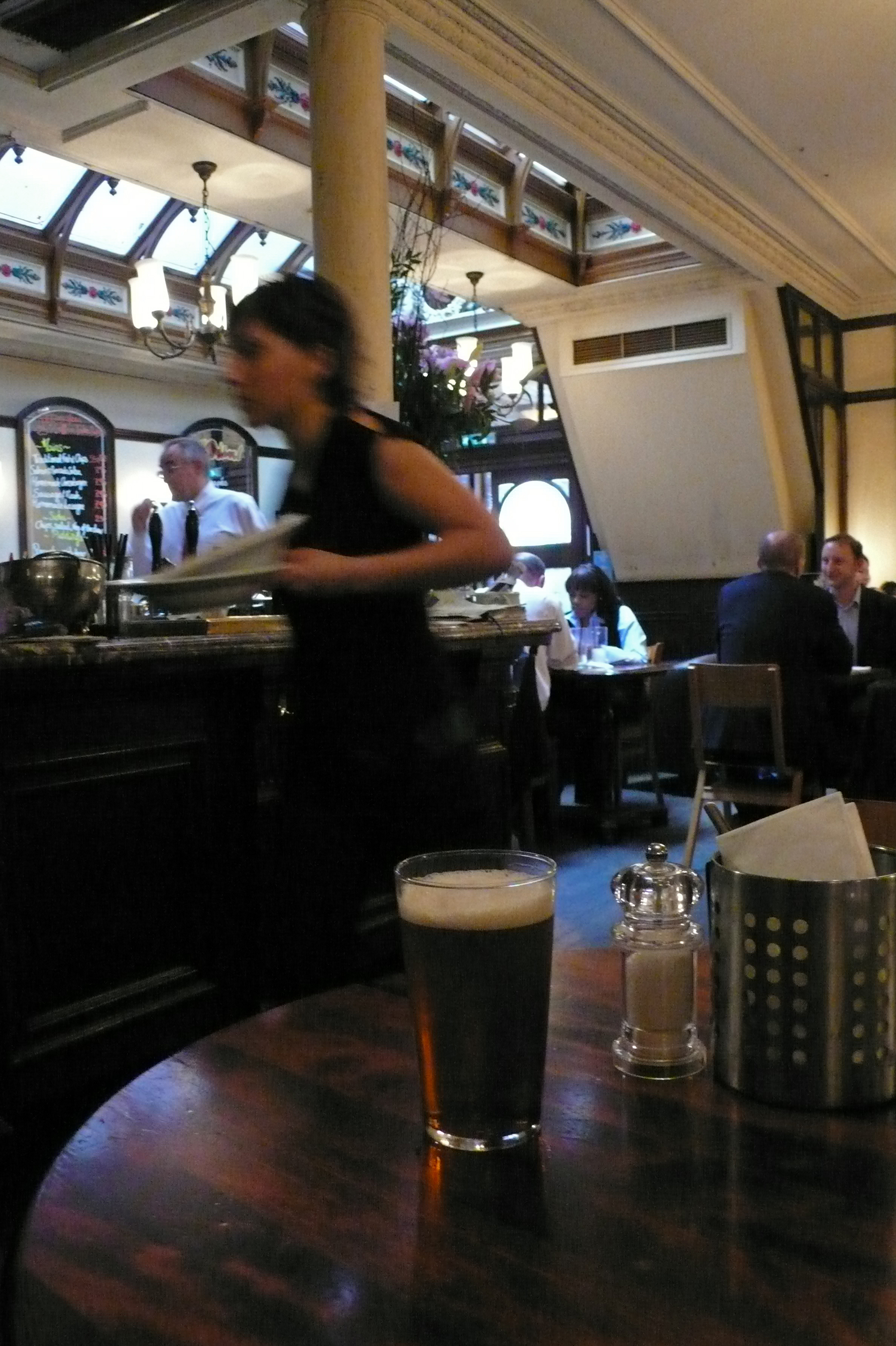
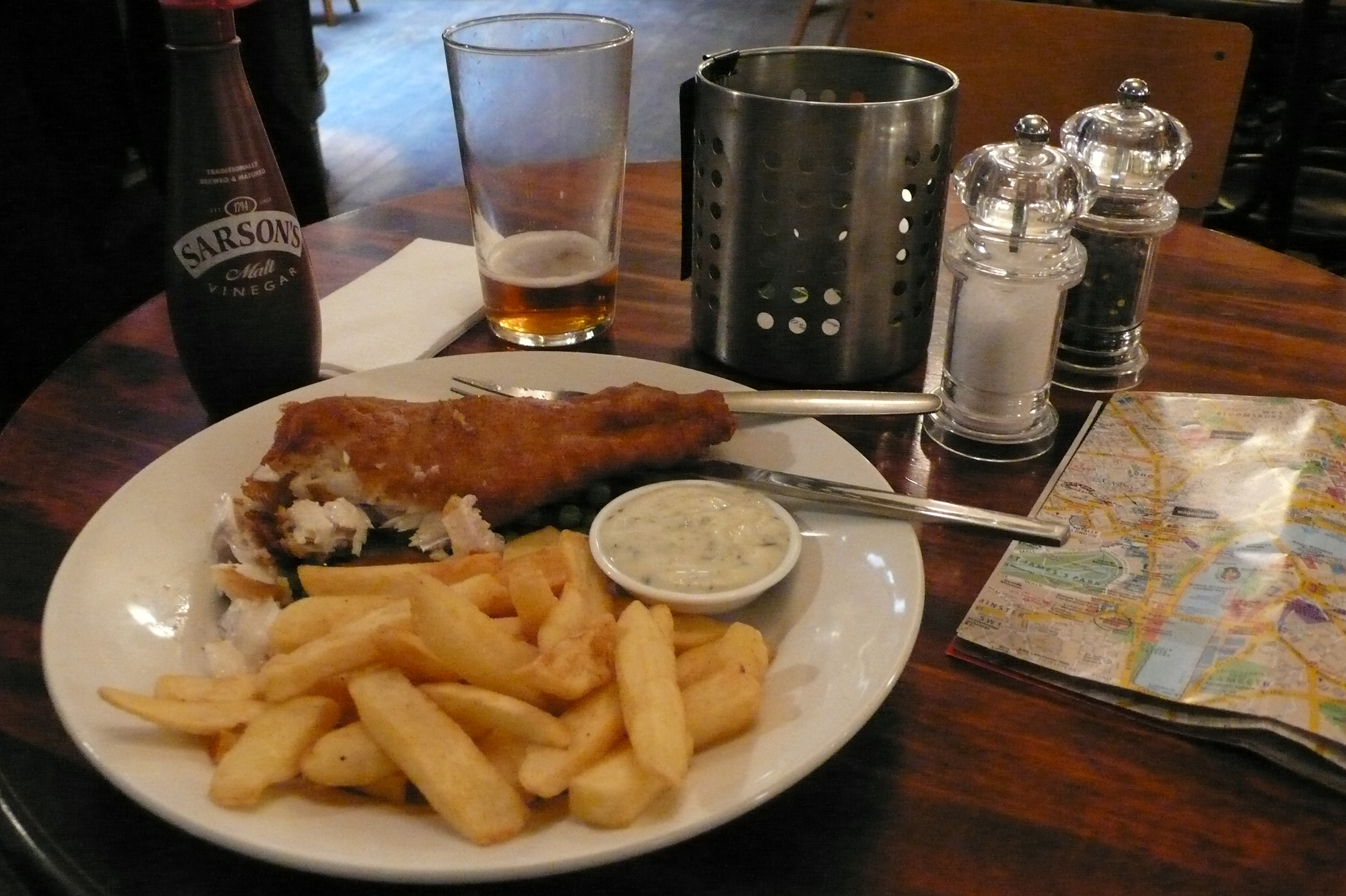
I swing into an inviting pub at 99 Fleet Street, just about two blocks north of the hotel: The Punch Tavern.  There, I had my first English draught and an order of fish and chips for lunch.  The atmosphere was warm and cheerful, the tables filled with young men in dark suits and ladies in dresses all enjoying a lunch break from whatever office they were employed nearby.

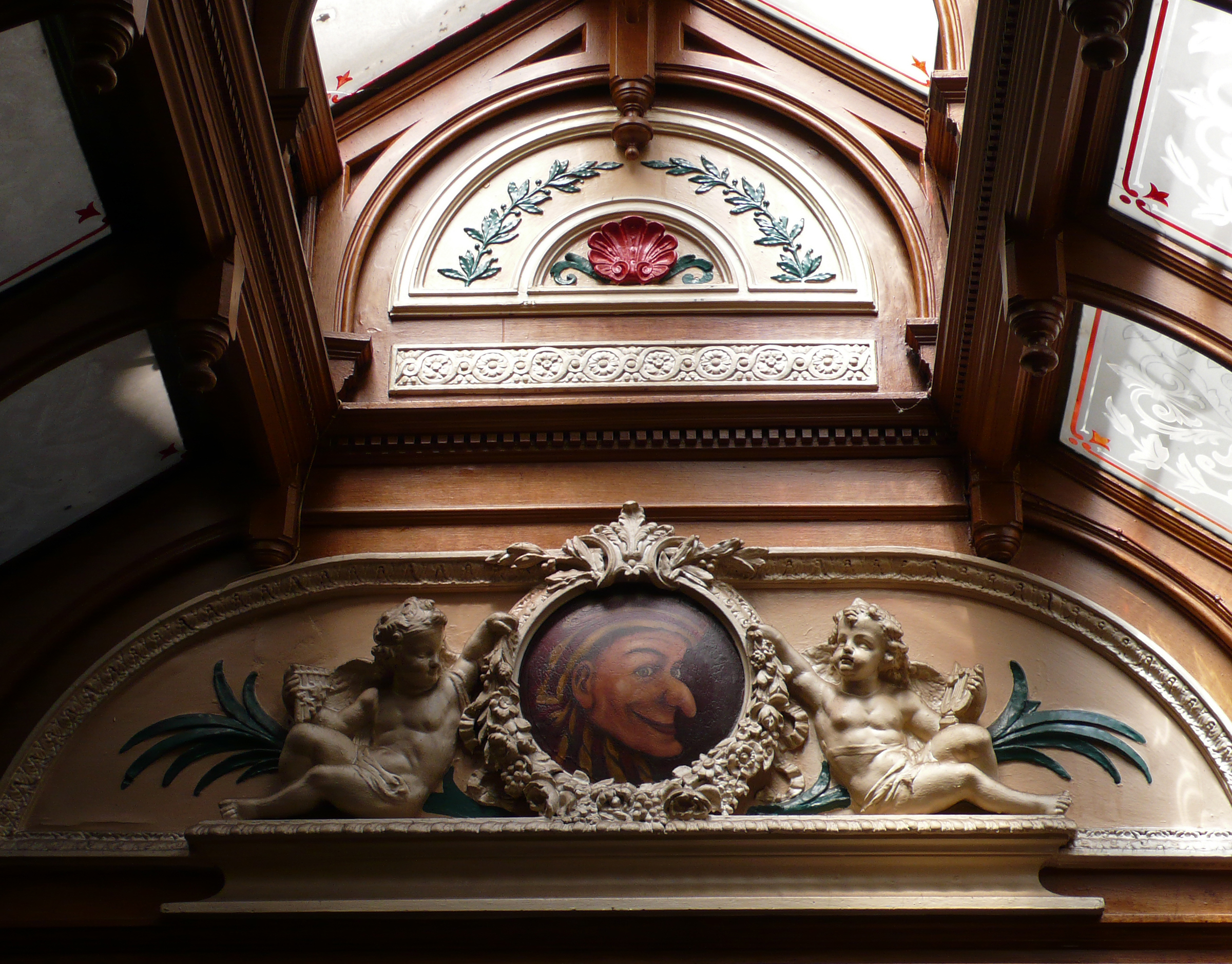
The previous building on the site was known as the “Crown and Sugar Loaf” but was renamed the “Punch Tavern” in the late 1840s because of its association with the satirical Punch Magazine whose journalists frequented the pub.  The building was rebuilt in 1894-5 and features many original Victorian details including a glazed tiled entrance hall with etched glass doors, barrel-vaulted ceiling, ten 6-foot mirrors, a marble bar, dark oak panelling, ornate fireplace and a series of original Punch & Judy themed paintings.

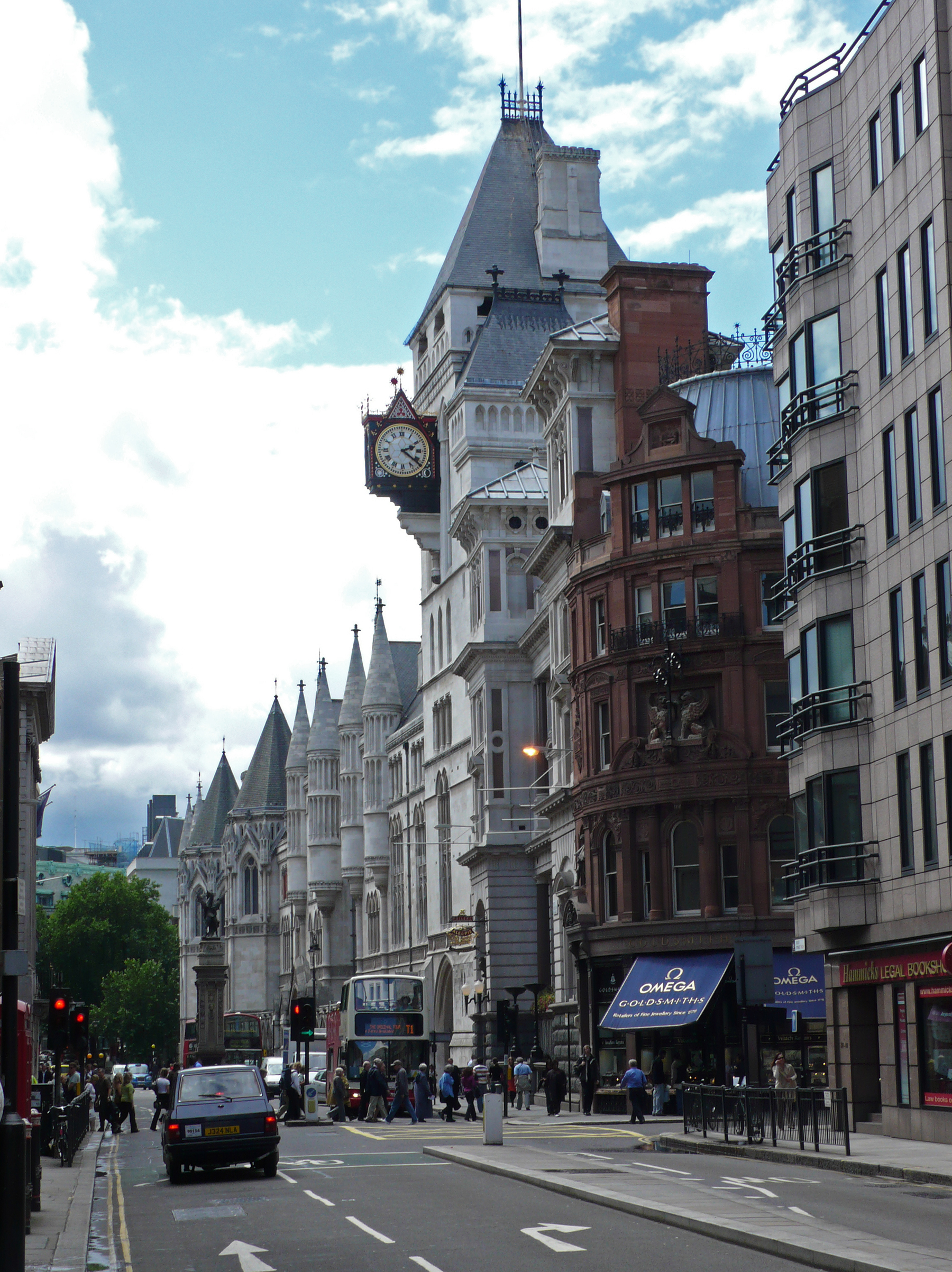
Outside the front door of The Punch Tavern is the bustling thoroughfare that forms one of the most historic by-ways in London: Fleet Street, which turns into The Strand and then into The Mall as it winds westwards toward Buckingham Palace.  From here where I stood eastwards the road turns into Ludgate Hill where Fleet Street crosses New Bridge Street, and then at St. Paul’s Cathedral it’s name changes to Cannon Street for a long stretch through the financial district before becoming Eastcheap and Great Tower Street as it finally ends at the Tower of London.

Fleet Street looking west

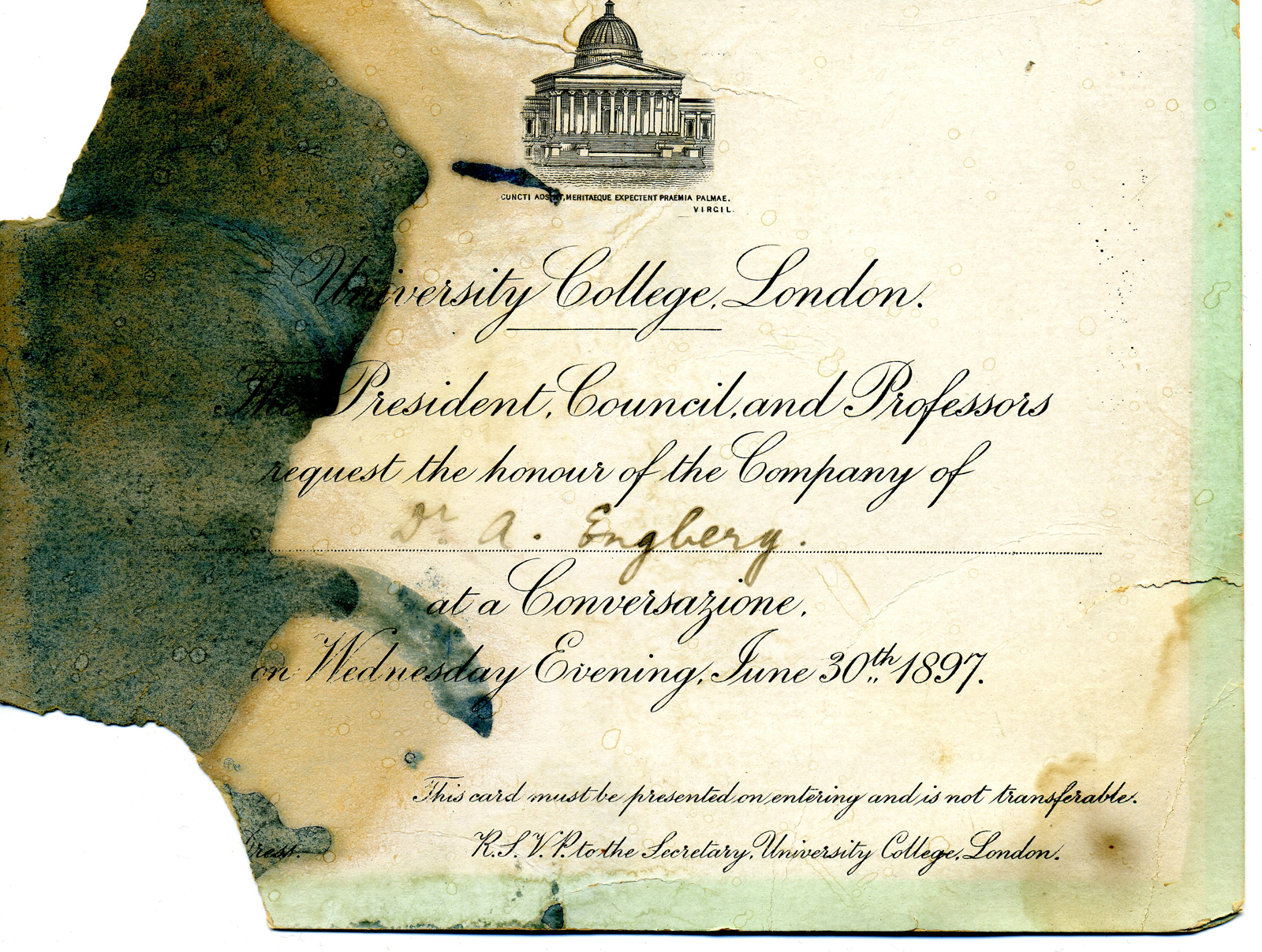
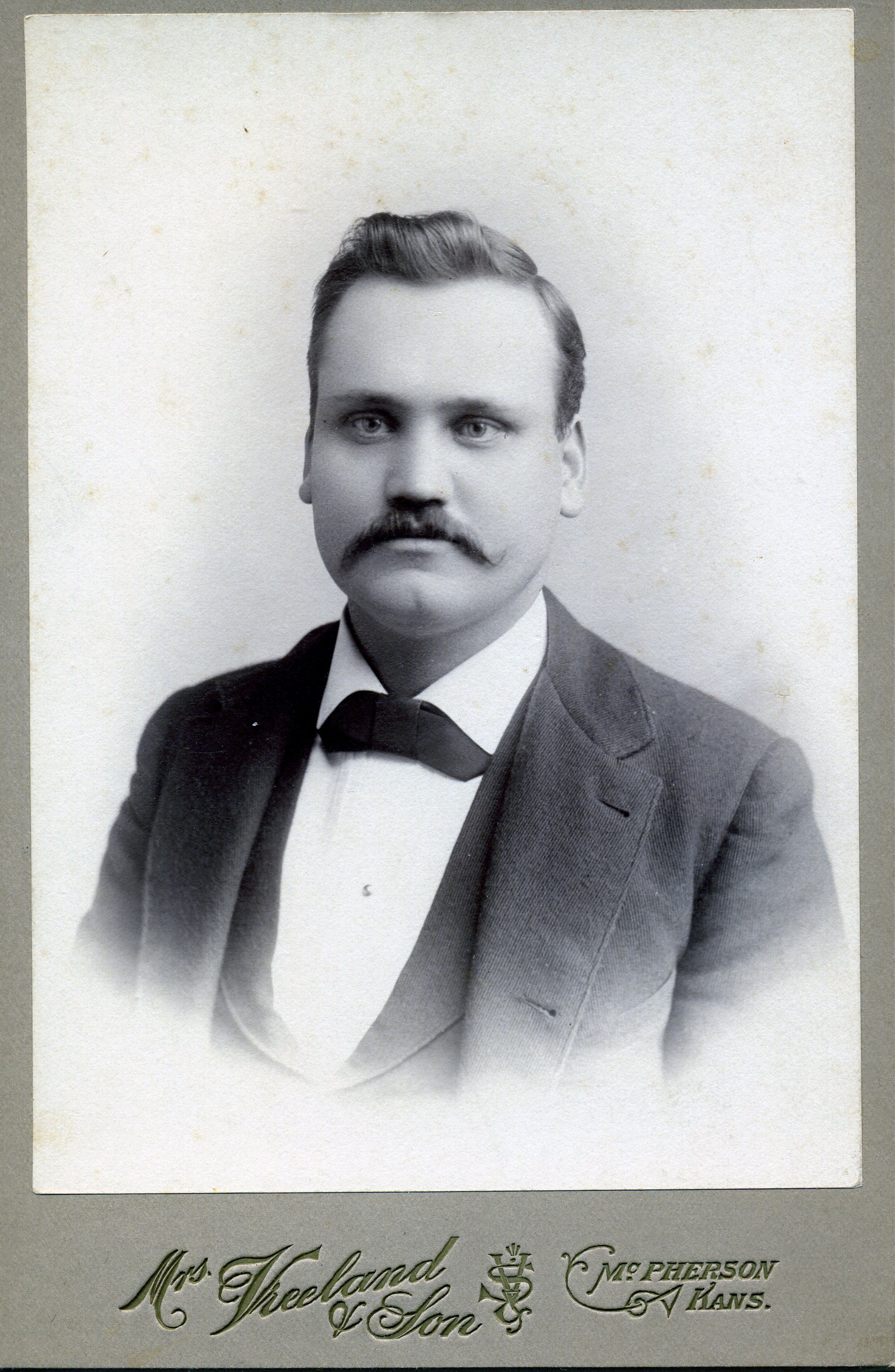
I felt immersed in the middle of a timeless story, whose names and places had whirled around in my imagination from books I’ve read my entire life.  I was walking the paths that my great grandfather Dr. Andrew Engberg walked when he was an attending surgeon at University College (University Hospital) for advanced training almost exactly 110 years earlier!  There was an odd familiarity to the whole place as I traced along The Strand that afternoon.

Invitation to Dr. A. Engberg for an evening of “conversazione” with the President, Council and Professors of University College on June 30th 1897

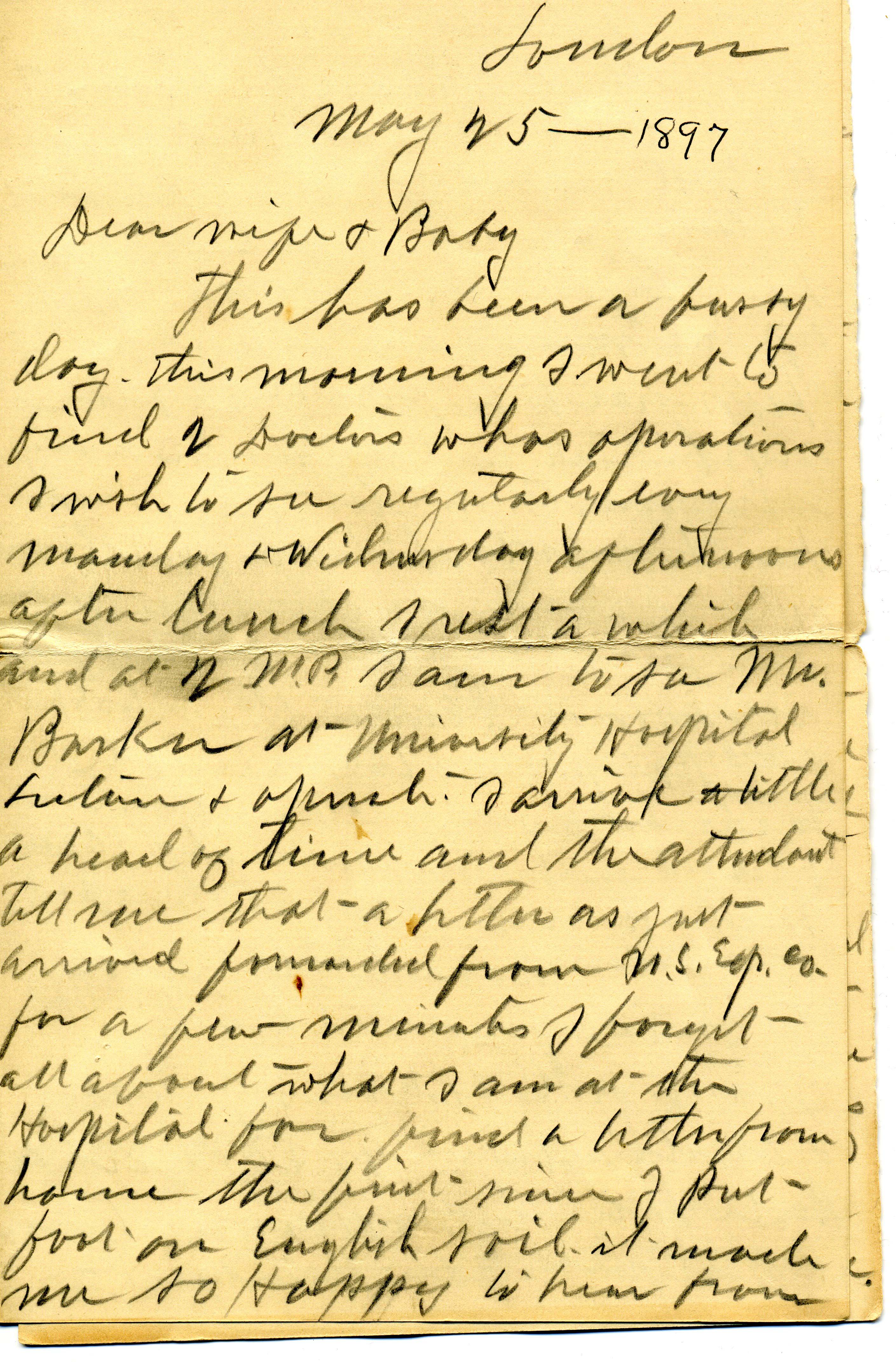
Andrew Engberg’s only child was my paternal grandmother, Sara Engberg Etzold.  She and her mother Carrie Lyon Engberg stayed back in McPherson, Kansas while Dr. Engberg lived and studied at University College Hospital.  He wrote his family a letter (I’ve scanned and inserted page 1 below) which speaks to the reactions of the son of Swedish immigrants, who grew up on a farm in Southern Illinois, to the stark urban London landscape of the 1890’s.  The end of page 2 and all of pages 3 and 4 of that hand-scrawled letter talk about his typical day, his apartment situation and the experience of discovering a new neighborhood north and outside of the congested London urban center:  “...My work begins 9 a.m. & ends between 4 & 5 p.m. as a rule there is no dinner horn. I generally eat breakfast, take nutritious a lunch at 12 – if convenient – & dinner 5 or 6.  Tomorrow I hope to move to permanent quarters.  I am rooming very convenient to the Hospital but it is too smoky within night in the city my lungs get so heavy & choke up.  I am going to room in a suburb north of the city call(ed) Hampstead Heath.  It’s a lovely place & rooms are much cheaper than down town. Heath is a new name to me, it looks like one would take and combine hills, meadows & parks & drop in a little lake once and a while. I happened to take car out there last Monday & I had not been looking to make a plan.   So Monday I went back and found what I wanted.  The room will cost £1.50 per week.  Then I can take my meals either there or down town.  It is only half an hour ride & I am right in busy London again.  The room I have had cost me (a)bout £0.55 per day so it will pay in several ways to live out here.”…


Dr. Andrew Engberg’s letter home from London May 1897  (Page 1)

I have transcribed the above page, as follows:

“London

May 25—1897

Dear wife & Baby,

This has been a busy day. This morning I went to find 2 doctors whos(e) operations I wish to see regularly every Monday & Wednesday afternoons.   After lunch I rest a while and at 2 p.m. I am to see Mr. Barker at University Hospital _(?)_ & _(?)_.   I arrive a little a head of time and the attendant tell(s) me that a letter has just arrived forwarded from the U.S. –  for a few minutes I forgot all about what I am at the hospital for (to) find a letter from home the first since I put foot on English soil – it made me so happy to hear from you.”

Dr. Andrew Engberg c. 1896

Little did I know the uncanny thread of history that had reached through time and tugged my conscious mind to consider this journey.  The medical and emergency response systems in London grew out of the studies undertaken at University College Hospital.  Those systems played a dramatic role in a personal event that was to shake up this trip, and rock my world!

INHL Logo Globe Grey-Preserving the Past


Bright Angel Trail

•July 26, 2010 • Leave a Comment

(Please click on any photograph to pull up a large resolution image)

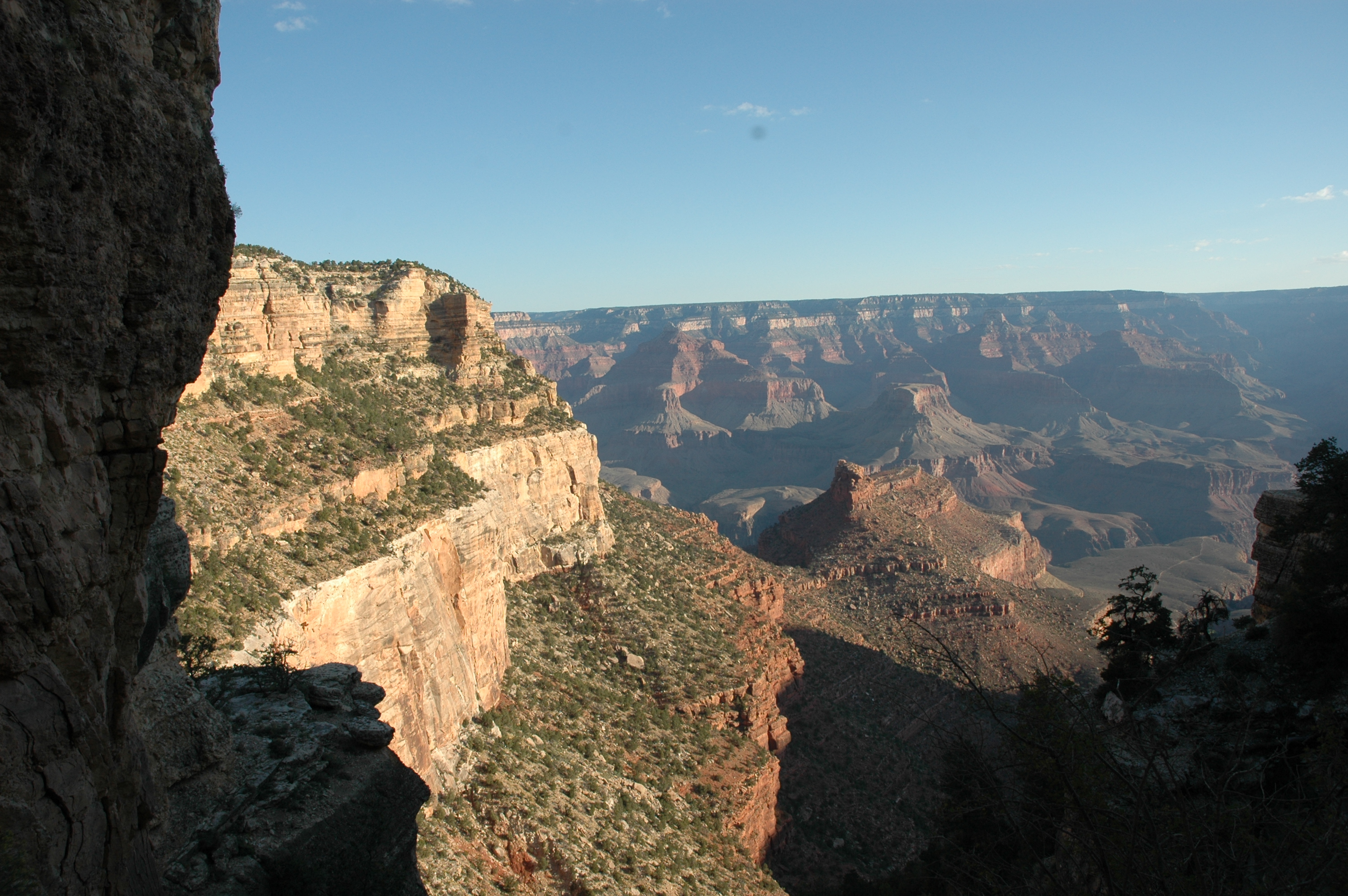
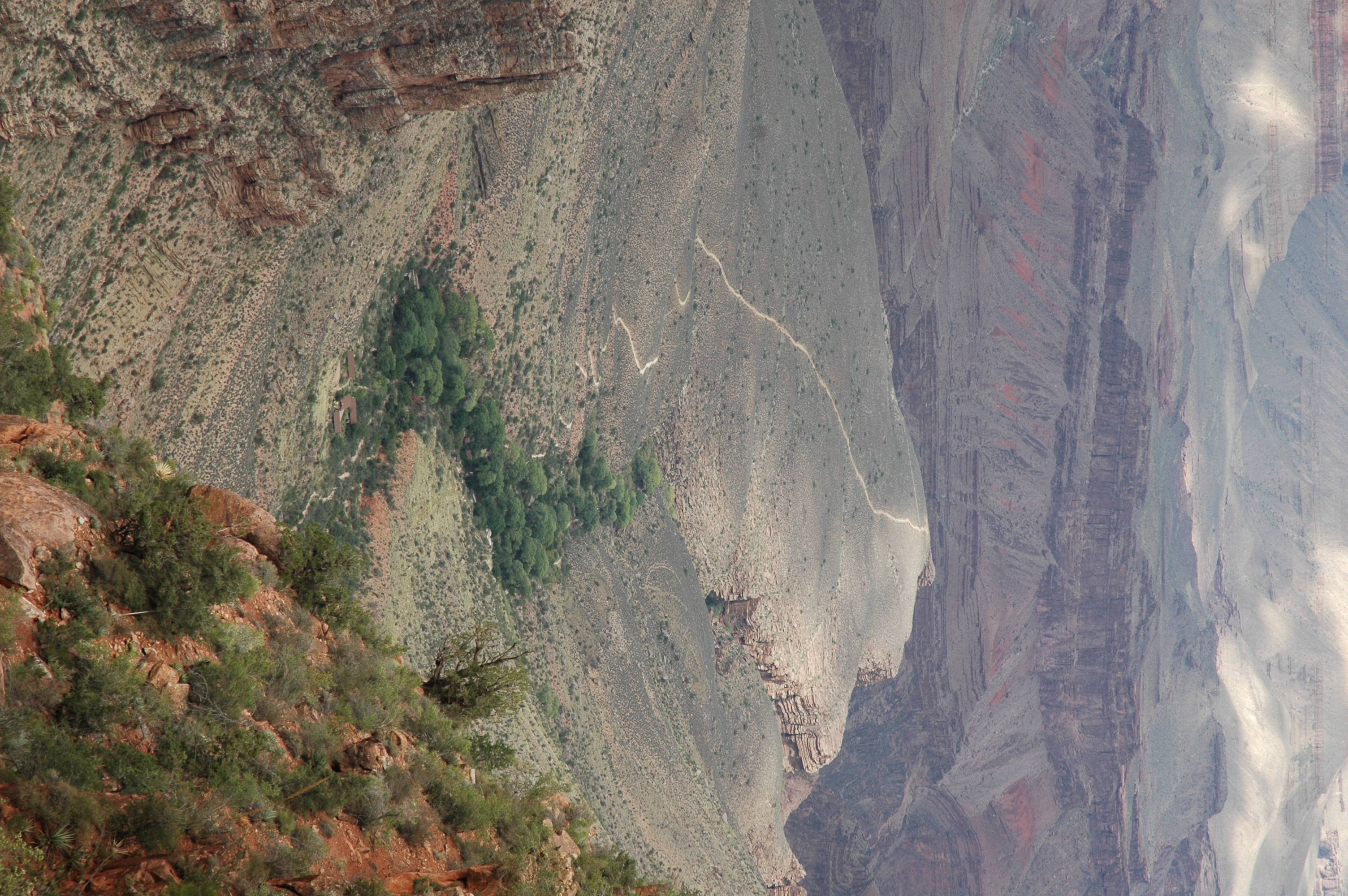
BRIGHT ANGEL LODGE and KOLB STUDIO, GRAND CANYON VILLAGE, AZ – Looking back down the giant canyon from which we had just emerged after a ten-hour hike down and back up the Bright Angel Trail, the thin line tracing the last leg of our trip out to Plateau Point before we turned and climbed out seems like a fragile tan thread laid across the sage green of the Tonto Plateau.  (Click on the above photo) The trail was barely visible from here on the Rim Trail in front of the Kolb Studio near the Bright Angel Lodge.  It had been very real to us several hours earlier, however, during the heat of the day, as we reached our turn-around point on the second major hike of this INHL Adventure to the Grand Canyon.  Returning to the trailhead at the top and staggering into the crowds gawking at the view from the Rim Trail in front of the Bright Angel Lodge, the moment seemed surrealistic: hundreds of milling visitors versus the harsh physical challenge and quiet solitude of the just-completed hike.

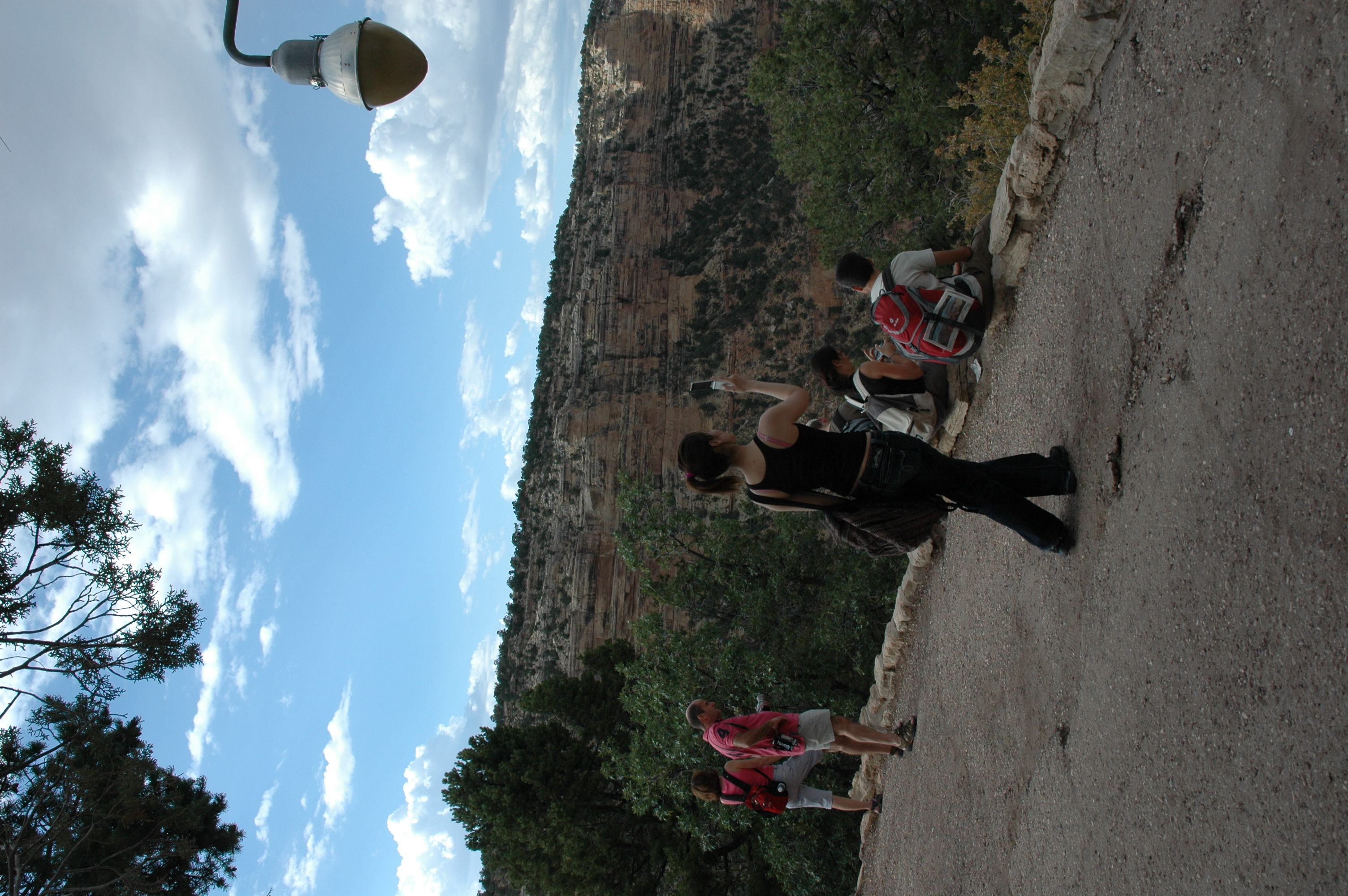
Crowds of tourists on the Rim Trail, for some this is the only sight of the Canyon of Canyons!

Let’s get our bearings.  Day One, we arrived late in the afternoon from Phoenix, via Flagstaff in a rented Hyundai Santa Fe.  Checking in at the Red Feather Lodge in Tusayan, just outside the National Park boundary, we headed over to the Rim to catch our first glimpse of the vast Canyon of canyons!  There, we acclimated to the altitude and stretched our legs with a sunset walk around the Rim Trail from Mather Point eastwards. Day Two, we started very early and hiked down the South Kaibab Trail to Skeleton Point, a 7-mile roundtrip hike that got us used to the trails, weather and geography and gave us our first glimpse of the Colorado River rushing through the deep, dark, Vishnu Basalt Lower Canyon below the Tonto Plateau. Today was our third day at the canyon and we were tackling a major day-hike down the Bright Angel Trail, through Indian Garden to another overlook of the Lower Canyon called Plateau Point.  It would be about 13 miles down and back. We started very early, the sun just topping the pines behind us as we stepped down the trail next to the Kolb Studio and began our journey.

The shadows marked huge dark swatches moving across on the canyon walls and along the trial at first, while the sun-splashed faces of rock reflected bright secondary illumination on our path and made photography a challenge due to the intense contrast.  This trail down into the ancient gash in the earth was wider and less steep than the South Kaibab Trail.  However, it was also filled with an incredibly soft layer of pulverized dust that liked clinging to everything, much more evident than over at the South Kaibab.  This Bright Angel Trail is the route that the mule trains use to take visitors and supplies down to the Phantom Ranch guesthouses and campground at the bottom of the canyon, in a shaded grove next to the Colorado River.

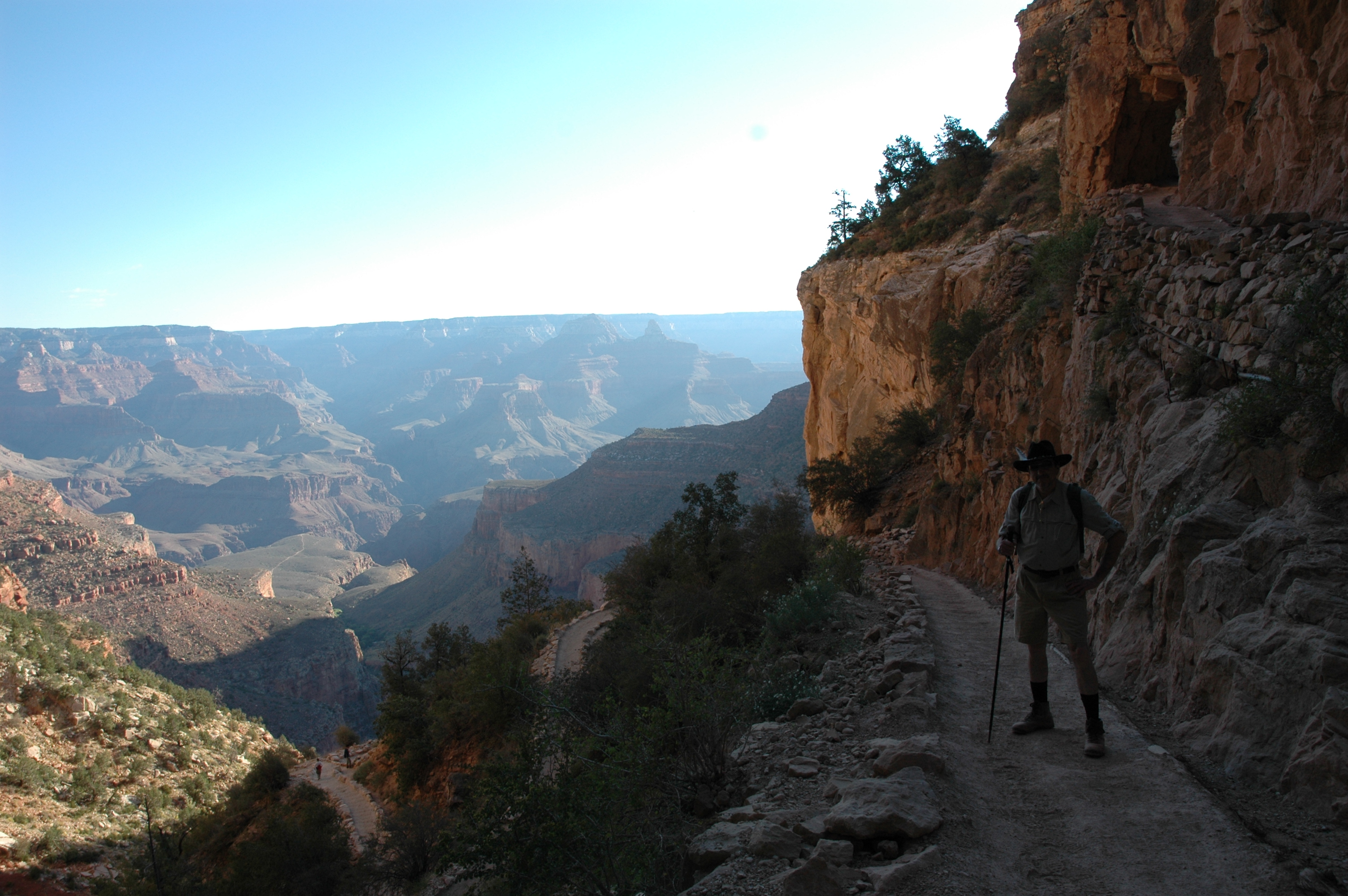
The first interesting feature of the trek is the tunnel, carved into the cliff face that stretches up on the left, high overhead.  You’ll find the first tunnel about 0.18 miles from the trailhead.  Its an easy trail walk and turn-around spot for those who would only just “dip their toe” in this immense pond!   In fact, we noticed many visitors did just that: there were fewer on the trail after the first tunnel than before it.

Davison on a switch-back below and just past the second tunnel

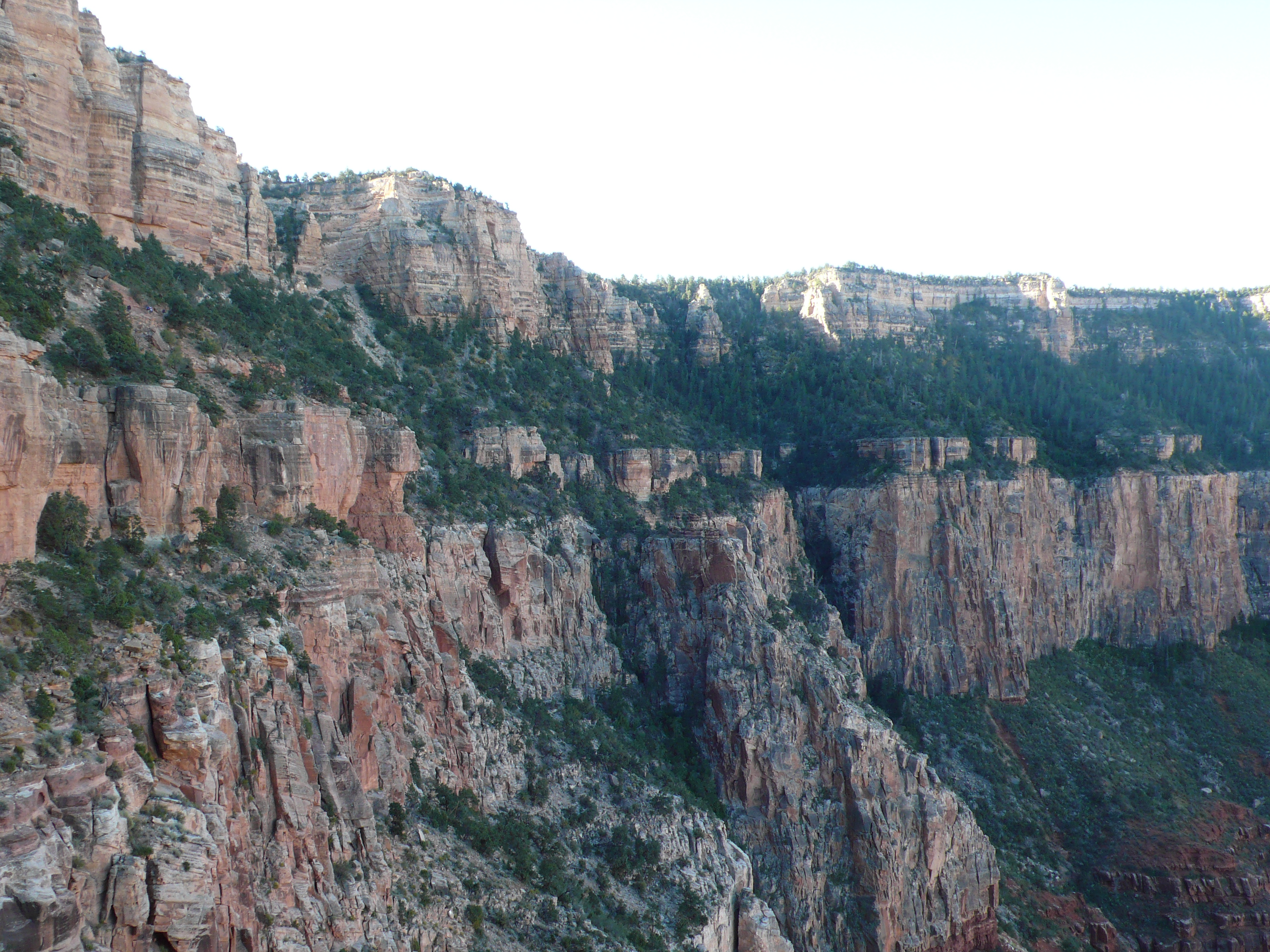
The second tunnel is quite a bit further down the trail, about 1/3 of a mile past the first switchback, and three-quarters of a mile in from the trailhead. There, you have descended a mere 545 feet from the start elevation, but just wait…now the steep switchbacks really begin! Keep your eyes on the huge golden cliffs to your left as you descend now, they are magnificent.

We have hiked for almost a mile and yet barely advanced into this gigantic gash in the earth.  The scale of the place is daunting and reminds us that being prepared for the trek can make all the difference in the experience the Canyon affords.  I recommend some basic equipment to make the adventure truly memorable, even survivable:  (1) Trekking poles are a must!  The balance they provide on the uneven trail and support for the knees is invaluable, and affords the opportunity to look around a bit and enjoy the magnificent walk.  (2) A small backpack to carry a change of clothes (shorts and t-shirt), sunscreen, binoculars, some granola bars and fruit, and (of course) plenty of fluids.  (3) We brought along powdered drink mixes with electrolytes to add to our water bottles.  That one idea made a huge difference when we refilled our bottles at various points along the route.  Eat little bits of your snacks along the way, not large helpings.  That way, you stay energized and don’t tax your system with a lot of food to digest at once.  (4) A hat is almost a necessity, especially one with a wide brim.  If its collapsable, keep it in the backpack until you need it…for surely you will need it on this trek!

Davison on the upper section, early in the beginning of the Bright Angel Trail hike

The body motion you find smoothest on the descent becomes a rhythm tuned to your own strings.  Find that rhythm and hold onto it.  With two trek poles, as I had, it was a one-two-three-four (repeat) sort of rhythm, left-foot and right pole, right-foot and left pole, etc.  Breathing also is integral to that rhythm.  One, Two, Three Short In-hales, then a long Ex-hale, pause, then repeat.  Once the rhythms are balanced in your pace, the experience of the walk moves from the immediate steps in front of you to what is going on around you:  the passing rock layers, the views of the escarpments, the beautiful sky, the birds (maybe you’ll catch a glimpse of one of the rare Condors being reintroduced to the region), mountain sheep, deer and other animals…even bi-pedal animals: your fellow hikers.  There are some pretty serious folk on those trails…and, then, there are some you have to wonder what they thought they were doing.  The latter you see straggling, broken, exhausted and overwhelmed, sometimes they loose focus and slip and have to be carried out by emergency crews.  The former are a sight to behold: outfitted in the finest trek gear, pushing a pace that would make Lance Armstrong proud!   We fell somewhere closer to the “serious folk”.

The first rest house is 1.5 miles into the trek, where water can be had and toilet facilities are available, the only pit toilets on the trail until Indian Garden some 3.5 miles and 2,000 feet below us.  It is called, appropriately “1.5 Mile Rest House”.  We got there before the sun had breached the Rim, so it was still in the morning shade.  The view below was mesmerizing.  The details hard to grasp in its immensity, you almost had to study it intensely to “see” what was laid out in front of you.  Point being: pause and appreciate the view, the smells, the sounds of this trek as you descend.  We noticed many hikers used this point as a turnaround spot.  We had much more to see, and many miles left in our adventure, though.

We found a secret vantage point, with water, set into a niche above the trail and removed from the bustle at the larger and newer 1.5-Mile Rest house.  It must be the original first rest house on the Bright Angel Trail, built with native rock and accessed by a small scrub oak-hidden rock stairway off the uphill side of the trail.  There, we pause and refresh ourselves in this secluded setting.  The view is delightful and the aire pleasantly tinged with a musky scent.  It’s not easy to notice as you stumble down the trail, looking ahead at the newer rest house on the ridge, and that’s good for it afforded a private respite.

We slip back down to the trail and head on, for we know many miles lay ahead of us.

Soon, we heard the the tell-tale sound of the mule train clacking along the trail above us and in a moment, from our perch on a rock ledge uphill and out of the way of the caravan, the dusty riders and pack animals traced past us toward their destination at Phantom Ranch far below, leaving a “mist” of fine dust hanging in the early morning air.  We talked about whether it would be fun to sit on that sweaty animal for several hours covered in dust kicked up by the lead mules.  The answer was obvious.  Our minds might be changed by the end of this trek today, when we stagger back up this same stretch of trail toward the top, but for now we are sure that the better way in and out of this beautiful place is by foot.

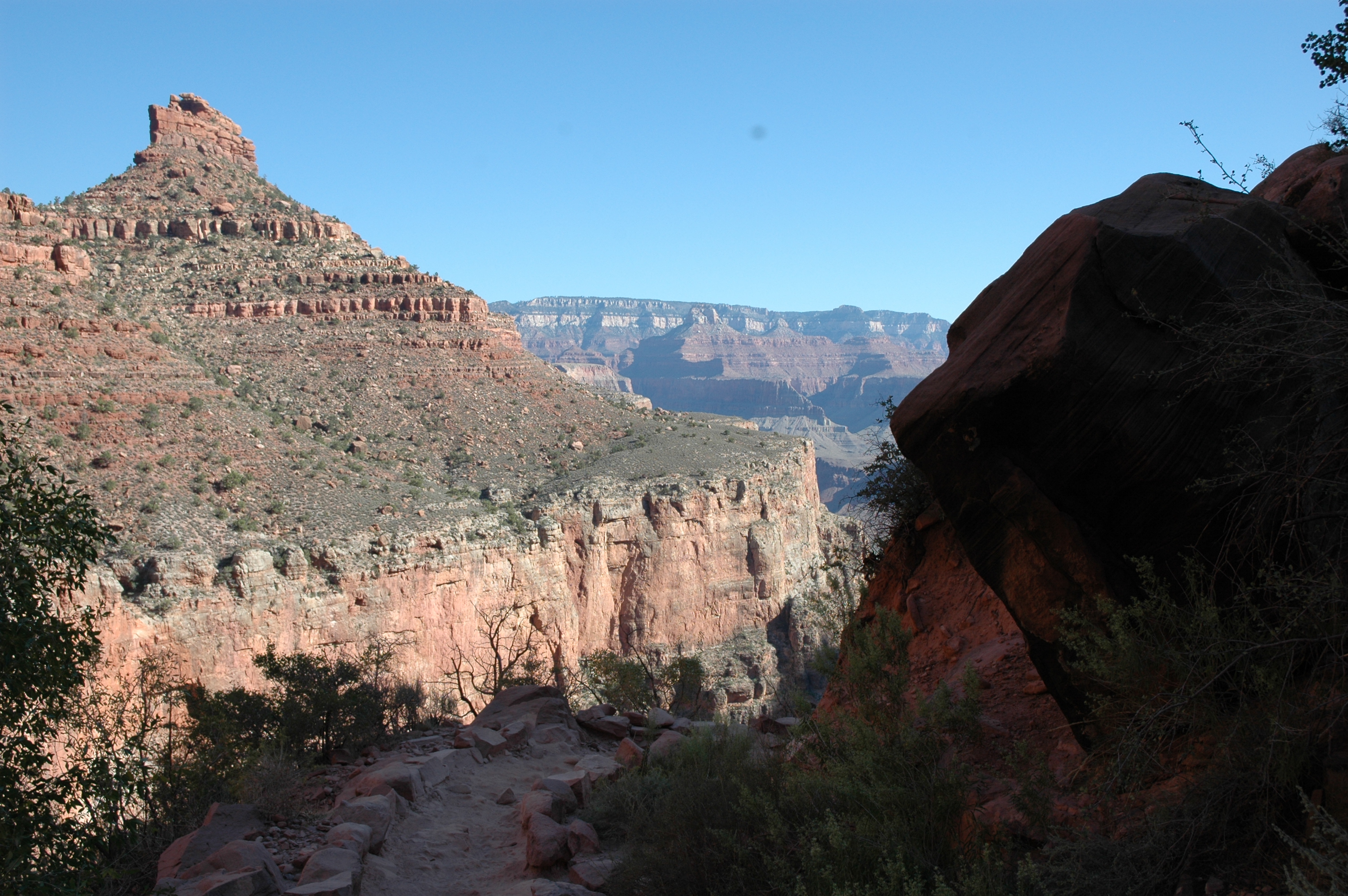
The next stop is the “3-Mile Rest House” and a chance to overlook the green Indian Garden campsite and rest station well below us still.  The shade begins its retreat from the trail now, and the sun becomes our constant hiking companion.  The switchbacks on the trail section between the 1.5-Mile and 3-Mile Rest Houses are intense.

INHL Directors Etzold and Davison at the 3-Mile Rest House

As with the other rest house, this one has an “original” rock and wood structure.  We prefer these original structures and grab a good bench seat inside in the shade after taking the mandatory posed INHL group shot.  We have now descended 2,025 feet into the Grand Canyon from the trailhead and the elevation has dropped to 4,760 feet above sea level.  After the Three-Mile Rest House we descend the Redwall limestone cliffs through what is known as “Jacob’s Ladder” – a tough series of very steep switchbacks.  Then, we pick our way over a bridge across a gash in the rock walls where the transcanyon water pipeline crosses.  Soon afterwards, the switchbacks get less frequent and the trail flattens out and takes a straight line towards the cool leafy respite called Indian Garden.

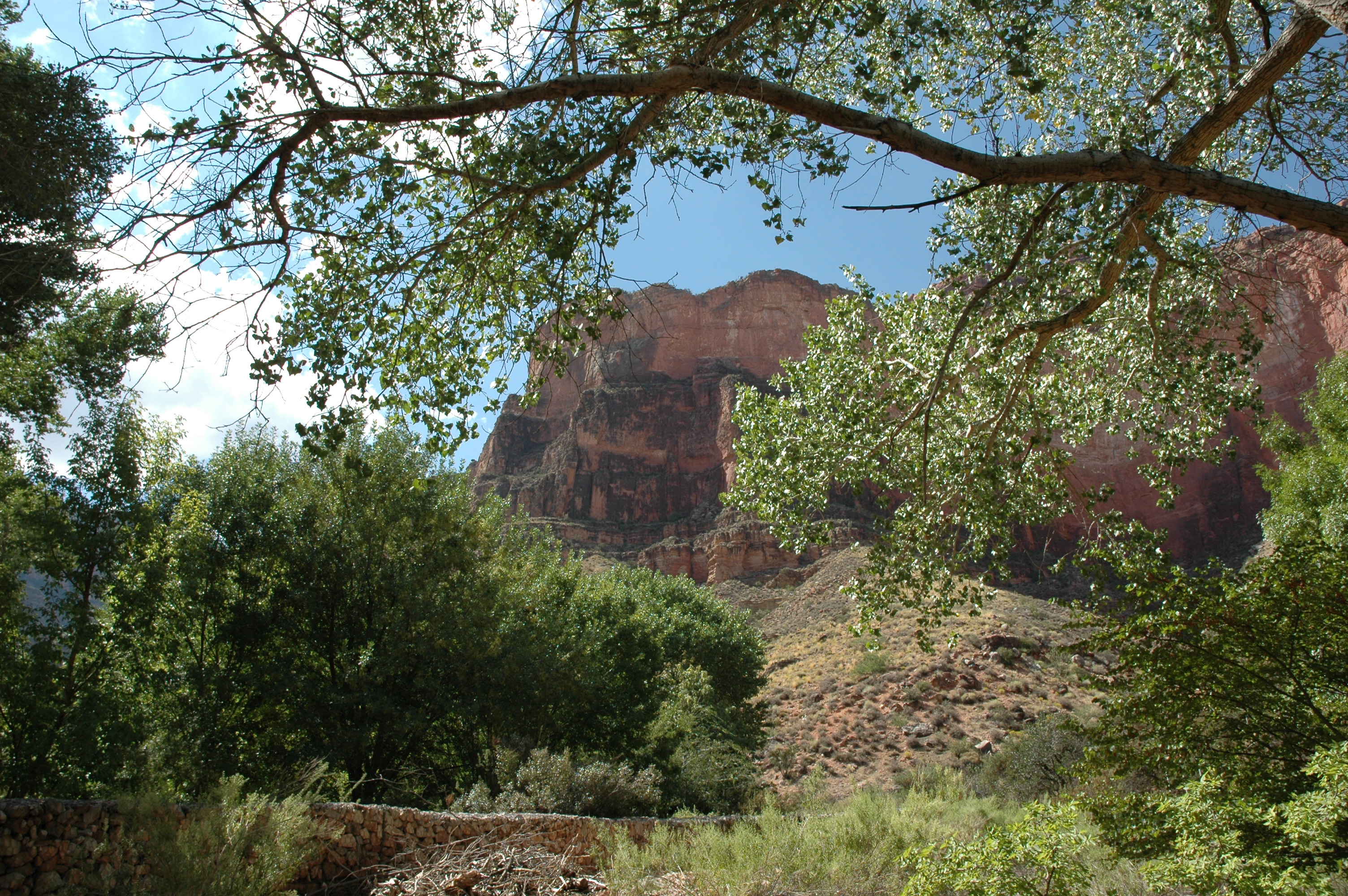
The sunshine is now all around us, with shade coming only with the occasional ledge or tree by the trail side.  Heat is becoming noticeable, whereas we had a brisk start earlier this morning at the top, now, at this lower altitude, thicker atmosphere and bright Western sunshine combine to remind us we are in a desert ecosystem.  Prickly pear and other cacti are scattered among the live oak, scrub oak and piñon pine.  Down below, we see real trees – Western Cottonwood – alongside what must be a year-round stream carving through the bottom of the canyon we’ve been descending.  Willow trees grow thick along the stream’s banks.  This must be Indian Gardenwhere the original native Havasupai inhabitants of the Grand Canyon lived and farmed maize and squash for generations and generations.

Cottonwoods and willows at Indian Garden

The trail meanders through a developed area with a ranger station, picnic benches under giant Cottonwood trees, overnight camping spots, and a mule corral.  Under a shady tree about fifty yards off the trail we find a water fountain and refill our bottles, not forgetting the powdered electrolytes.  Here, the Tonto Trail intersects with the Bright Angel Trail, and hikers and campers mingle at this crossroad to share tales of their adventures.  We rest, for we have hiked 4.6 miles and descended 3,060 feet into the canyon since our early morning start.  Ahead lies our destination and turnaround spot: Plateau Point, a mile and a half out onto the Tonto Plateau.

Cool, gurgling stream flows through Indian Garden

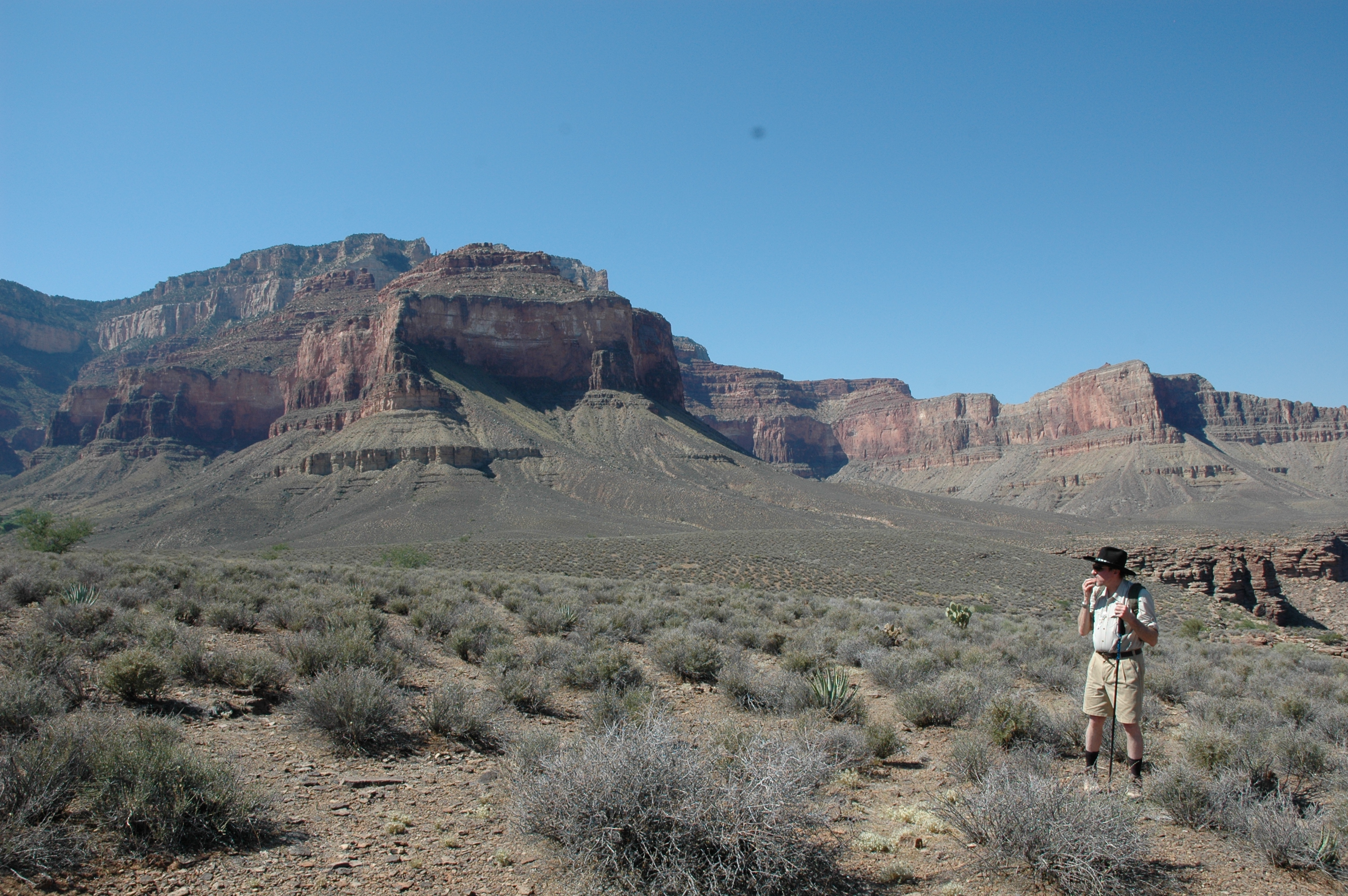
We set out on the final descent leg after a shady pause and a small meal.  The trails are well marked and it actually felt good to get out of the bustle of that crossroads in the Canyon and onto the road into the searing heat of the Tonto Plateau.  Its over 100 degrees Fahrenheit as we follow the flat trail to the overlook.  This is late September, but the sun, crystal blue skies, rocks and desert climate combine to create a solar oven of sorts along the whole length of the Tonto Plateau!  Finally, after a 1.5-mile quick-paced walk we arrive at Plateau Point.  The Colorado River looks cool and inviting far below!

Plateau Point

Colorado River framed by granite cliffs from Plateau Point

Rapids on the river far below!

Before we start the 6.5 mile ascent back to the rim, we find a spot off the trail to set up a small marker, a shrine if you will, to say to those who come later “We were here!“.  Maybe someday we will return and find this marker as we make our way down and further into this Canyon of Canyons!

INHL Marker at Plateau Point

Now, for the daunting task we have been thinking about every step of the way down this trail….the intense trek back up!  Turning from the view of the Colorado River, we take a deep breath and, setting one foot in front of the next, begin the long steady climb to the microscopic speck at the top of the distant ridge: Bright Angel Lodge and the waiting trial head where we started early this morning!  Pace ourselves, don’t rush.  Drink plenty of fluids and take small snacks.  Get into a rhythm.

Another rest stop at Indian Garden offers us a chance to take a short “siesta”!  It will be hours before we can stretch out like this, so we take advantage of the shade and picnic benches.  A change into a dry t-shirt and my shorts refreshes me, after dousing my head in the water fountain!  Davison shows one way to rest….

The climb out from Indian Garden is marked by several features we knew from the trek in, hours earlier when the morning shade was just moving off the harsh landscape.  Before getting to the 3-Mile Rest House ,about a mile and a half uphill from the Indian Garden, we would be groaning through the thigh-burning ascent of Jacob’s Ladder.  That rest house never felt so welcoming as when we trudged up the shallow slope after ascending the “Ladder” and found a shaded bench to rest upon!  Now, we only have 3 miles to go…and 10 miles behind us!

Three-Mile Rest House as the afternoon clouds roll in!

Indian Garden down below in the foreground and the trail to Plateau Point in the distance

The afternoon thunderheads and cumulus clouds began rolling in, providing us not only some well-deserved shade, but occasional light rain to cool us with a desert mist as we continued the ascent.  Steadily we climbed, mindful that we had to stop and rest frequently.  The fine dust from the trail was noticeably clinging to our boots, socks and legs as we finally reached the paved portions of the trail at the top…exhausted, but thrilled!

Veni!  Vidi!  Vici!

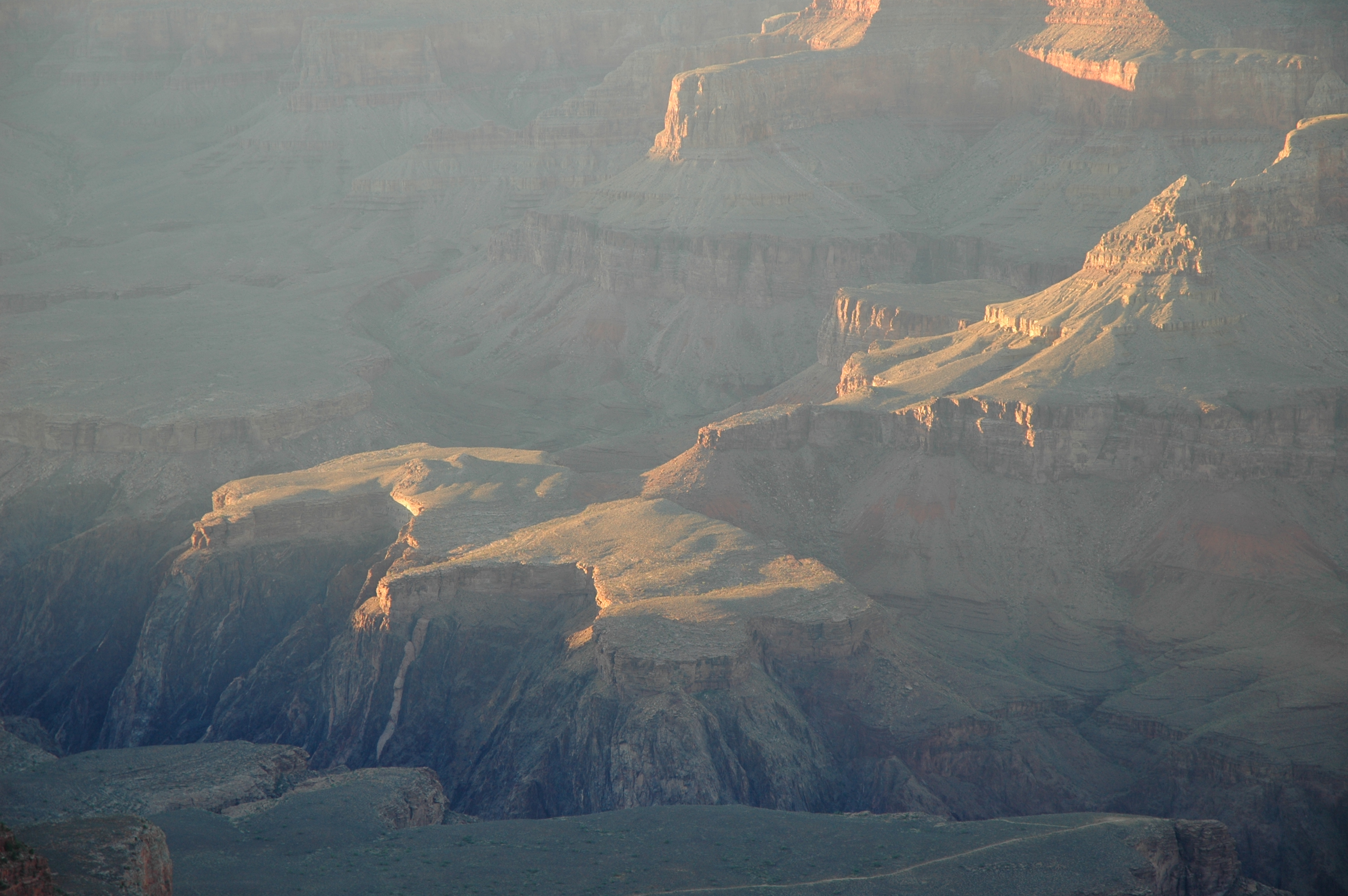
Grand Canyon from Bright Angel Trailhead

Bright Angel Trail Map

South Rim Panorama from Plateau Point with features labeled

INHL Logo Globe Grey-Preserving the Past

South Kaibab Trail

•July 24, 2010 • Leave a Comment

Cedar Ridge (far right) and O'Neill Bluff (center) on the South Kaibab Trail

EL TOVAR LODGE, GRAND CANYON VILLAGE, AZ – The icy, tart-sweet juice of the Prickly Pear Cactus Margarita washed down our parched throats and the tequila coursed through our muscles, aching from the day’s hike to Skeleton Point on the South Kaibab Trail.  A warm glow set in as we stared out at the vista from the huge back porch of the El Tovar, knowing that these two founders of the INHL, James Davison and Dave Etzold, actually now “knew” the Grand Canyon in an intimate way. Dropping into that Canyon, diving off the rim on the narrow, steep South Kaibab Trail had been an incredible first experience!

It had been an early start that morning, up before dawn at the Red Feather Lodge in Tusayan, a quick breakfast and drive to the South Kaibab Trailhead at Yaki Point Road off of Desert View Drive just as the first light of the sun hit the tops of the pine trees.  The morning air felt cool in late September, almost chilly.  It was bracing as we struck out on the first steps down the trail…into the Canyon and back through time.  As we dropped below the rim, the shade kept us cool for a while as we traced our way along the trail built in the 1920’s by Park Rangers blasting a new shorter route to Phantom Ranch next to the Colorado River far below.

The Kaibab Trail traces a thin diagonal across the face of Yaki Point as seen from Mather Point

South Kaibab Trail

The gigantic proportions of the Canyon were hard to grasp at first, the scale was so immense.  Finding similar sedimentary rock formations next to us on the trail, and following those formations around to the far wall of the valley helped keep our perspective.  We were now tracing our way down the trail carved through the canyon walls.  Observing the similar sedimentary layers wrapping us in the Earth’s grasp made the size of this geologic monster more manageable.  We virtually walked through time as we descended that trail: steadily dropping through layers laid down millions of years ago during alternating wet and dry climate era.  Cross-bedded sandstone looking like frozen sand dunes blown by ancient aeolian winds; dark fossil-rich patterns of ancient marine sediments from the time this land was immersed under a great ocean; mudstone formed by primordial ooze at the bottom of that ocean; limestone formed from the calcium carbonate in those marine environments; and, igneous and metamorphic intrusions tracking the violent deep-forces in the Earth that penetrated here and sometimes stopped the flow of the mighty Colorado River with their lava.

There is a phrase that helps one remember by the first letter of the word, the nine major sequences of rock layers, from the top of the rim to the bottom river channel: “Know The Canyon’s History, See Rocks Made By Time” (KTCHSRMBT).  We will explore that key to this grand puzzle later.  An unbelievably beautiful landscape spreads out in front of us, and engulfs us on all sides, as we wind our way down the trail, further and further into the world’s greatest Canyon.  For now, onwards into the depths, next stop “Cedar Ridge”!

Mule train carrying supplies for Phantom Ranch pauses on Cedar Ridge

Here, on the red sandstone bluff called Cedar Ridge, we rest and watch a mule train climb out of the canyon from the camp on the Colorado River that they must have left hours ago.  This was the reason the Rangers had built this trail: to more efficiently serve the needs of Phantom Ranch, the popular shady camp at the bottom of this immense gash in the Earth’s surface.  The original trail to the bottom, the Bright Angel Trail, was 30% longer each way.  That route was the Native American Indian trail into and out of the canyon bottom discovered by the first explorers to map the area.  To get mail, supplies and people down to Phantom Ranch more efficiently, this South Kaibab Trail route was carved through the rocks.  Those rocks, now soaking up the rays of the mid-day sun, radiated heat like a furnace on our skin as we worked our way down further, to our turn-around at Skeleton Point.

Dave at the base of O’Neill Butte along the South Kaibab

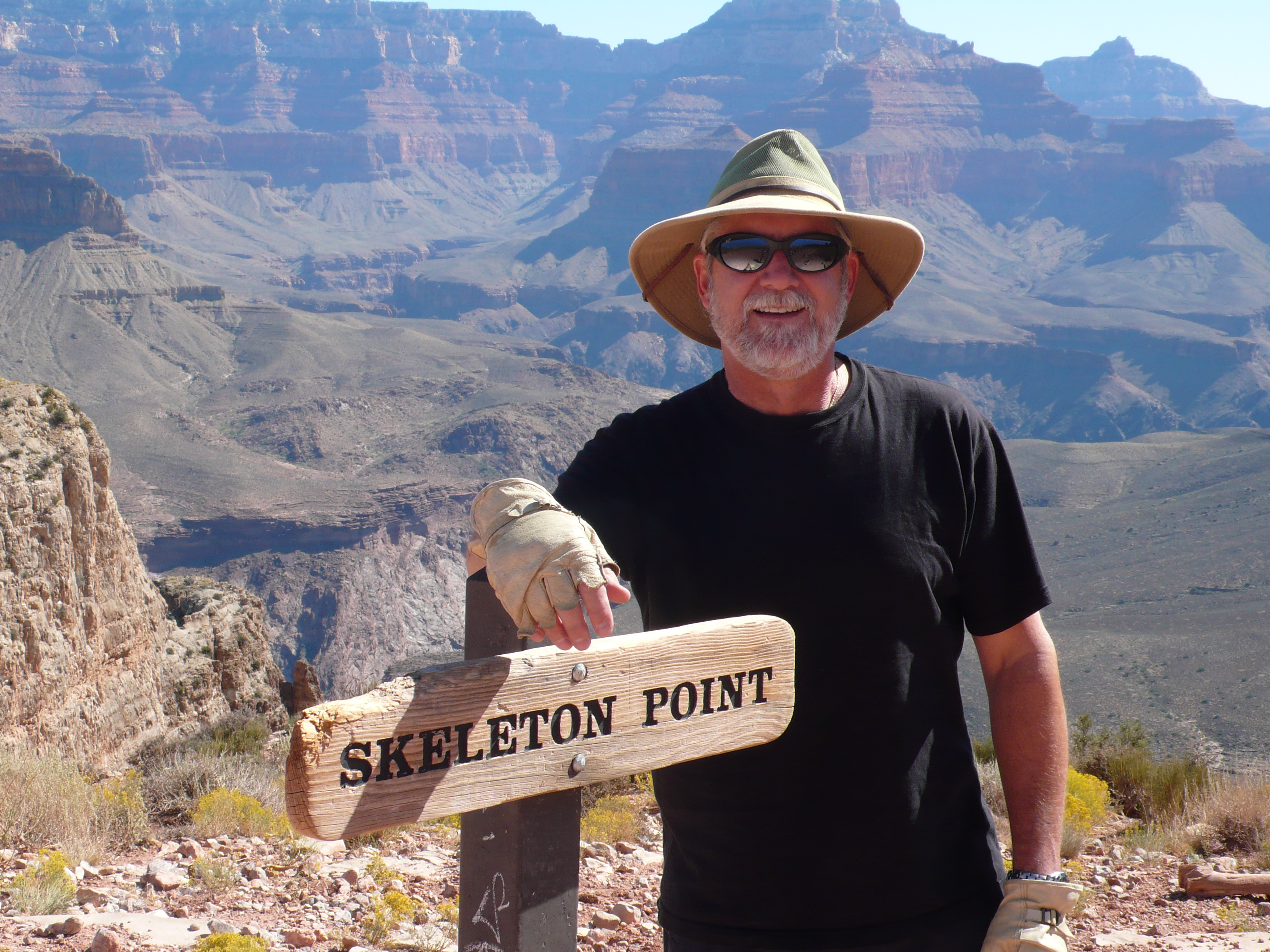
The red rocks of the layer from which Cedar Ridge and O’Neill Butte are made disappear behind us as we continue our descent to the overlook and turn-around point below.  Now and then, we hear the echo of approaching mule trains, their hoofs clacking along on the rocks of the trail and the dust from their passing hanging in the still air like mist.  One must be very careful not to move too quickly around the mules, and the Rangers advise moving off the trail uphill from the passing animals and their loads.  Several times a year these mule trains have been startled and accidents have led to the deaths of some animals and serious injuries to hikers and riders.  Soon, we see a clearing ahead and a sign post announcing our destination: Skeleton Point, you are now ours!

Skeleton Point

Colorado River below Skeleton Point

The rest stop and view from Skeleton Point of the Tonto Plateau, and the Colorado River below, was extraordinary.  The return was brutal.  It takes twice as long to climb out of the canyon as it takes to walk in.  Further, we were now in the heat of the day and, though we were visiting in late September, the temperatures 2,000 feet below the rim and exposed to the full sun of the desert Southwest took its toll on us. When its steep: One, two three, rest; one, two, three, four, rest.  When its level, a quicker pace is possible.  Never push yourself, and be sure to stay hydrated and snack in small increments frequently to keep your energy up.  The trail finally tops off, at the same point we breached in our start six or seven hours earlier.  Feet that were so heavy, legs almost like stumps, now found renewed strength in the excitement of the achievement.  We had done it!  There and back again….

INHL Directors James Davison and David Etzold at the end of the roundtrip hike to Skeleton Point on the South Kaibab Trail

Map of South Kaibab Trail

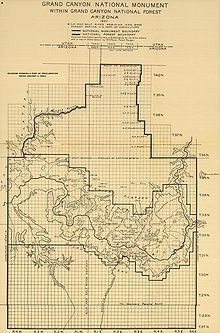
1908 Map of the Grand Canyon National Monument

The Greatest Canyon on Earth!

•July 23, 2010 • 1 Comment

GRAND CANYON NATIONAL PARK, AZ – It sneaks up on you.  This huge gash in the Earth’s crust doesn’t loom on the horizon, as would a mountain range; and it doesn’t make any noise to warn you of its presence, as does the ocean surf or a huge waterfall.  I hides on the edge of a high wooded plain in the American southwest, until it almost jumps out and strikes you like a rattlesnake curled under a bush.  Walking toward the edge of the Canyon of canyons, you get glimpses of it through the trees from the parking areas and between buses of tourist groups.  But, those are just hints.

Maybe, you arrive at the Grand Canyon Village, where you plan to stay at the one of the several accommodations operated by Xantera Parks & Resorts, like the grand dame of Western National Park Lodges: the El Tovar Hotel, perched on the edge of the South Rim.  The El Tovar was built in 1905 and remodeled in 2005, it is a classic rock and wood 78-room gem with a sweeping view of the canyon from it’s dining room and back balcony.  I recommend the Prickly Pear Cactus Margarita in the late afternoon, after one of your long hikes!  Also at the Village is the Bright Angel Lodge and Cabins, designed by famous architect Mary E. J. Colter in 1935.  There, you can enjoy a refreshing ice cream at the Parlor or check in for the famous Grand Canyon Mule Rides down the Bright Angel Trail.  You can also try the Kachina Lodge or the Thunderbird Lodge, which remind me of a 1960’s dormitory or motel arrangement squeezed between the El Tovar and the Bright Angel Lodge, but I wouldn’t recommend them.  Two other lodges are operated at the South Rim, but about one-half mile away tucked in the Piñon, Juniper and Ponderosa Pine Forests: the Maswik and Yavapai Lodges.  It’s busy in the Village, people scurrying here and there, children underfoot, tourist groups shuffling for posed photos on the edge of the Rim before they jump back in their buses.  Walk along the South Rim Trail to the right, and find some quiet vista that’s all yours!

We stayed in Tusayan, a small town just outside the Park boundary.  The Red Feather Lodge was just fine for us, and it featured an early free breakfast before the sun rose, so we could get out to the trailhead and beat the crowds.  Tusayan also has the National Geographic Visitors Center and an IMAX Theater, with a beautiful presentation of the Grand Canyon Experience, which sounds camp…but is beautifully made and highly recommended.  See it before or after you see the Canyon and it helps you grasp the magnitude and grandeur of the place.

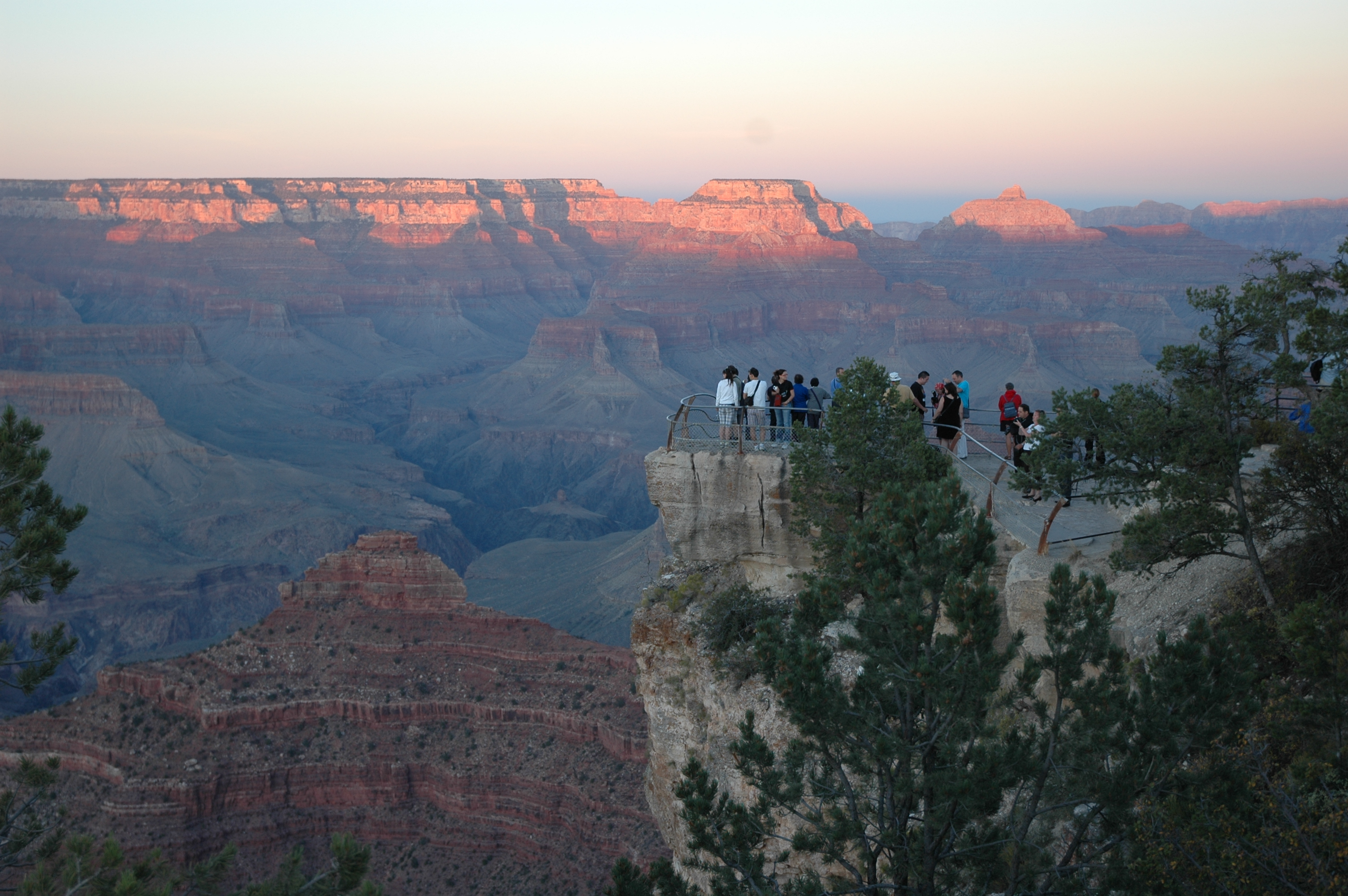
Sunset on the South Rim Trail

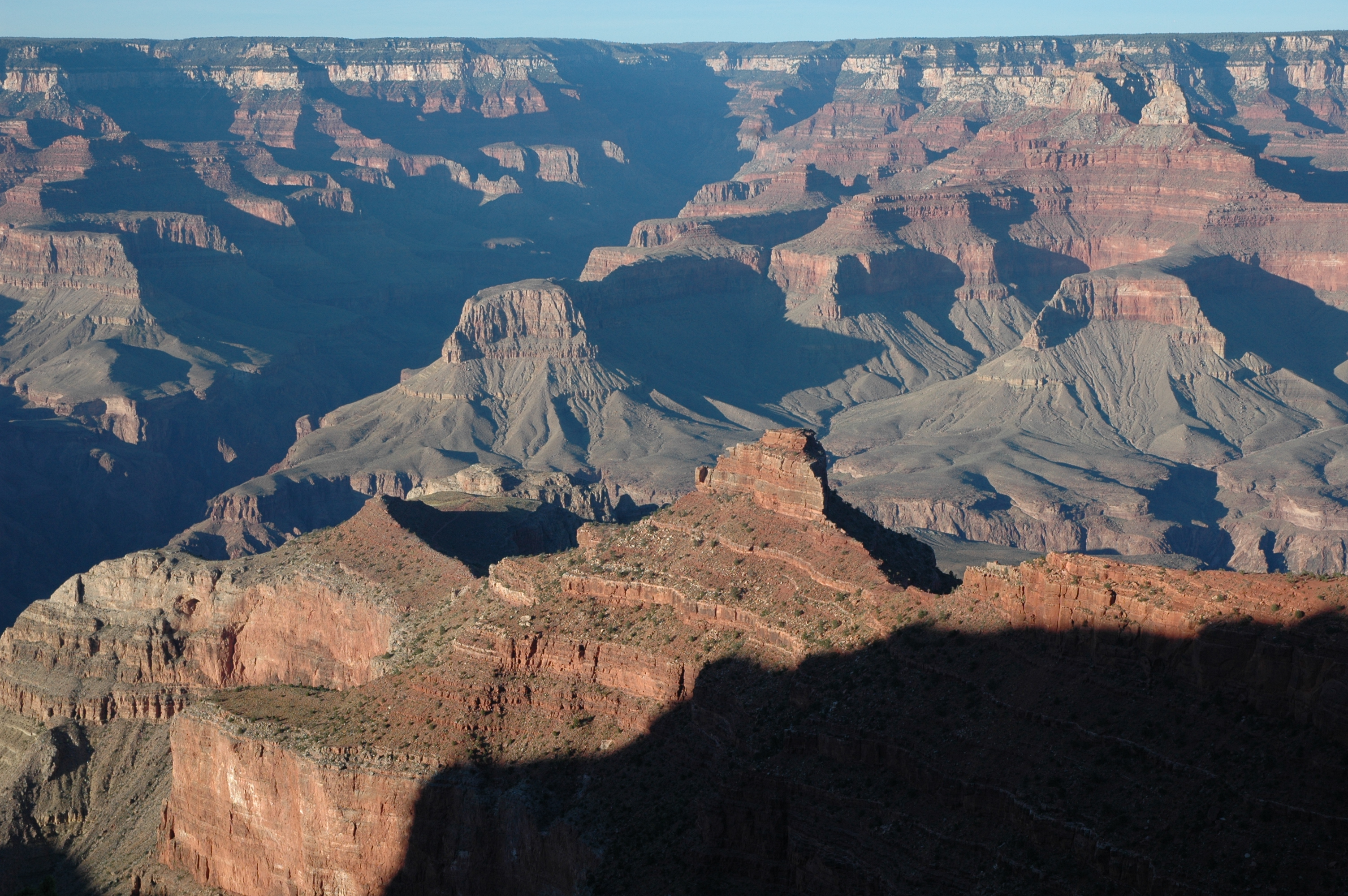
So, the plan was to take two major hikes over the three days, both into the Canyon and down as far as we could reasonably get before turning back to climb back up to the South Rim.  That first evening we arrived from Phoenix Sky Harbor Airport via Flagstaff, after checking into the Red Feather Lodge in Tusayan and driving to Grand Canyon Village, was spent walking to Mather Point and then along the Rim Trail to the east in order to get away from the tour groups and buses.  It allowed us to get acclimated to the altitude along the Rim –  from 6,900 to 7,100 feet above seal level.  What astonishing views greeted us from Mather Point and the Rim Trail as the sun set and the long-angled rays caught the far side of the Canyon!

Tomorrow, the International National History League (INHL) will tackle the first real hiking challenge: The South Kaibab Trail to Skeleton Point, overlooking the Inner Canyon and the Colorado River far below!  This trek will cover approximately 7 miles roundtrip, dropping off the rim at the South Kaibab Trailhead (which is 4.5 miles east of Grand Canyon Village) off of Yaki Point Road, and dropping over 2,040 feet into the giant Canyon below.  It should take us 6 or 7 hours and will be a good run-up to the next-day’s big hike on the Bright Angel Trail.

The Pass of the North-Founding

•July 6, 2010 • Leave a Comment

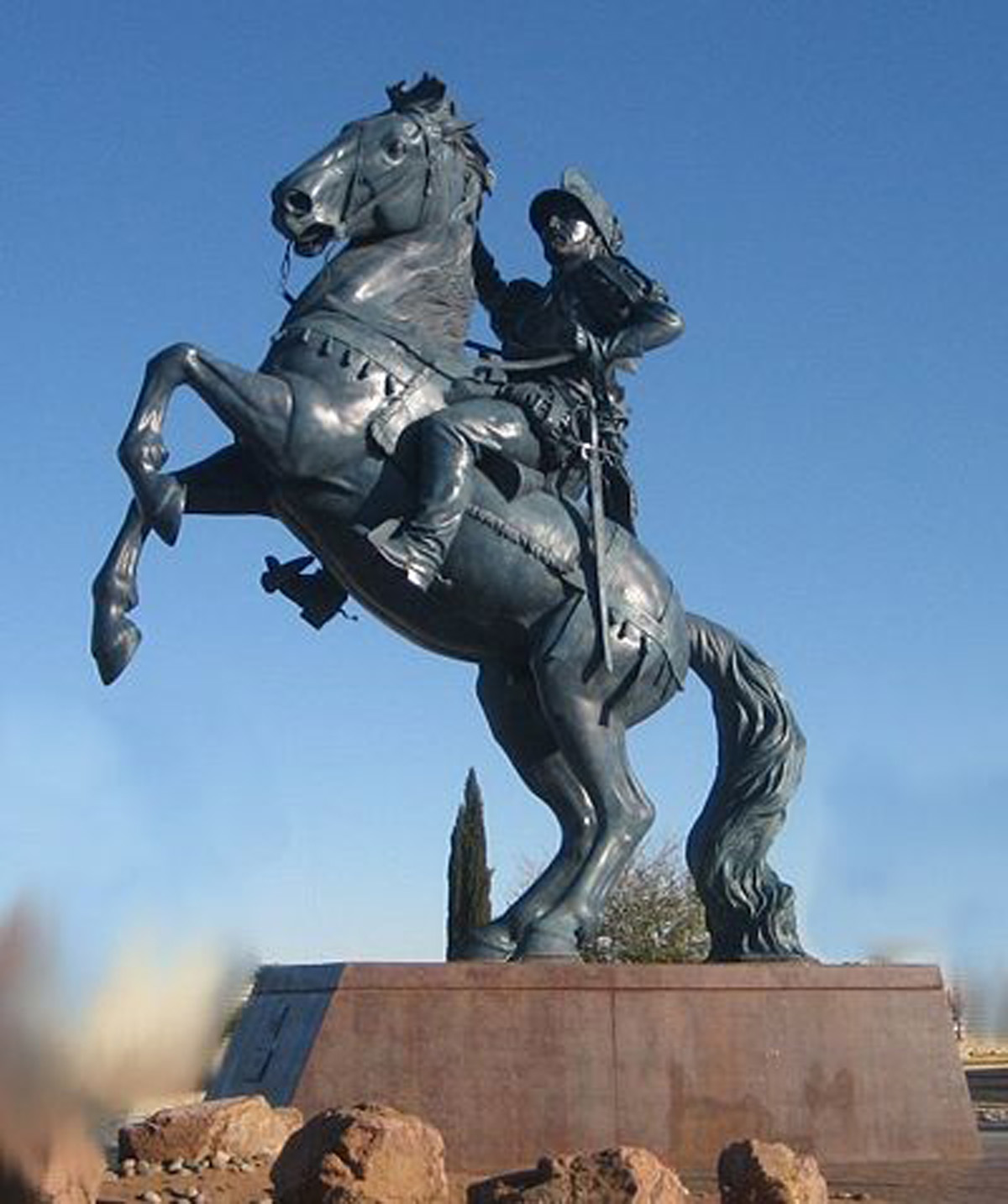
The Conquistador who discovered and named “El Paso del Norte”: Don Juan de Onate.  Commemorated by the largest bronze equestrian statue in the world by artist John S. Houser, installed at the El Paso International Airport on October 31, 2006.

EL PASO, TEXAS.  It was a long, hard trip for the several hundred soldiers, priests and settlers in the expedition led by Don Juan de Onate Salazar from the interior of New Spain (now Mexico) to the Northern reaches of present-day New Mexico in 1598.  The caravan of “carretas” (large ox-drawn carts), horse-drawn wagons, soldiers – both mounted in light armor and marching, civilian mercenaries, Roman Catholic priests and settlers with their cattle and other livestock stretched into the distance for a couple of miles.

The grueling crossing of the expansive Chihuahua Desert south of the Pass of the North required strict water rationing, and travel was limited to the evenings and early mornings so as to avoid the heat of the scorching sun.  About half-way through their journey, entering the Rio Grande Valley from the south in late April 1598 (the valley shared today by El Paso, Texas and Juarez, Mexico) the horses and cattle broke for the banks of the wild river that flowed through a gap in the mountain ranges.  The river was full and flowing swiftly with Spring snow-melt runoff from the Rockies far to the north. Thirsty for water, some of the livestock were said to have died from drinking too much as their handlers tried in vain to keep them back from the rushing river.

The expedition camped on the banks of that wild northern river and hunted wild game in the marshes and bosque that grew along the edges of the sandhills that funneled this ribbon of life through such a parched land.  A great feast and celebration was held, where local Native Americans were invited to attend by the party of adventurers on April 30, 1598 thanking God for bringing the party through this first portion of their expedition safely.  It is noted that the celebration was marked by the expedition leader, Don Juan de Onate, himself, who performed a Taking (or “Toma”), formally claiming all the lands, animals and plants in this new continent for King Philip II of Spain. This is where the name “Paso del Rio del Norte” was first used in the historical accounts sent back to the King in Spain.

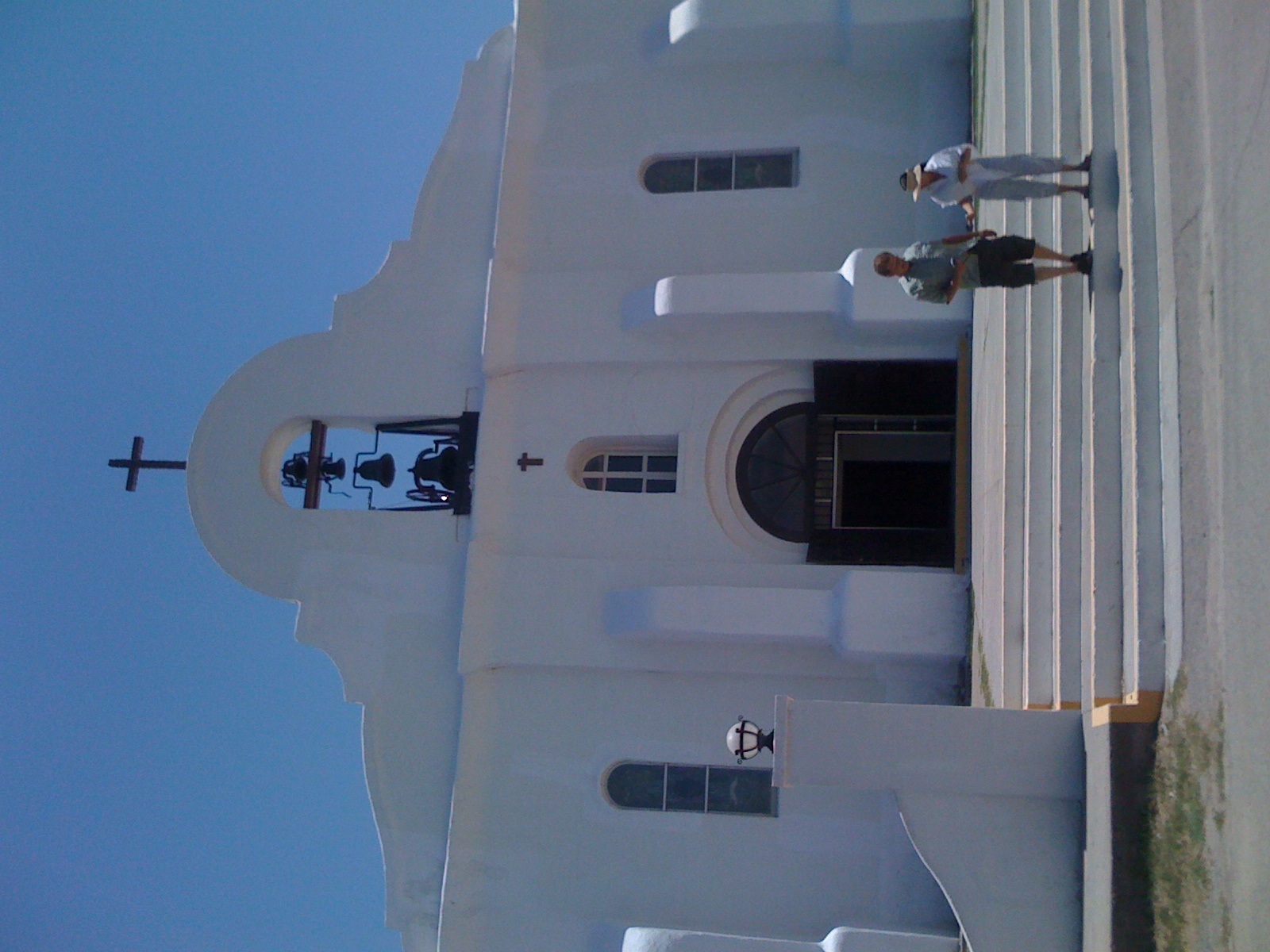
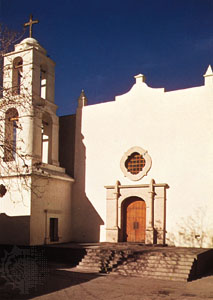
Here, then, was the actual FIRST THANKSGIVING celebrated on what would someday be American soil.   Ironically, some twenty-three years before the Pilgrims arrived and celebrated the better-known holiday at Plymouth, Massachusetts in 1621!  Today, the well-preserved Presidio of San Elizario stands near the location of that historic 1598 Spanish Thanksgiving Celebration.  The city of San Antonio, Texas – a more widely recognized early Spanish settlement in the New World – would not even be discovered for over a hundred more years.

Don Juan de Onate was the discoverer of the Pass of the North in 1598.  Not long after, the settlements of Paso del Norte were founded by a Franciscan monk, one Fray Garcia around 1630.

Presidio Chapel of San Elizario

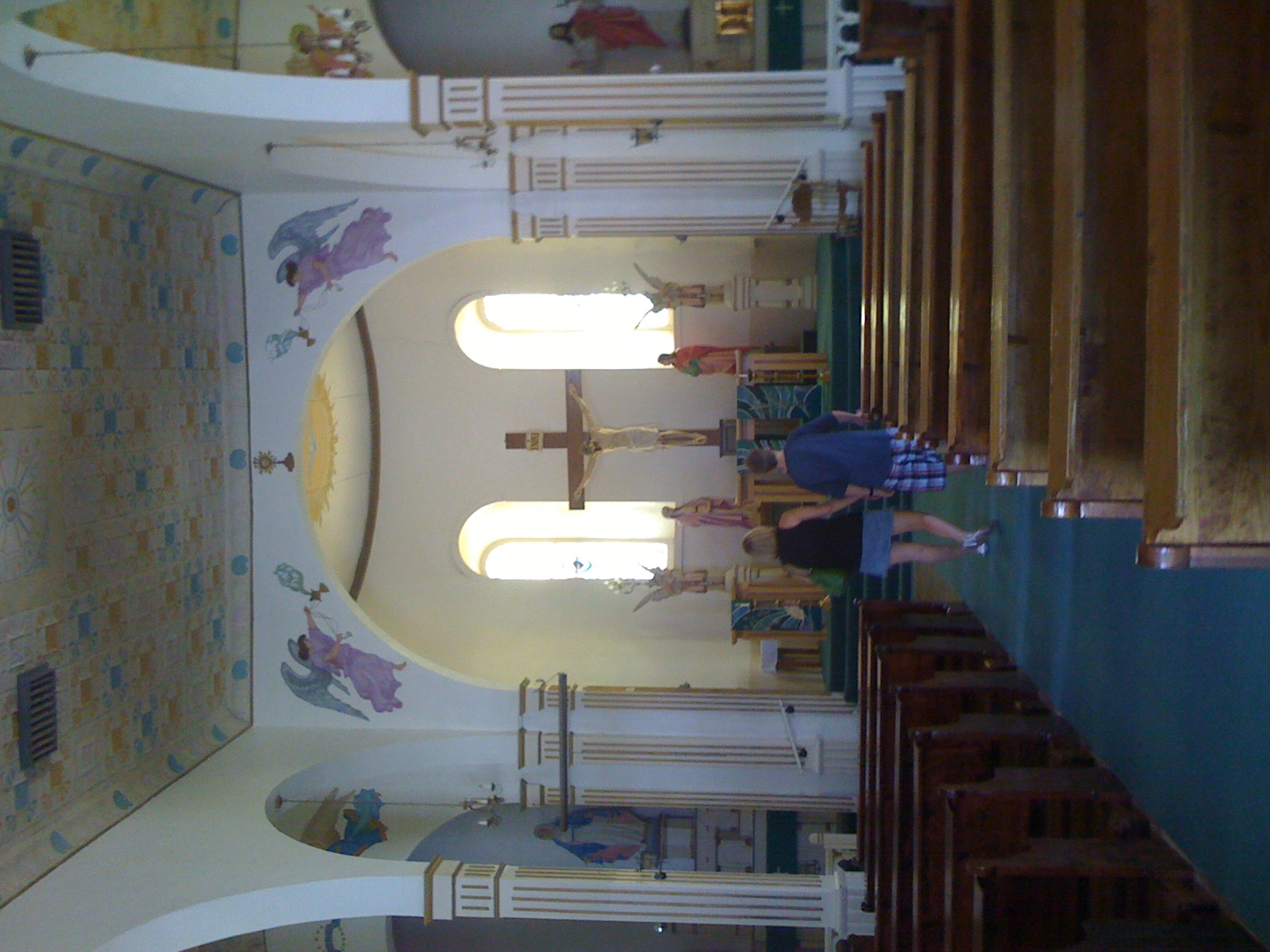
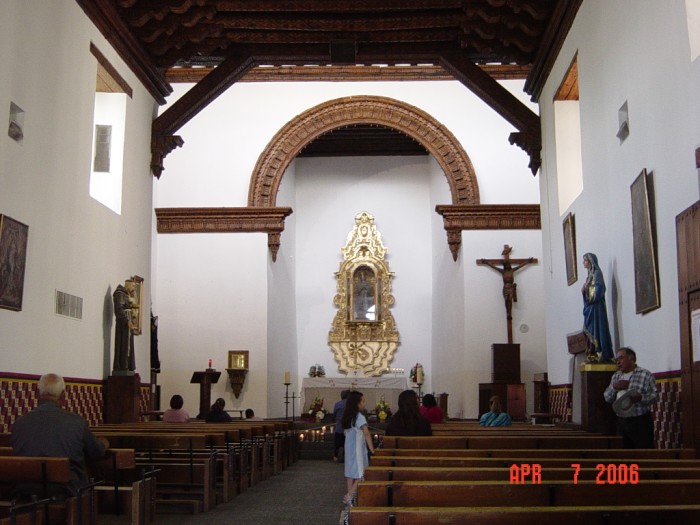
Interior of San Elizario Chapel

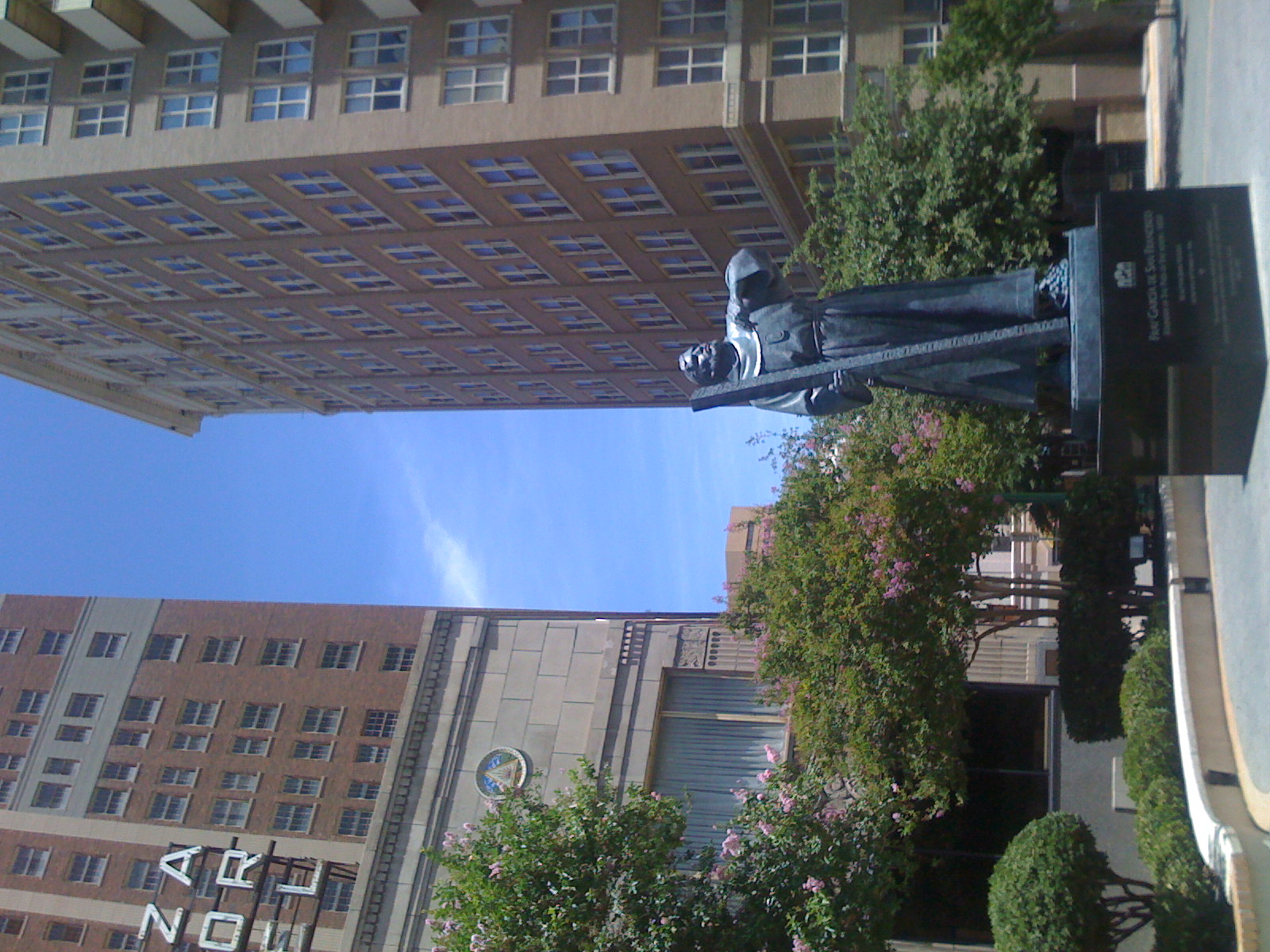
Fray Garcia de San Francisco Statue, Downtown El Paso, the Founder of the “Pass of the North” c. 1630

Fray Garcia de San Francisco served at the Pass of the North for many years, returning to Senecu Pueblo in New Mexico where he died January 22, 1673.  His statue in Downtown El Paso is the first of the Twelve Travelers series commemorating persons of significance to the El Paso del Norte region.  It was commissioned of sculptor John Sherrill Houser and built between 1994 and 1996, assisted by his son Ethan Taliesin Houser in the enlarging process.  The bronze was cast and installed in Pioneer Plaza, Downtown El Paso, by MC3 Foundry of Los Angeles, California on September 26, 1996.  The 14-foot statue is the largest standing bronze figure in the State of Texas (see photograph above).

Fray Garcia de San Francisco is heralded as the official “founder” of the settlements at the Pass of the North, where the sister cities of Juarez and El Paso share a common international boundary marked by the Rio Grande, one of the world’s largest international metroplex.  Little is known of his birth except that his family came from the Spanish Province of Old Castile.  His name translated is “Father (or Friar) Garcia of St Francis”.  Garcia, was probably his father’s surname.  His second name signifies his membership in the Franciscan Order, he was a priest of the Barefoot Friars of San Diego.

He became acquainted with the region in the early 1600’s, traveling with Fray Antonio de Arteaga to reinforce the Church’s mission work in the Province of New Mexico.  In 1630, Fray Garcia was given charge of the new Piro Indian Mission of Senecu near modern day Socorro, New Mexico (about 120 miles north of El Paso).  That same year, the Manso Indians at the Pass of the North (El Paso) requested a resident missionary.  This tribe was probably the most southern of the Rio Grande Pueblo Indians who lived in small family bands along the Rio Grande from Presidio, Texas to Las Cruces, New Mexico and possibly northwest into the Gila River basin and mountains.  The Mansos cultivated corn, beans and squash, and hunted water fowl, deer, rabbits and rodents.

Examples of projectile points and tools made by the regional Indian tribes

Responding to the call, Fray Garcia arrived at the Pass of the North in late 1630 with two assistant priests, sometime later returning to Senecu and leaving the assistants to care for the Mansos.  For unknown reasons, the Mansos became hostile and threatened the newly-arrived missionaries, Spanish soldiers arrived and rescued the priests and returned them to the northern capital of New Spain in Santa Fe.

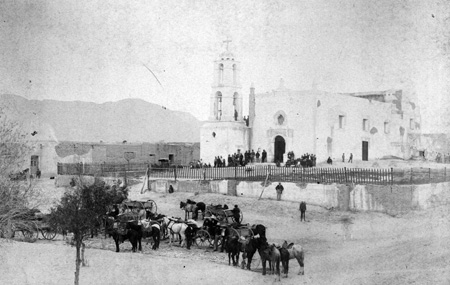
Nuestra Senora de Guadalupe Mission c. 1889

Nearly thirty years later, in 1659, Fray Garcia once again returned to the Paso del Norte, determined to establish a permanent mission at this strategic location on the Camino Real (the Royal Road) between Mexico City and its capital of New Spain, Santa Fe.  Choosing an elevated rock terrace that was protected from seasonal Rio Grande flood waters, and with the help of some friendly Manso Indians as well as neighboring Suma Indians (nomadic hunter-gatherers who ranged from the Rio Grande south to the eastern flanks of the Sierra Madre in Chihuahua) and ten Piro Indian familes, the tiny settlement on the southern bank of the river began building a large permanent church, Nuestra Senora de Guadalupe, which was finished eight years later and formally dedicated January 16, 1668.  That mission still stands today in downtown Cd. Juarez, and is a beautiful example of 17th Century Rio Grande Mission architecture.

Mission Nuestra Senora de Guadalupe

Interior of Mission Nuestra Senora de Guadalupe, Juarez

Fray Garcia is not only the recognized founder of the Pass of the North, he introduced the West Texas and New Mexico region to European culture, learning, and agriculture.  Of significance in this regard were the ubiquitous acequia (irrigation canals) built throughout the region to carry water from the Rio Grande, grape and fruit orchard cultivation and livestock production.  For over 250 years thereafter, the Pass was famed for its quality wine and a potent “Paso Brandy”, distilled from local grapes.  His first church, the Guadalupe Mission in Cd. Juarez, is considered the “mother church” for all other Roman Catholic missions serving the El Paso Valley.  Those missions (and their ethnic Indian affiliations) include the following:  On the southern bank of the Rio Grande, now Mexico, were the Senecu del Sur Mission (Piro) and the San Lorenzo Mission (Manso, Suma, Tlaxcala and Spaniard).  On the northern bank, now the United States, were the Ysleta del Sur Mission (Tigua) and Socorro del Sur Mission (Piro).  In 1789, the Spanish military garrison founded the San Elizario Presido which contained a presidial chapel, school and a mission for the Apache and San Elceario tribes.

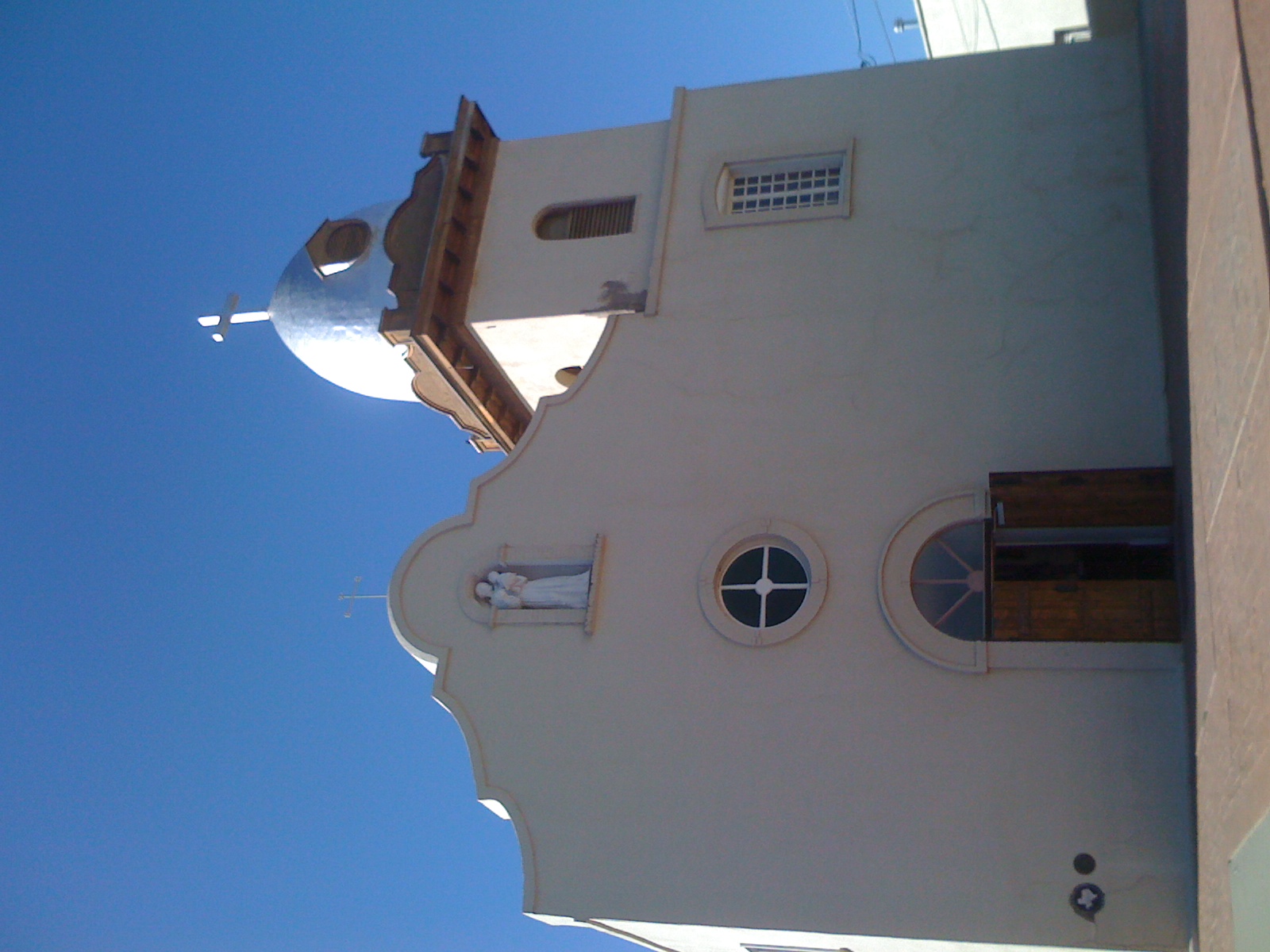
Ysleta Mission in El Paso

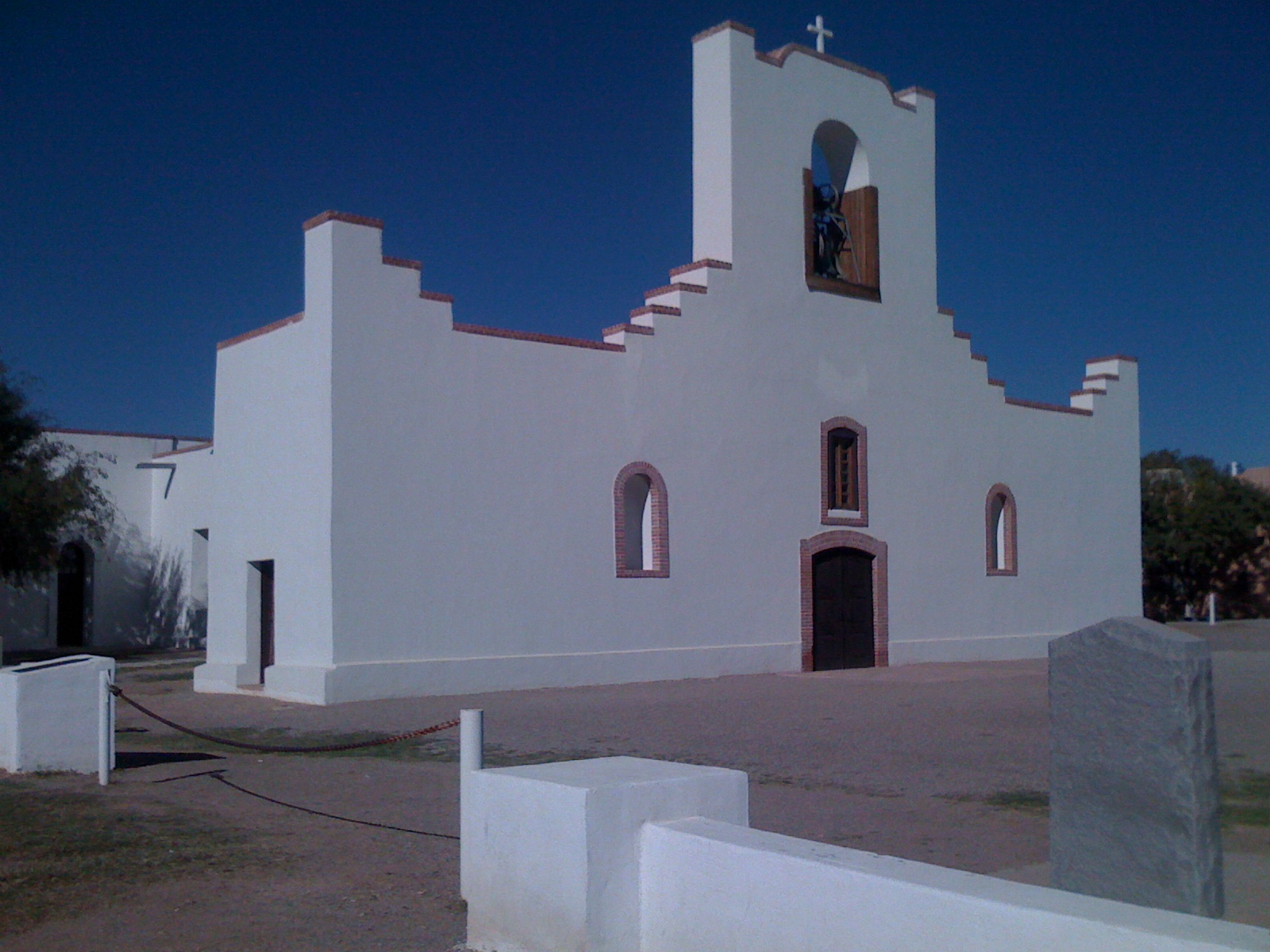
Socorro Mission in El Paso’s Lower Valley 

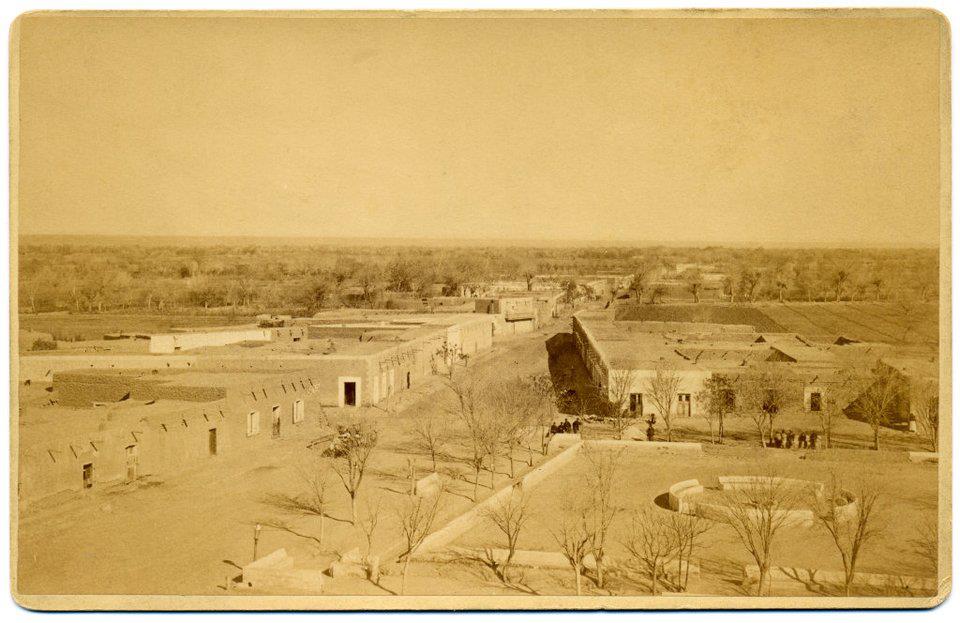
View of San Jacinto Plaza, Main Street at Mesa Street, Downtown El Paso c. 1882

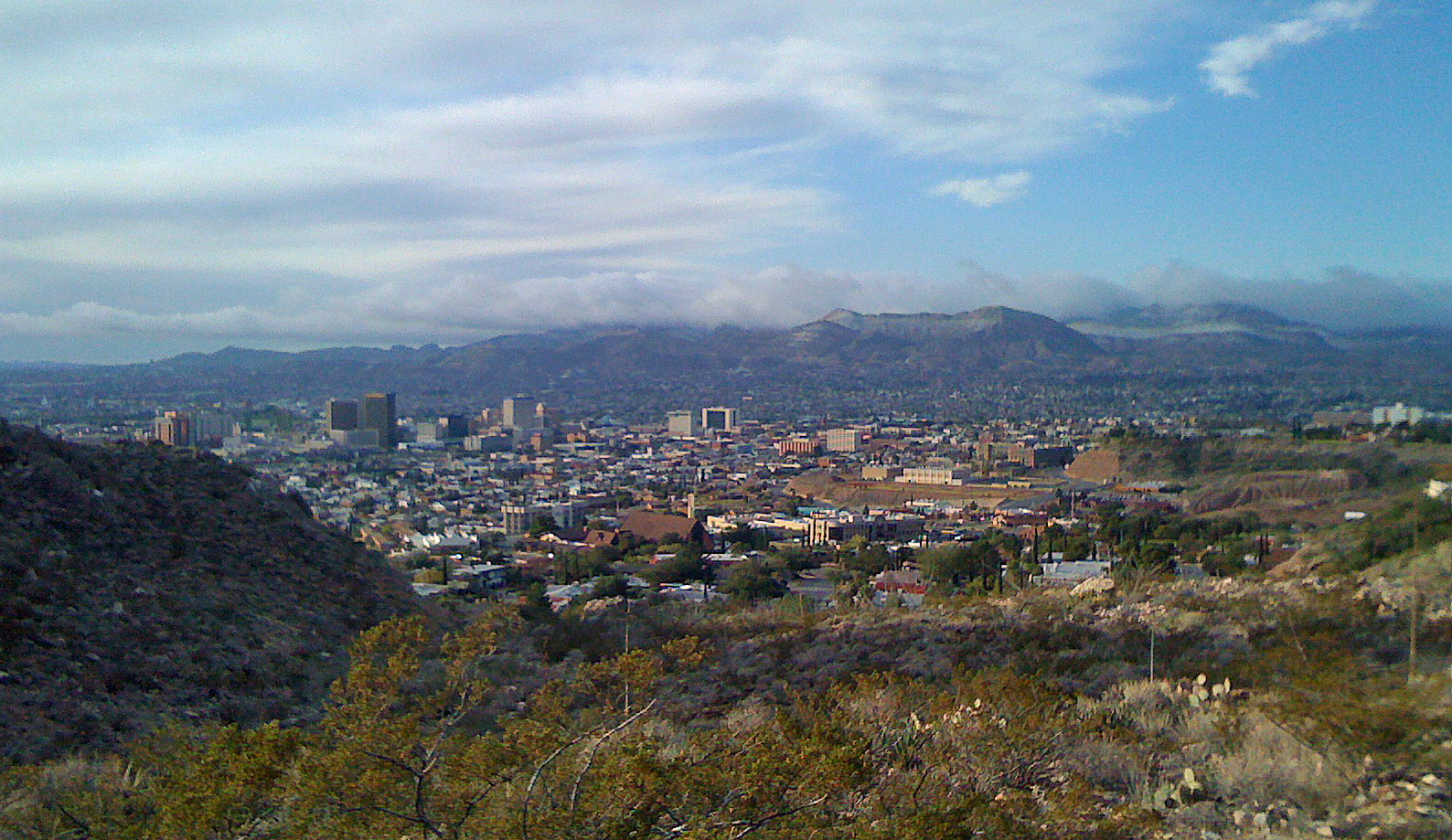
View of the Pass of the North today, looking south from Scenic Drive: Downtown El Paso, Texas and Juarez, Mexico – two cities, two countries, one community of over 2 million people!

Andean treats!

•April 16, 2010 • Leave a Comment

(You may click on any photograph to pull up a larger version of the image.)

EL PASO, TEXAS – Three months after our landmark adventure trek on the Inca Trail to Machu Picchu, some deep impressions of that journey stick like glue to the thread of my daily consciousness: the food, and its herald…smell.  Olfactory experience is strong and deep, some say our smell sense is the strongest and most ancient sense, a data base formed of the palette of scents in our lives…and their associated tastes.  Here is an assembly of smell and taste sensations from a distant land, some images and descriptions discovered during the INHL expedition to Lima, Cusco and Machu Picchu in Peru 2010.

Pisco Sour...the first taste of Peru!

Pisco Sour is a cocktail containing pisco, lemon or lime juice, egg whites, simple syrup, and regional bitters (like Amargo bitters, though Angostura bitters work if regional bitters are unavailable).  The roots of Pisco itself reach back to the 1500s and stem from Colonial rule.  The Spaniards brought the grape to the Peruvian region from Europe, but the King of Spain banned wine in the 17th Century, forcing locals to concoct a different kind of alcohol from the grape.  Pisco is a brandy, a refined derivative of grappa.

An account holds that the Pisco Sour cocktail is a variation of the Whiskey Sour, invented in the early 1920s by American expatriate Victor V. “Gringo” Morris at the Morris’ Bar in Lima. The cocktail quickly became a favorite of locals.  Soon many of the grand Lima hotels at that time such as the Maury and the Hotel Bolivar began serving Pisco Sours to their international guests, helping the drink become an international hit.  An old advertisement of Pisco Sour was published in 1924 by the Morris’ Bar of Lima.

In Peru Pisco Sour Day is celebrated on the first Saturday of February.  Years ending with zero (0) are of special significance. The theme for the celebration is red and white (Peruvian flag colours). When the Peruvian National Anthem is played all Pisco Sours must be finished as a mark of respect.  The INHL Team barely missed the first Saturday of February celebration in this auspicious year of 2010, having exited the country on January 25th.  Had we known…well that should be left to conjecture!  However, that first Pisco Sour we savored, which was served to us in the lobby bar of the Mirador Park Hotel in Lima on the second afternoon of the journey (end of our first full day in Lima), left a rich, smooth, tart impression on the emulsion sheet of our memory.

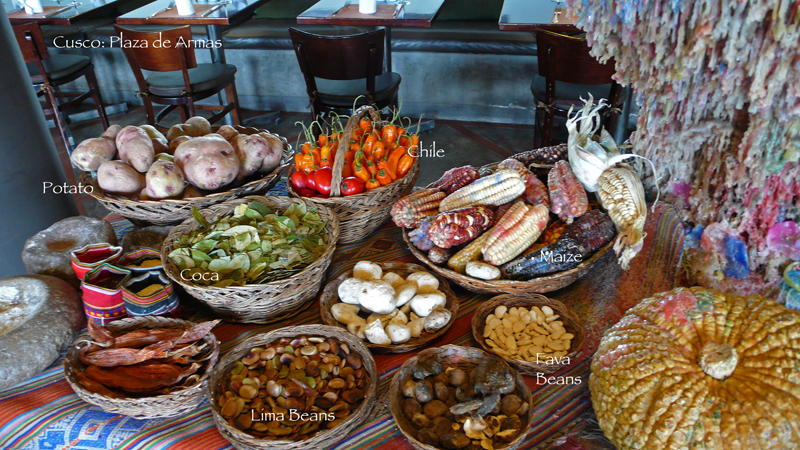
Peruvian fruits of the earth laid out at a Cusco restaurant

We wander into a nice restaurant facing the Plaza de Armas Cusco, and before we find our table we appreciate a display of wonderous “fruits of the earth” from the region: Maize, Coca, Potato, Chile, Beans, Squash, and more!  This is an ancient civilization.  A display at the Museo Larco in Lima tells the story of six great “cradles of civilization” on Earth, which seeded and nurtured the foundation of all human culture: Mesopotamia, Egypt, Indus, Shang (or Yellow River valley), Mesoamerica and Andean South America.  That museum exhibit identifies Peru as one of those six unique and independently-evolved civilizations.  History echoes from the ages in this display of the “fruits of the earth” at our Cusco restaurant,  illustrating the historical variety of some of Andean South America’s treats.  A notable star in this visual presentation: the lowly Potato!

Peru and the ancient Andean cultures that derived from this particular “cradle of civilization” were the first people on the planet to discover and cultivate the potato.  That’s quite a claim!  Today as many as 3,000 varieties of potato are found in the Peru and Chilean regions of South America.  Therefore, every meal in Peru seems to include some element of potato…whether fried, mashed, pureed, baked, stewed, strung, chopped, boiled or blended.

The more notable uses discovered on our trek included boiled potato as a base for several dishes, or with ají based sauces like in Papa a la Huancaina or Ocopa, or diced potato for its use in soups like in Cau Cau or in Carapulca with dried potato (papa seca).  Smashed condimented potato is used in Causa Limeña and Papa Rellena, shown below.

Papas Rellenas

Papas Rellenas

French-fried potatoes are a typical ingredient in Peruvian stir-fries, including the classic dish Lomo Saltado.  Chuño is a freeze-dried potato product traditionally made by Quechua and Aymara communities of Peru and Bolivia, and is known in various countries of South America, including Peru, Bolivia, Argentina, and Chile.  In Chile’s Chiloé Archipelago, potatoes are the main ingredient of many dishes including milcaos, chapaleles, curanto and chochoca. In Ecuador, the potato is a staple with most dishes and is featured in the hearty Locro de Papas, a thick soup of potato, squash and cheese.

One variety of potato flower, this image from a textbook....

...and a species of potato flower discovered next to our camp on the second night of the Inca Trail trek, fed by the waters of the Pacaymayu River!

The potato has been an essential crop in the Andes since the pre-Columbian Era.  The Moche culture from Northern Peru made ceramics from earth, water, and fire.  They believed pottery was a sacred substance and thus, formed it into significant shapes representing important themes.  Potatoes are represented anthropomorphically as well as naturally in various art forms we discovered.

Ceramic potato vessel, Larco Museum, Lima

Potatoes were first domesticated in Peru between 3000 BC and 2000 BC.  In the Altiplano, the large high plain in the middle of the Andes, potatoes provided the principal energy source for the Inca Empire, its predecessors and its Spanish successor.  In Peru above 10,000 feet altitude, tubers exposed to the cold night air turned into chuño; when kept in permanently-frozen underground storehouses, chuño can be stored for years with no loss of nutritional value.  The Spanish fed chuño to the silver miners who produced vast wealth in the 16th century for the Spanish government.  One might say that the potato helped fill the Spanish treasury with their silver hoard from the New World.  Every “Piece of Eight” and  every “Dubloon” circulating in the West Indies and the Spanish Main carried both the blood of the Inca and the tarnish of the lowly potato.

Then, there’s a surprising food specialty dating as far back as recorded history in the region: Cuy, or Guinea Pig!  Not much meat on those bones, but they are easy to raise, don’t take up a lot of room, are clean and pleasant around the house, and reproduce like…well, like hamsters!  Big hamsters!

The platter of food in front of Christ in this 17th Century depiction of the "Last Supper" holds a nicely baked guinea pig!

Even the religious artwork of the 1600’s from Peru showed a cultural sensitivity to the “national house specialty” of Guinea Pig!  Could there be a more obvious presentation as this Last Supper dinner setting to depict the importance of the delicacy to the regional population?  Luckily, our exploration didn’t require the accompaniment of the apostles, but it wouldn’t have seemed out of place on the night our team actually did explore this culinary tidbit.  Multhauf enjoyed Cuy in our company, a near-perfect setting at the Divina Comedia Restaurant on Calle Pumacurco in Cusco, one block up the street from our base at the the Hotel Monasterio.  There we were entertained by aria-singing waiters and classical music of the highest caliber.  His companions pushed their envelopes with Alpaca Brochettes.

Even on the morning we left on the trek over the Inca Trail to Machu Picchu, during a quick stop for breakfast in the Urubamba River town of Ollantaytambo, we found guinea pig (cuy) on the menu!  The Watakay Restaurant has a sign in front prominently featuring the delicacy and, inside the attractive grounds, a nice adobe breeding pen/hutch for the little morsels, almost as if the creatures were on display.  I half expected one of the waiters to walk over and ask “Which one may i prepare for you, Sir?”

Davison with a smug look next to the Watakay Restaurant sign in Ollantaytambo, advertising their house specialties...only one item got a big green arrow...you guessed it: Guinea Pig!

We had bacon & eggs and pancakes, but it was an interesting idea!

The multi-story guinea pig hutch at the Watakay Restaurant...fresh meat!

Guinea pigs (called cuy, cuye, curí) were originally domesticated for their meat in the Andes. Traditionally, the animal was usually reserved for ceremonial meals by indigenous people in the Andean highlands, but since the 1960s it has become more socially acceptable for consumption by all people. It continues to be a major part of the diet in Peru and Bolivia, particularly in the Andes Mountains highlands; it is also eaten in some areas of Ecuador (mainly in the Sierra) and Colombia. Because guinea pigs require much less room than traditional livestock and reproduce extremely quickly, they are a more profitable source of food and income than many traditional stock animals, such as pigs and cows; moreover, they can be raised in an urban environment. Both rural and urban families raise guinea pigs for supplementary income, and the animals are commonly bought and sold at local markets and large-scale municipal fairs.

Guinea pig meat is high in protein and low in fat and cholesterol, and is described as being similar to rabbit and the dark meat of chicken. The animal may be served fried (chactado or frito), broiled (asado), or roasted (al horno), and in urban restaurants may also be served in a casserole or a fricassee.

Maize, or corn as we know it in the United States, plays a very significant role in the world’s food supply and is part of nearly every meal served in Peru: from beverages made from it to flatbreads called “tortillas”.  We found evidence of the prominence of this agricultural food product to the Incan and pre-Incan cultures of the South American region in depictions in ceramic artwork and in the beautiful golden artifacts on display at the Larco Museum.

Maize is a grass domesticated by indigenous peoples in Mesoamerica in prehistoric times. The Aztecs and Mayans cultivated it in numerous varieties throughout central and southern Mexico, to cook or grind in a process called nixtamalization. Later the crop spread through much of the Americas. Between 1250 A.D. and 1700 A.D. nearly the whole continent had gained access to the crop. Any significant or dense populations in the region developed a great trade network based on surplus and varieties of maize crops. After European contact with the Americas in the late 15th and early 16th centuries, explorers and traders carried maize back to Europe and introduced it to other countries through trade. Its ability to grow in distinct climates, and its use were highly valued, thus spreading to the rest of the world.

Stylized Golden Maize artifact, Larco Museum

The variety of maize in the markets, restaurants and roadside vendor stands speaks to its universal influence on the indigenous culture.  Variegated colorful cobs to creamy white, huge-kerneled maize run the gamut of the genetic strains of this species known as Zea Mays. Fields of cultivated maize are prominent in the countryside outside of Cusco on the road to the Sacred Valley, which we passed on our way to the start of the Inca Trail Trek to Machu Picchu.

Etzold and field of maize next to our first night's camp site on the Inca Trail to Machu Picchu: Wayllabamba

Before we leave for the trek on the Inca Trail, on a hike to the ruins of the Inca fortress of Saqsaywaman high above Cusco, we stop for a local treat from a street-vendor: Choclo Con Queso (Andean Corn and Cheese).  There, Multhauf and I enjoy a couple of boiled ears of the sweet, fat-kerneled, white corn served up with a chunk of fresh cheese.  Yum!

Roadside vendor on Pumacurso...the road to Saqsaywaman

Multhauf and Etzold appreciating the fresh choclo con queso

Of course, one must also appreciate the variety of local beverages needed to wash down these exotic flavors ….fine beer available in two national varieties: Cusquena and Cristal. Our taste of these mass-produced and internationally marketed Peruvian “cervezas” took place at a delightful oasis in the midst of the teeming capitol: the Museo Rafael Larco Herrera or Larco Museum, and its idyllic garden bar, in Lima.

Beer is an ancient concoction.  Most cultures have a “primitive” version of this beverage in their history, but few still have the benefit of offering the ancestral version to their modern populations, much less their visitors.  Peru claims top honors in this regard, as we discovered during the early days on the Inca Trail trek….where advertisements for Chicha were hard to miss!

The orange bag at the end of the pole is the universal "sign" advertising Chicha for sale inside; this in the village of Wayllabamba on the first night of the Inca Trail trek to Machu Picchu.

Chicha is traditionally prepared from a specific kind of yellow maize (jora) and is usually referred to as chicha de jora.  It has a pale straw color, a slightly milky appearance, and a slightly sour aftertaste, reminiscent of hard apple cider, and is drunk either young and sweet or mature and strong.   It contains a slight amount of alcohol, 1-3%.  Chicha de jora is prepared by germinating maize, extracting the malt sugars, boiling the wort, and fermenting it in large vessels, traditionally huge earthenware vats, for several days. The process is essentially the same as the process for the production of beer.

In some cultures, instead of germinating the maize to release the starches therein, the maize is ground, moistened in the chicha maker’s mouth, and formed into small balls which are then flattened and laid out to dry. Naturally occurring ptyalin enzymes in the maker’s saliva catalyses the breakdown of starch in the maize into maltose.  This process of chewing grains or other starches was used in the production of alcoholic beverages in pre-modern cultures around the world.

Chicha de Jora...salud!

Chicha de jora has been prepared and consumed in communities throughout in the Andes for millennia. The Inca used chicha for ritual purposes and consumed it in vast quantities during religious festivals. Mills in which it was probably made were found at Machu Picchu.  During the Inca Empire women were taught the techniques of brewing chicha in Acllahuasis (feminine schools).

Huge ceramic vessels for chicha fermentation sit in a display case in a gallery of the Larco Museum, Lima

There is a long scene in the famous novel Moby Dick, set in a Lima drinking establishment, involving a group of people sitting at a table telling stories and drinking chicha.  I can’t see for sure through the dimly lit, smoky interior of Melville’s timeless bar scene, but I’d bet good money that the members of our INHL expedition weren’t sitting at that particular table!  We’ll have to save some of these experiences for the next time!  There will be a next time.
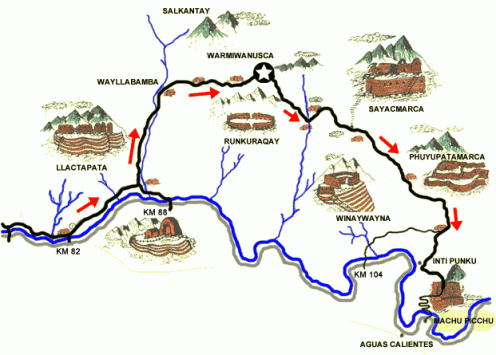
Graphic depiction of the Inca Trail to Machu Picchu

Inca Trail to Machu Picchu shown on topographic map